
A Rewilder’s Guide to Outdoor Adventure is the book behind Lucky Sheep®. It grew from years of experimenting with how the human body, natural materials, sleep, weather, terrain and outdoor equipment interact. The book explores the philosophy. Lucky Sheep builds the equipment. The outdoors tests both.
It is not a catalog, and it is not a finished doctrine. It is one person’s record of an experiment that is still running. This page is the shortest way into it.
How the Book Came About
Years ago I was hiking barefoot up a mountain trail with a friend, sharing my “crazy idea to reinvent backpacking gear” around the philosophy of barefoot walking. I was breaking a rule from my Outdoor Leadership training — always wear sturdy boots — and seeing how far I could take it.
What put me on that trail was illness. Multiple chemical sensitivities had made me allergic to my own tent and sleeping bag. I had spent a decade going organic with my clothing, bedding and home, and my outdoor gear — the equipment that was supposed to bring me closer to nature — was still the most toxic thing I owned.
I pictured a whole camping setup made from organic fabrics. There was one problem: I didn’t know how to sew. So I learned. I pieced together prototypes from thrift-store wool and scraps of fabric and tested them for years.
Then I moved into a tipi, on and off for three years, using only natural fiber clothing and bedding, to see whether the theories held up through a mountain winter. For me, they did. The gear from that experiment grew into Lucky Sheep. The book is where I wrote down what I learned along the way.
The Ideas
Eight of the ideas that run through the book, and the articles where each one is worked out in full. They are my positions, tested on my own body. Take what works for you.
The body is the first piece of gear. It is when you go outside that you most need your body to work well — against rain, wind, cold, sun and uneven ground. Preparedness still matters; I carry the Ten Essentials. But the body comes first, and the gear is built around what it already does. How to sleep outside
We want maximum exposure to air. Sleeping under the open sky is, to me, the ultimate. Next best is an open-ended tarp, then canvas that breathes, and a sealed synthetic tent last — a closed tent holds a night’s breath and perspiration with nowhere to go. For backpacking I carry a silnylon tarp; the point is airflow, not any single material. Tarp vs tent
Wool’s superpower is heat of adsorption. Water vapor goes into the fiber and a small amount of heat comes out. That is why wool can feel warm even when it is damp — and why you can pull a wool bag over your head and breathe. How wool stays warm when wet
Down is a chain of compromises. Down bags are light and pack small, “but the benefits stop there.” Down fails wet, so it has to be zipped into a tent; the tent traps your breath; the sleeper ends up damp and colder. The warmth-to-weight argument holds under ideal conditions, which means dry conditions. Wool vs down sleeping bags
The sleep environment is the spec. We all perspire and respire about a cup each night. Whether that moisture is carried away or held against the skin decides how you sleep — more than the number printed on the bag. Sleeping bag temperature ratings explained
Clothing is a three-step system, and you will get wet. Merino next to the skin, wool over it, a waxed cotton or wool shell that can vent. In real rain everyone in the group gets wet; the difference is drying out overnight from your own body heat. Waxed canvas vs membrane shells
Weight matters — but it isn’t the only thing that matters. My bag weighs about four pounds where a down bag weighs one or two. My whole pack, at almost exactly thirty pounds, weighed the same as everyone else’s on a four-day Linville Gorge trip. Scrutinize weight, then ask what the ounces buy. How much does a wool sleeping bag weigh?
Field-test honesty. I grade my own gear after every trip — a four out of five here, a three there, with what needs fixing named. Warming up under a tarp in the rain: “I won’t really know for sure until hours later.” Why damp weather feels colder · Send us your own field report
Chapters and the Articles That Grew from Them
The book runs from rewilding the body, through gear and food, to camping basics and nature itself. Many of its chapters became articles on this site; this is the map.
- Part 1 — Rewilding (ancestral health, grounding, reevaluating choices): How to Sleep Outside · Sleeping on a Hard Surface · Wool Sleeping Pad vs Foam and Inflatable Pads
- Chapter 4 — Natural vs. Synthetic Fabrics: How Wool Stays Warm When Wet · Why Wool Is Better Than Synthetic and Down for Sleep · Wool vs Down Sleeping Bags · Why Damp Weather Feels Colder · Can You Breathe Inside a Sleeping Bag? · Best Non-Toxic Sleeping Bag · Non-Toxic Camping Gear Guide
- Chapter 5 — Clothing for Cold, Wind and Rain: Waxed Canvas Rain Jacket vs Membrane Shells · Waxed Canvas Care
- Chapter 7 — Putting Your Entire Gear Set Together: How Much Does a Wool Sleeping Bag Weigh? · Sleeping Bag Liner Guide · Tarp vs Tent · Tent Condensation · Canvas Backpack for Hiking · Wool Felt Bedroll · Who Invented the Sleeping Bag?
- Part 3 — Food (chapters 8–10): How to Make Pemmican · Backpacking Food & Fire
- Part 4 — Camping Basics (no-trace camping, campsite, day-hike checklist): Canvas Tent Care · Camping Pillow: Wool vs Inflatable vs a Sack of Clothes
- Part 5 — Rewilding Lifestyle (things you can do at home, carrying, cold adapting): Wool Bedding · Human Performance
- Nature and Consciousness (moving water, an accidental shaman, early initiations): Rewilding Adventures
Watch
Some of the book was filmed before it was written. More on the Lucky Sheep® YouTube channel.
Get the Book
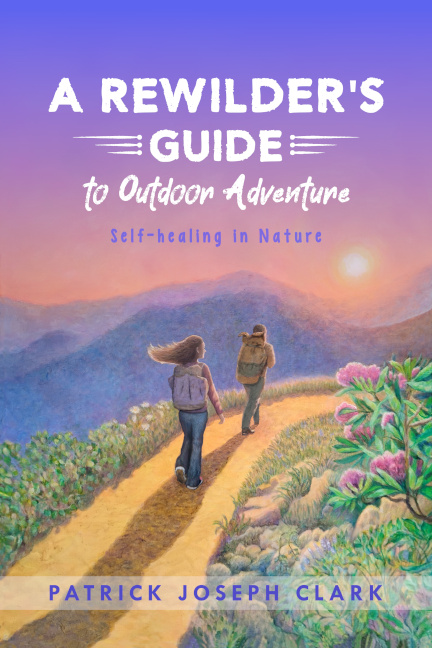
A Rewilder’s Guide to Outdoor Adventure — $24. Rewilding, gear, food, camping basics, and what happens to a person who spends enough nights outside. Ships from Burnsville, North Carolina.
A course built on the book may follow. If it does, the field notes will say so first.
Go Wild. Go Light. Go Natural.