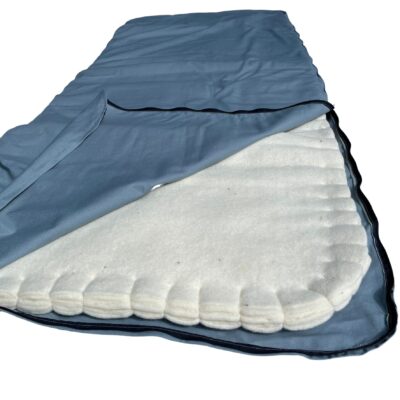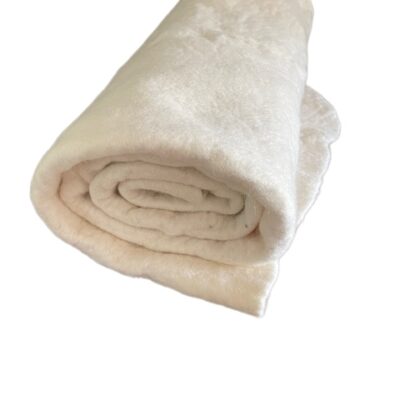
A wool bedroll is the oldest sleep system there is: something that sheds weather on the outside, wool on the inside, rolled up and tied in the morning. The cowboys had it right, and so did the old-timers I learned from. The Lucky Sheep® wool felt bedroll is the updated version, 4 lb of dense US wool felt, 50 by 76 inches and made in USA, that works as a felt blanket, a quilt, an over-quilt, a pad or a liner depending on the night.
Natural fibers are old-timer approved
As a lifelong outdoor guy I went along with the trends like everyone else, believing synthetics offered better performance and less weight. The buzzword “moisture wicking” killed any idea of natural fibers. Slowly my wool sweaters and socks were replaced with pile and polypropylene, and there was a period when you could not find anything natural in an outdoor shop.
But the old-timer who taught me in the Nantahala back in 1983 had climbed before synthetics existed, wore wool pants and a wool jacket in the old pictures, and gave me first pick from a pile of wool sweaters. He was all about ventilation and warned us to stay away from down. (I tell that story properly in the history of the sleeping bag.)
Go back further and the pattern holds. Waxed cotton and linen shells go back to the Vikings and beyond, and under the sleeper went a tanned hide with the fur on, which is close to what a felted wool pad is. The bedroll is that lineage in one piece.
What is a cowboy bedroll?
A cowboy bedroll was a heavy duty canvas sleeping bag before there were sleeping bags. The outside was a canvas tarp, folded lengthwise so the top half could be pulled over the sleeper. Inside went wool blankets or thick wool-batted quilts the hands called sougans, and in the morning the whole thing was rolled tight from the foot and tied.
The logic is the part worth keeping. Canvas took the rain and wind. Wool took the cold, and kept taking it after a wet night, because wool draws moisture vapor into the fiber and gives back a little heat as it does. The bed dried by being unrolled in the sun. If you are searching for a canvas sleeping bag, that is what you are really looking for: the canvas was only ever the shell. The story of how the bag itself came along is in the early origins of sleeping bags.
What the wool bedroll is today
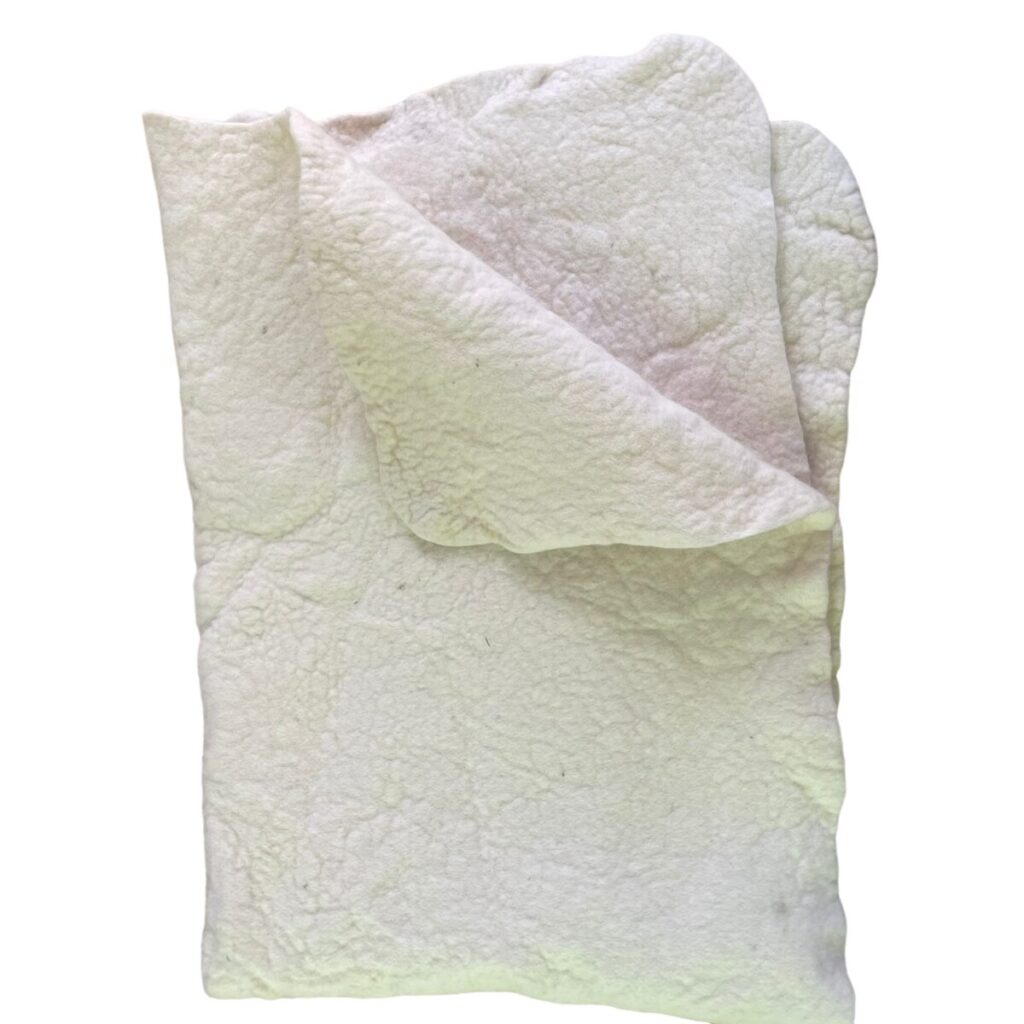
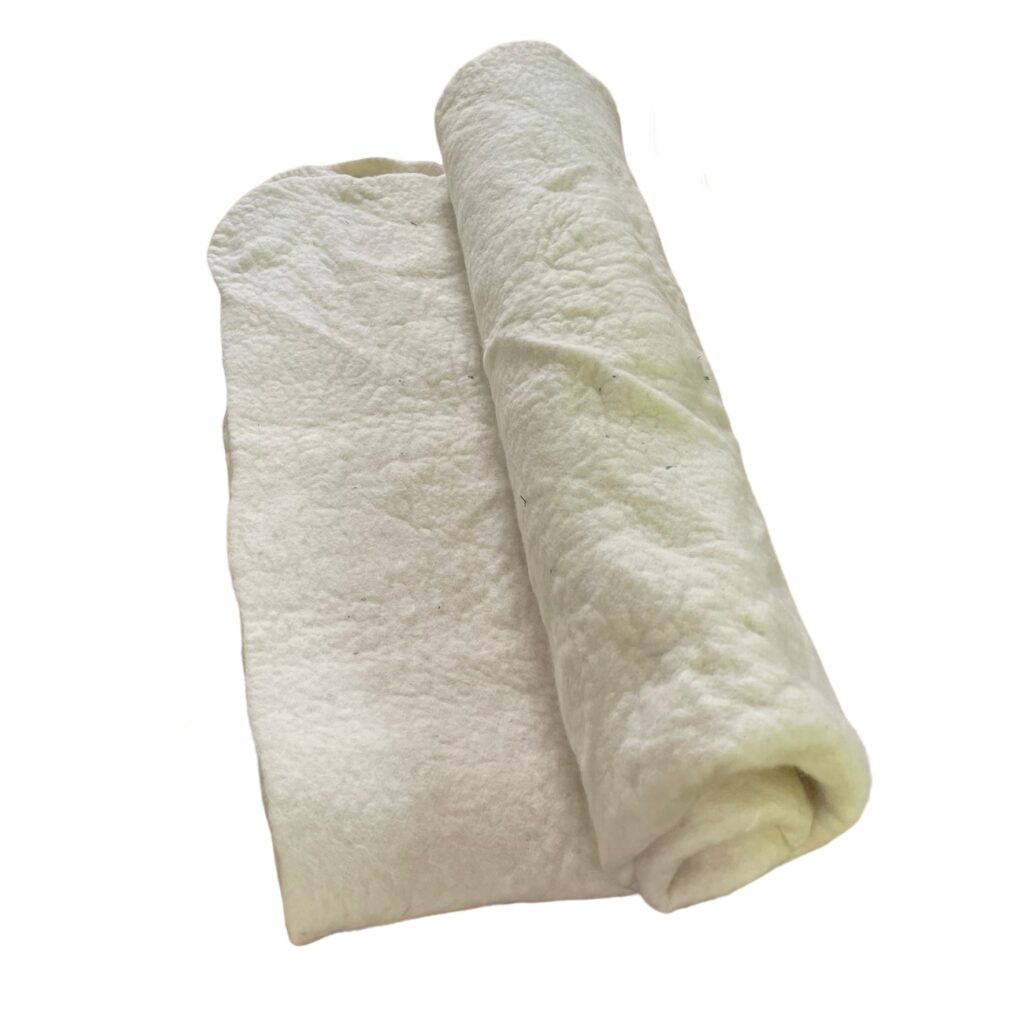
Our wool felt bedroll keeps the wool and drops the bulk. Instead of a stack of loosely woven blankets it is one sheet of dense US wool felt, 50 by 76 inches and 4 lb. Felt has no open weave, so it stops wind better than a blanket of the same weight and it does not shift or bunch. It is made in Burnsville, North Carolina, and like every Lucky Sheep® bag it is one of the few pieces of sleeping gear still made in USA.
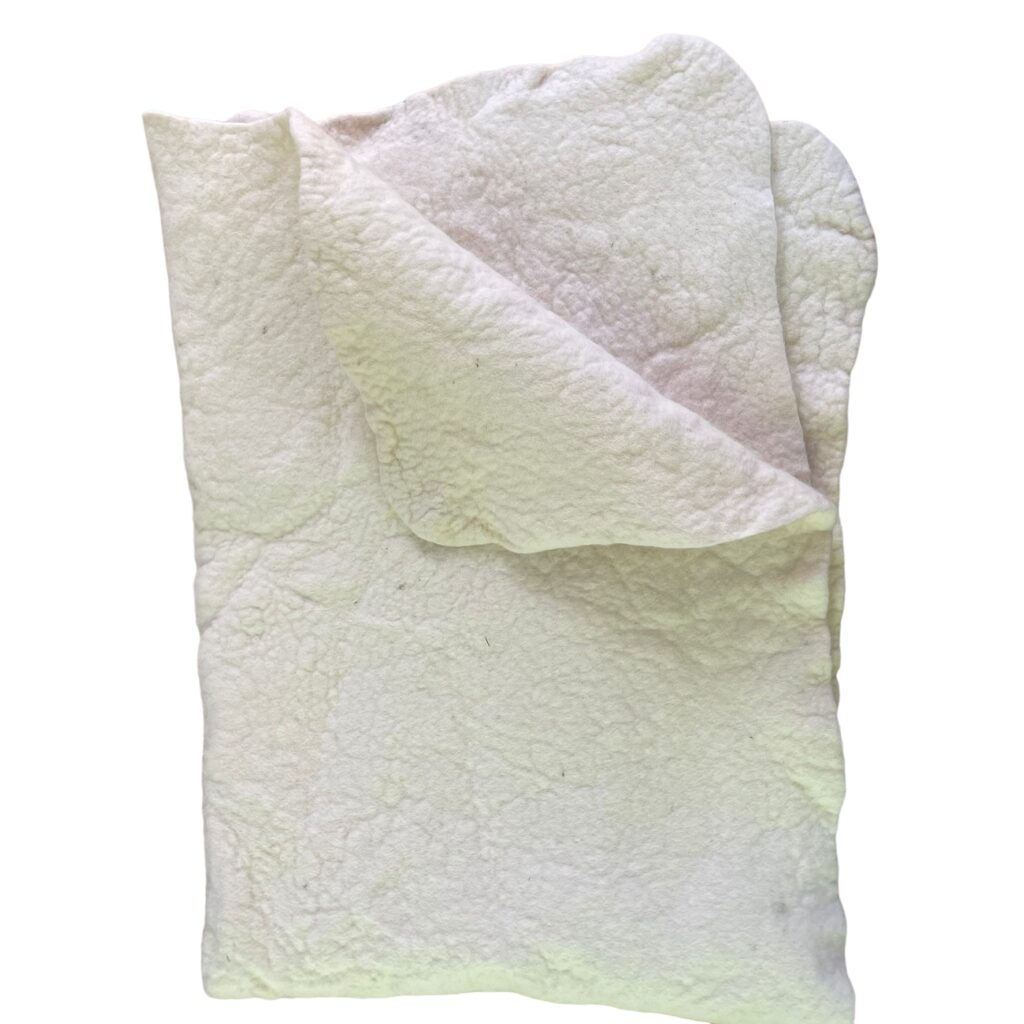
One sheet, five jobs.
- Felt blanket. Spread flat it covers one sleeper with room to tuck: cabin, couch, porch, truck bed.
- Wool blanket sleeping bag. Folded lengthwise and zipped, or simply wrapped, it is the summer bag for nights when a full bag is too much.
- Over-quilt. Laid over the Rewilder or the Aurora Borealis it adds wool above the bag and closes the draft around the shoulders. This is the winter use.
- Pad. Folded in thirds it is a firm felt pad for a cot, a truck bed or a porch floor.
- Liner. Inside a rectangular bag it adds wool from below and keeps the bag clean.
It comes two ways. The plain felt blanket ($275) is the simpler option; felt grips felt, so it stays where you put it. The zippered version ($325) adds an organic cotton shell with a full-length zipper down one side, so it closes into a rectangular bag in seconds and slides more easily inside another bag as a liner. Both are the same 4 lb of felt.
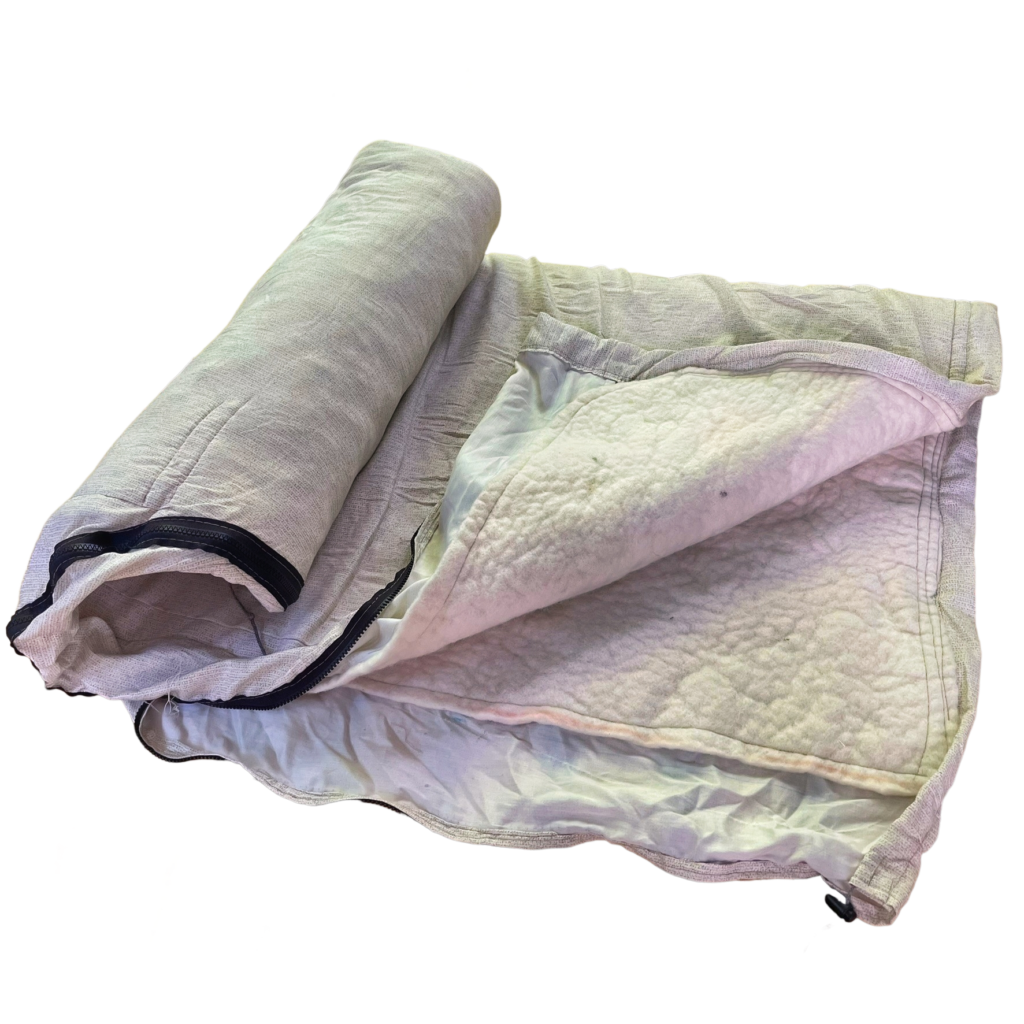
Can you camp with a blanket instead of a sleeping bag?
People did for most of human history, and I do whenever the night allows it. The old debate about blankets and sleeping bags misses what actually matters to sleep: cool air on your face, wool around your body, and moisture that can get out. A felt blanket does all three on a mild night, and it lets you throw a leg out or pull it over your head as the temperature moves.
Is a wool felt blanket warm enough on its own?
We do not publish a temperature rating for the bedroll, because a blanket’s warmth depends on what is under you and how you wrap it. In my experience it is a summer and shoulder-season bed on its own, with a wool base layer for sleeping and something between you and the ground. When the nights turn cold it goes over the bag rather than replacing it.
How do you roll a bedroll?
Felt rolls better than it stuffs, and the cowboy method keeps the creases from landing in the same place every trip.
- Lay it flat and brush off grass and grit; anything left in the felt gets pressed in.
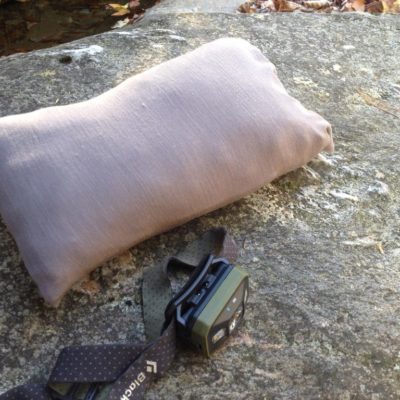
- Fold in half lengthwise. Lay a pillow or spare clothing along the fold if you are packing them inside.
- Roll tightly from the foot toward the head, kneeling on the roll every turn or two.
- Tie with two straps or cord a hand’s width from each end.
- Carry it under a pack lid, across the top of a daypack, or behind a saddle. Wrapped in a canvas tarp it can ride outside in rain.
Bedroll vs sleeping pad: which goes under you?
Both can, but they do different jobs, and a wool bedroll is at its best on top. Under you, at a camp you drive to, goes the wool sleeping pad: ¾ in of felt for a tipi floor, 1.5 in for a cabin or a wool camping mattress on a slatted platform. When backpacking I use a closed-cell foam pad; it is synthetic, but it is the only thing I know of that is really practical for carrying.
The bedroll goes over the bag as an over-quilt, tucked under the shoulders and hips. In a drafty cabin or a tipi on frozen ground I put it over the Aurora Borealis, and the outer felt takes the night’s moisture instead of the bag. In the morning the bedroll is the damp layer, and felt dries flat in the sun faster than a lofted bag does.
If you sleep warm, put it under the bag instead, folded double as a second pad. If you sleep cold, fold it lengthwise over the torso only, which puts most of the 4 lb where it matters.
Under the open sky: where I actually use it
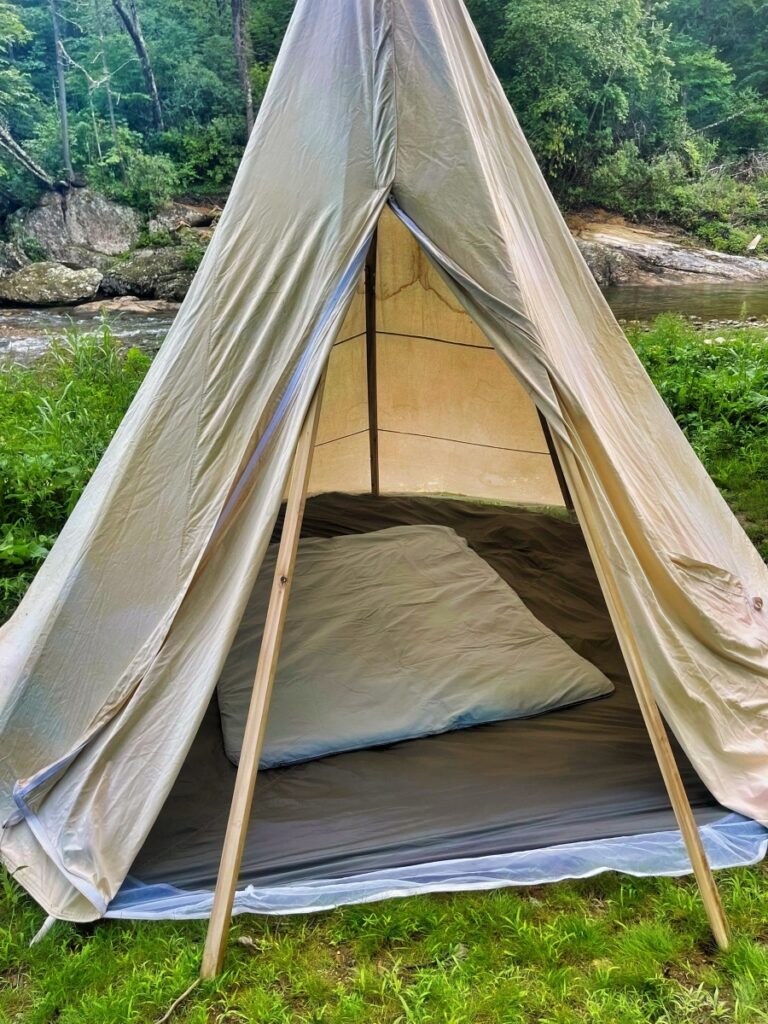
I find sleeping under the open sky is the ultimate. The next best thing is an open-air tarp, which allows air to circulate through the front and back. There is nothing like a super dose of fresh air and negative ions to create sleep like nothing else, and when I am camping in ways other than backpacking I use a canvas tent that breathes through the fabric.
That is where the wool bedroll lives: on a porch, in the tipi, in a truck bed with the tailgate down, or on a slatted platform under the stars. At 4 lb it is not a backpacking item; the Rewilder covers that job at about the same weight with a 20°F field rating. The bedroll is for the nights when you are not carrying your bed far but still want it to work in the cold and the damp.
Part of the Lucky Sheep® Sleep System. Tarp above. Waterproof barrier below. Wool under you and around you. Air moving through everything. The bedroll is the piece that moves between those layers as the night demands.
Care: air it, spot-clean it, never hot-wash it
Felt is what happens when wool meets heat, water and agitation on purpose, so a hot machine wash gives you a smaller, stiffer bedroll. Keep it out of the washer.
- After every trip. Unroll it and hang it in the sun for a few hours. Air does most of the cleaning; wool lets go of odor once it dries.
- Spot-clean. Cold water, a little wool soap, a sponge. Blot, do not scrub, and dry flat.
- Full wash, rarely. A bathtub of cold water and wool soap, a gentle press, no wringing. Roll in a towel, then dry flat. Never a dryer.
- Storage. Loosely rolled, dry and clean, in a cedar chest or a cotton bag. Moths go for dirty wool.
What I would tell you
Treated this way a wool bedroll outlasts the person who bought it, which is roughly what the cowboys expected too, and workmanship is guaranteed for life. Paul handed me a wool sweater in 1983 and I have never found a reason to give the idea back. Roll it, tie it, sleep under the sky.
Real fibers for real conditions.
Reviewed September 2026 by the Lucky Sheep® team.
A firm, breathable, foam-free place to sleep
Our wool sleeping pad is dense US wool felt in a washable organic cotton cover — a non-toxic sleeping pad for the tent or the floor at home. Pair it with the wool felt bedroll and a camp pillow.
-
Organic Wool Sleeping Pad
Firm, breathable, machine-washable cover
¼ – 1.5 in wool felt24 – 60 in wide
Price range: $150.00 through $1,100.00 Select options This product has multiple variants. The options may be chosen on the product page -
Wool Felt Bedroll Blanket
Blanket, quilt, pad or liner
4 lb / 1.8 kg50 × 76 inUS wool felt
Price range: $275.00 through $325.00 Select options This product has multiple variants. The options may be chosen on the product page