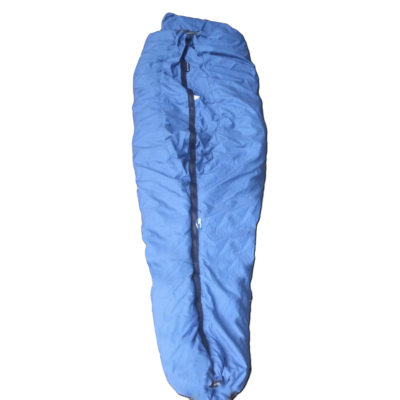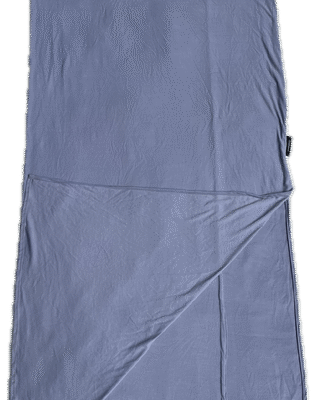
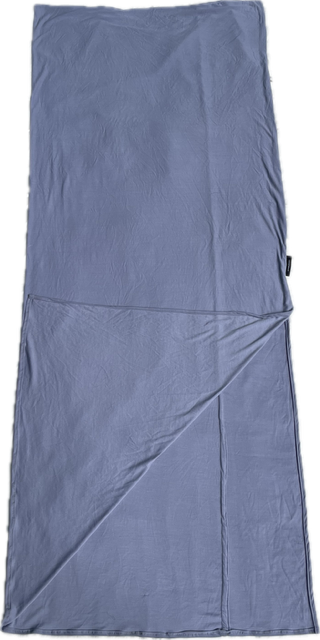
A sleeping bag liner is a thin sleep sack you slip inside your bag — or sleep in on its own on a warm night. Made of merino wool it adds about 10°F to any bag, keeps sweat and skin oil out of the insulation, and is the one part of a sleep system that goes in the washing machine. Here is how I choose one, what silk, fleece and wool actually do at two in the morning, and how a merino liner fits into my own sleep system.
The dry set: how a merino liner fits my sleep system
Because a merino base layer weighs only a few ounces, I bring two sets on a wilderness trek. I wear one through the weather — I let myself get wet from the waist down and let the wool deal with it — and keep a dry set tucked away in the pack for sleeping: merino top and bottom, a pair of wool socks reserved for the bag, a hat and a sweater. They ride in a waterproof silnylon stuff sack. This is one place where I use synthetic, and I do not apologize for it.
At camp the wet set comes off, the dry set goes on, and I crawl into my wool bag and pull a soft merino headwrap around my head and face. The wool seems to be just the right temperature, and it gives a sense of containment even when sleeping out in the open. A merino sleeping bag liner is that dry sleep set sewn into a sack — the same jersey, the same job, with nothing to hunt for in the dark.
What is the purpose of a sleeping bag liner?
Three jobs, in order of how much they matter to most people. Warmth: a liner is a thin insulating layer that closes the drafts against the skin, and a wool sleeping bag liner adds about 10°F. Cleanliness: the sweat, skin oil and sunscreen you shed overnight go into the liner and then into the wash, and your bag does not. Longevity: a sleeping bag and liner used together means a bag washed once a season instead of after every trip, and it keeps its loft and its shell for many more years.
The fourth use is the one that sells the most liners. On its own a liner is a camping sleep sack for summer, a sheet for a hostel or hut bunk, and the clean layer between you and a mattress of unknown history. Sleep sacks for adults, a sleep sack liner, a travel sheet — they are all the same object under different names.
How much warmth does a sleeping bag liner add?
It depends entirely on the material. Our merino liner adds about 10°F — a field figure from years of use, not a lab rating, so treat it the way I treat every number in this business, as a guide. In practice a sleeping bag liner for warmth turns a 30°F bag into a 20°F bag on a cold-snap night without buying a second bag, and it keeps that margin when the air turns damp. If you want to understand where a bag’s own number comes from first, read sleeping bag temperature ratings explained.
Why wool adds more than its thickness suggests comes down to what the fiber does with moisture. Water vapor absorbed by wool attaches to sites inside the fiber and gives up energy as heat — the heat of adsorption — so as the bag’s humidity rises through the night, the layer against your skin warms rather than chills. A so-called thermal sleeping bag liner made of brushed polyester does the opposite: polyester takes up almost nothing, sweat sits on the fiber surface, and the evaporation against your skin pulls heat out of you. That is the clammy feeling in a fleece sleeping bag liner before dawn.
There is a trick that only works in wool. Pull the liner and bag over your head and breathe. The moisture in your breath is adsorbed by the wool, migrates outward and is released, and you warm from the inside. Try it in a fleece liner and you will simply get humid and colder.
What is the best material for a sleeping bag liner?
Silk, synthetic or merino sleeping bag liner? I have used all three, and in the book I allow that a base layer can be silk as well as merino. The table is how they behave; the moisture figures are published textile data at 65 percent relative humidity.
| Silk liner | Synthetic (fleece or polyester) liner | Merino wool liner | |
|---|---|---|---|
| What it is | Woven silk sheet | Brushed polyester fleece or polyester taffeta | 100 percent merino jersey knit |
| Warmth added | A little; mostly a draft barrier | Warm when dry, clammy once damp | About 10°F, and holds it when damp |
| Moisture taken into the fiber | 9–11 percent | 0.4 percent (polyester) | 13–16 percent |
| Feel | Cool, slippery | Fleecy; clings and builds static | Soft, stretchy, warm to the touch, cool on a humid night |
| Odor after a week | Moderate | Strong | Low; airs out in the sun |
| Washing | Hand-wash or delicate | Machine wash | Machine wash cool, line dry |
| Best for | Hot-weather travel, hygiene only | Budget warmth in dry cold | Cold and damp; extending a bag’s range; sleeping alone in it |
The honest reading of that table is that silk wins on weight, fleece wins on price, and merino wins on everything that happens at two in the morning in a wet tarp camp. At 30 oz our merino liner is not a light item. Weight isn’t the only thing that matters, but it matters, and if grams per degree in dry cold is your only question, buy the warmer bag instead. If the question is what works in the damp, in a hut, and for a decade, keep reading.
Can you use a sleeping bag liner instead of a sleeping bag?
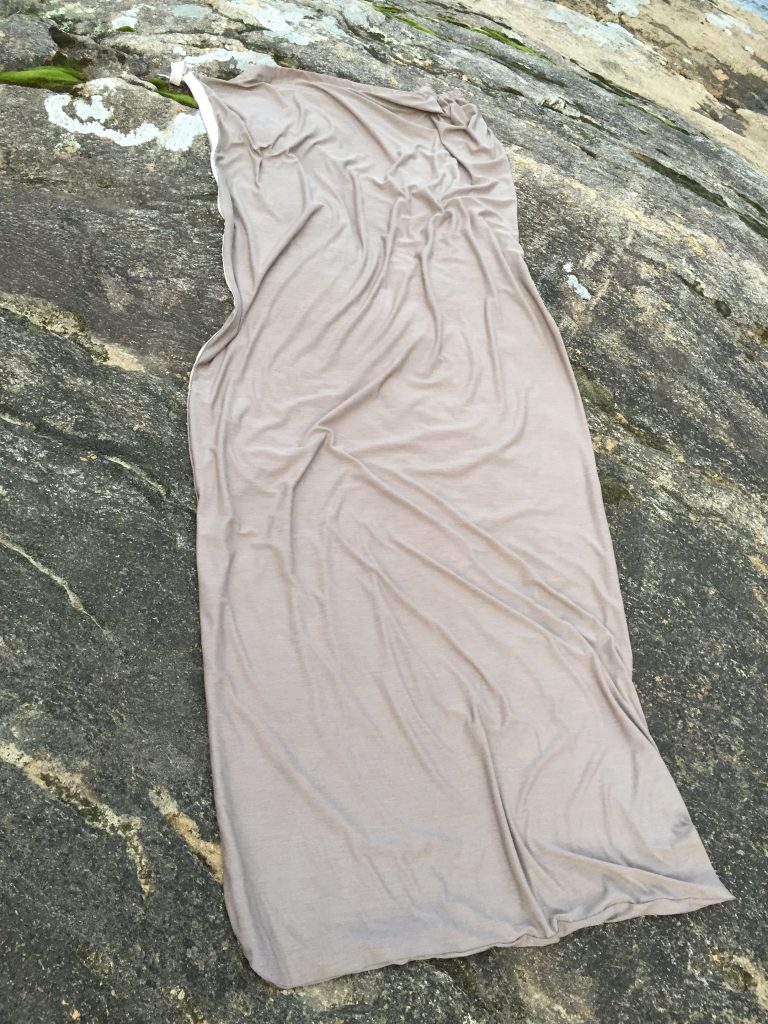
On summer nights, yes — a merino liner is the whole bed. Merino jersey feels warm to the touch but can feel cool on a humid, hot night, it breathes, and on the cool side of midnight it covers without trapping heat. My own multi-day checklist runs from 20 to 80°F, and at the top of that range the liner is what I sleep in.
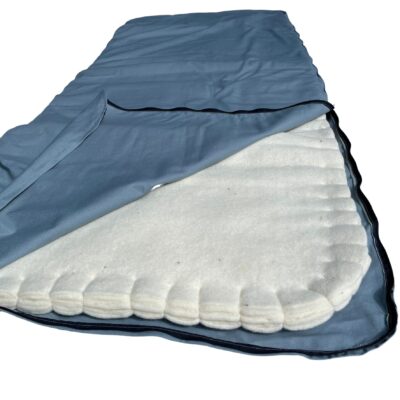
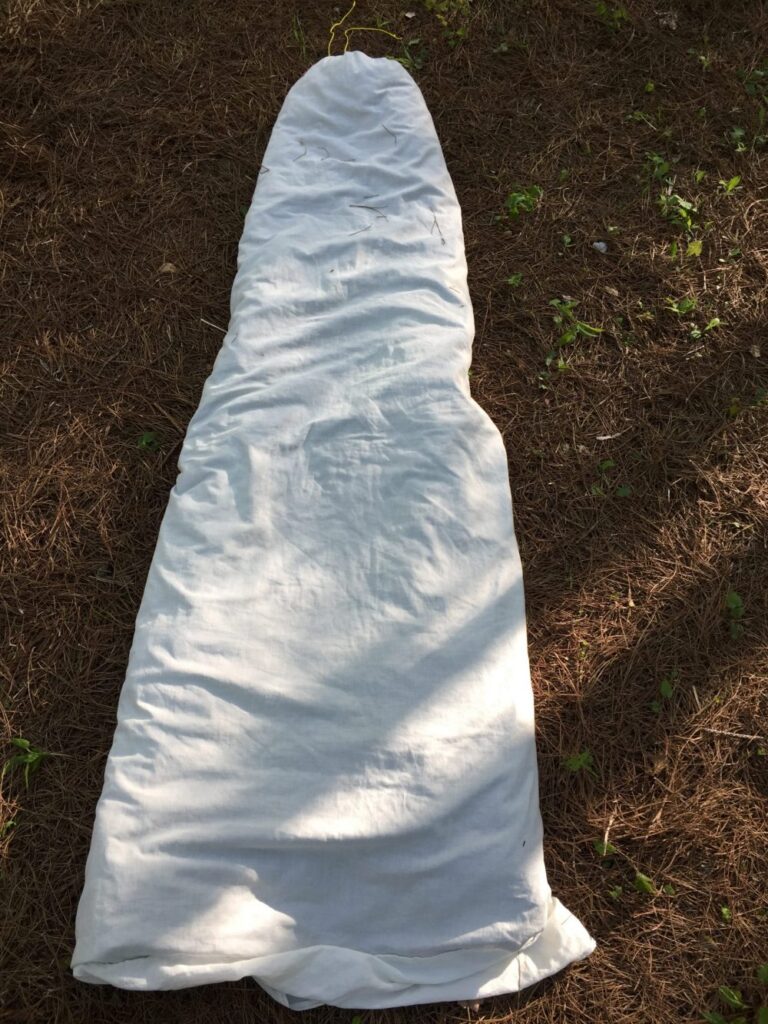
Outside under a tarp, dew and ground contact are the issue rather than cold, and for that we make the dust cover sleep sack: the same merino inside a beeswaxed organic cotton outer, cut to the Rewilder’s shape with a drawcord at the head. It is a summer bag and a travel sleep sack in one piece.
In a hostel, a hut or a hot tent, a liner is the sheet the house expects you to bring. Bunk rooms are warm and airless, and in my experience a wool liner sleeps cooler than a fleece one and smells a great deal better on day five. When the stove dies, pull the bag up over it.
Best sleeping bag liner for cold weather, backpacking or travel
Cold weather
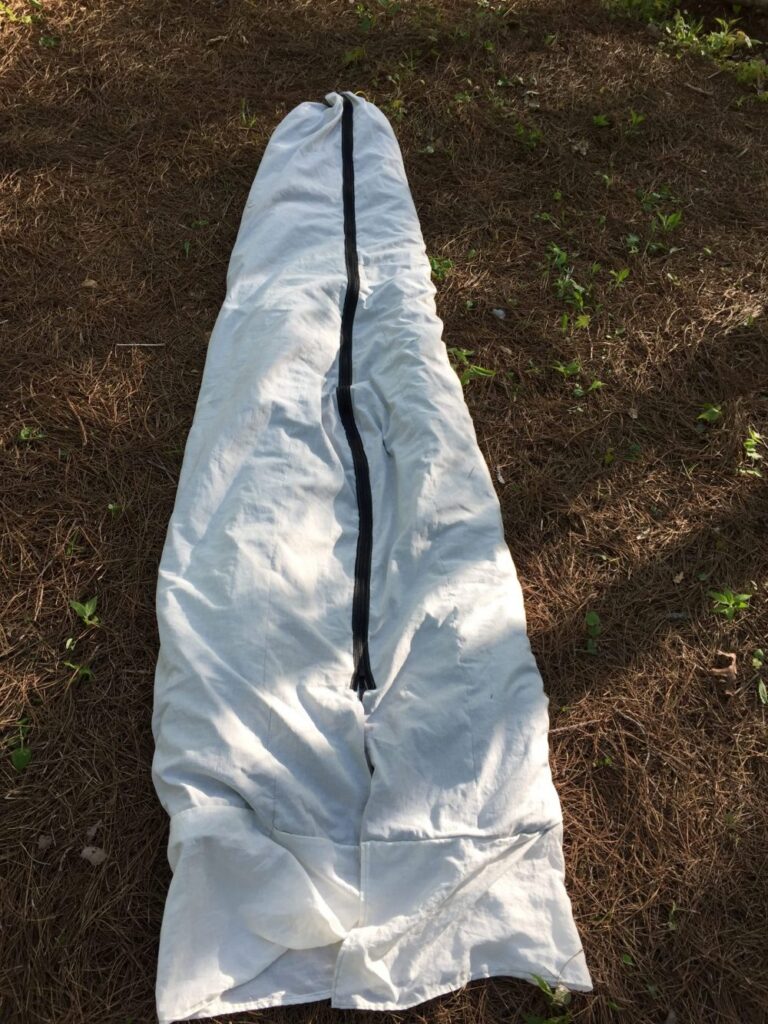
A cold weather sleeping bag liner earns its keep most inside a down bag. Down is what suffers when it gets damp, and in my experience a wool layer against the skin takes the vapor into its fibers before it reaches the feathers — the moisture stays where it does no harm and gives back heat as it goes. Slide the liner in before you get in, pull it to your chin, and leave the bag’s collar over it.
Backpacking
The best sleeping bag liner for backpacking is the one that replaces something. Mine replaces the dry sleep set and the spare socks, so the 30 oz is not all added weight, and because it is the only thing that gets washed, the bag itself stays out of the machine for years. A sleep sack for backpacking also has to survive a stuff sack, and jersey does. If you already carry a Rewilder with its merino lining sewn in, you do not need a second liner for warmth — carry the sack for hygiene on long trips and for the nights you sleep in it alone.
Travel
Machine washable is the whole point. A lightweight sleeping bag liner in silk is fine for a hostel in the tropics; for shoulder-season huts and pilgrim refuges I want the wool, because the blanket they hand you is not going to be.
Sizing, washing and the liner built into every Lucky Sheep® bag
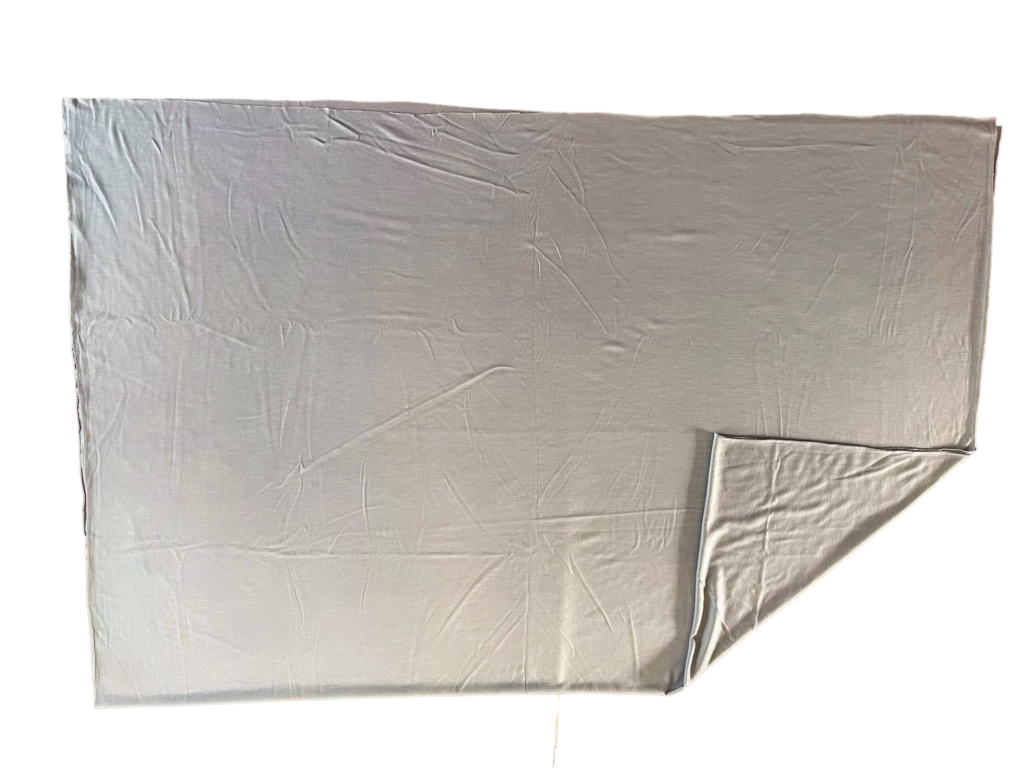
The merino wool sleeping bag liner is 100 percent merino jersey in two girths, 28 and 33 inches, made in the USA, and it costs $200 to $235. Jersey stretches, so the fit is forgiving, but the wrong choice still shows: too narrow and it pulls under your hips when you roll; too wide and it bunches at the foot. Choose 28 inches for a slim to average build and any tapered bag, 33 for broad shoulders, restless sleepers and rectangular bags — and if you will mostly sleep in it alone, go wider.
It is machine washable, which is most of the reason to own one: cool water on a wool cycle, no bleach or softener, and line dry — a hot dryer felts merino jersey. On the trail, turn it inside out and hang it in the sun at lunch; wool airs out, and a week’s trip usually needs no wash at all.
Every Rewilder and Aurora Borealis is built with a wool lining sewn in against the US wool batting — merino jersey by default, or WeatherWool® worsted, a woven American cloth that is smoother, denser and tougher against abrasion. Either way it is wool against wool from skin to shell, so the whole bag handles moisture the same way. The sleep sack is the same jersey as a separate piece, for any bag you already own.
What I would tell you
Keep one set dry, always. Put wool against your skin, whatever bag is over it. And when the tarp is dripping and the air is at 100 percent, do not build a bubble — pull the wool over your head, breathe, and let the fiber do what it knows how to do. Invite the weather in, and use natural materials that know what to do with it.
Reviewed September 2026 by the Lucky Sheep® team.
Sleep warm out there — in wool
The Rewilder is a 20°F backpacking sleeping bag (4 lb, packs to 11 × 11 in) that keeps insulating when conditions turn damp. Add the merino liner for another ~10°F and a wool pad underneath for a complete natural-fiber sleep system.
-
Lightweight Wool Sleeping Bag–The Rewilder
The lightest all-natural backpacking bag
4 lb / 1.8 kg20°F / −6°C (10°F option)Packs to 11 × 11 in
Price range: $557.00 through $888.00 Select options This product has multiple variants. The options may be chosen on the product page -
Merino Wool Sleeping Bag Liner & Sleep Sack
Warm, washable wool liner for any bag
1.9 lb / 0.9 kgAdds ~10°F30 oz merino jersey
Price range: $200.00 through $235.00 Select options This product has multiple variants. The options may be chosen on the product page -
Organic Wool Sleeping Pad
Firm, breathable, machine-washable cover
¼ – 1.5 in wool felt24 – 60 in wide
Price range: $150.00 through $1,100.00 Select options This product has multiple variants. The options may be chosen on the product page