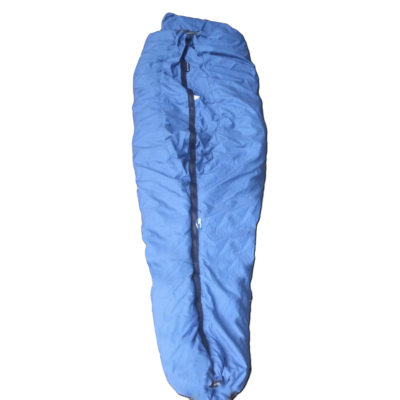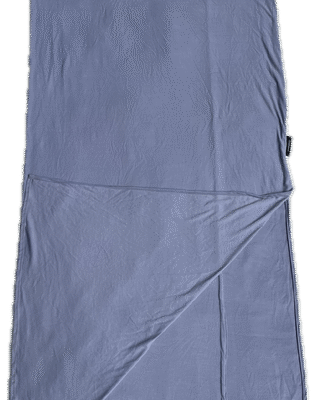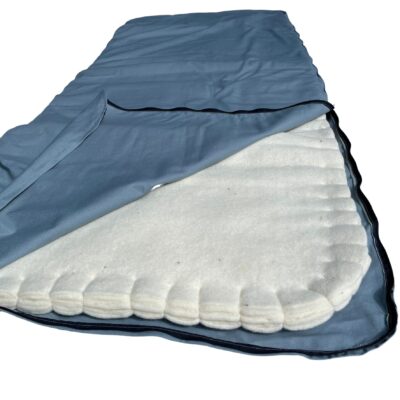

Can you breathe inside a sleeping bag? With down or synthetic fill the honest answer is no—you will wake up humid and colder. With a wool sleeping bag the answer changes, and that change is one of the biggest wool sleeping bag benefits in cold weather: you can pull the bag over your head, breathe inside it, and use your own breath as heat.
The Sleeping Bag Rule Wool Lets You Break
There is an old rule in backpacking: never breathe inside your sleeping bag.
With a conventional down or synthetic sleeping bag, there is good reason for that advice. Every breath releases warm water vapor. Trapping that moisture inside your sleep system can increase humidity and condensation. Down is particularly vulnerable because dampness can reduce its loft and insulating ability, while synthetic insulation—although considerably more tolerant of moisture—still depends largely on lofted fibers trapping warm air.
But a wool sleeping bag handles moisture differently.
Wool doesn’t merely tolerate water vapor. It actively interacts with it, absorbing and releasing moisture as humidity changes. That unusual characteristic opens up another way of thinking about sleeping warm in cold weather—including something conventional sleeping-bag advice tells you not to do:
Pull the sleeping bag over your head and breathe inside it.
Can You Breathe Inside a Wool Sleeping Bag?
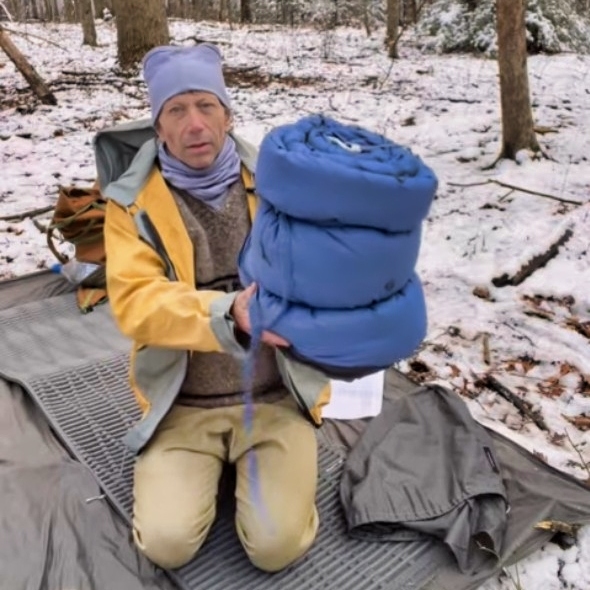
This is one of the most unusual characteristics of the Lucky Sheep® Rewilder, and one reason we make the sleeping bag long enough to extend over the sleeper’s head—about 12 to 14 inches beyond your height, which is why the Rewilder sizing guide asks you to choose length by height rather than sizing it like a mummy bag.
In cold weather, leaving your face exposed means continually inhaling cold outside air. Your respiratory system must warm and humidify that air with every breath. Meanwhile, the opening around your head and shoulders can be a significant place for warm air to escape.
Pull a breathable wool sleeping bag over your head, however, and you create a different microclimate.
Instead of continually breathing the coldest outside air, you breathe from the warmer environment inside the bag. Your exhaled breath contributes both warmth and moisture to that environment.
Normally, the moisture would be the problem.
With wool, moisture is part of the story.
How a Wool Sleeping Bag Handles Moisture Differently
Wool is hygroscopic, meaning it can take up substantial quantities of water vapor from humid air. Unlike a material that simply becomes wet on its surface, wool can hold moisture within the structure of the fiber while still feeling relatively dry.
The International Wool Textile Organisation reports that wool can take up as much as approximately 35% of its own weight in moisture vapor and subsequently release that moisture back into the surrounding air. This ability allows wool to act as a dynamic buffer for both temperature and humidity.
This same principle is discussed in A Rewilder’s Guide to Outdoor Adventure. Wool can absorb and desorb water vapor as conditions change. When humidity rises, water molecules interact with chemical sites within the wool fiber, releasing some energy as heat.
This phenomenon is commonly described as wool’s heat of sorption or heat of adsorption. And it becomes particularly interesting inside a sleeping bag.
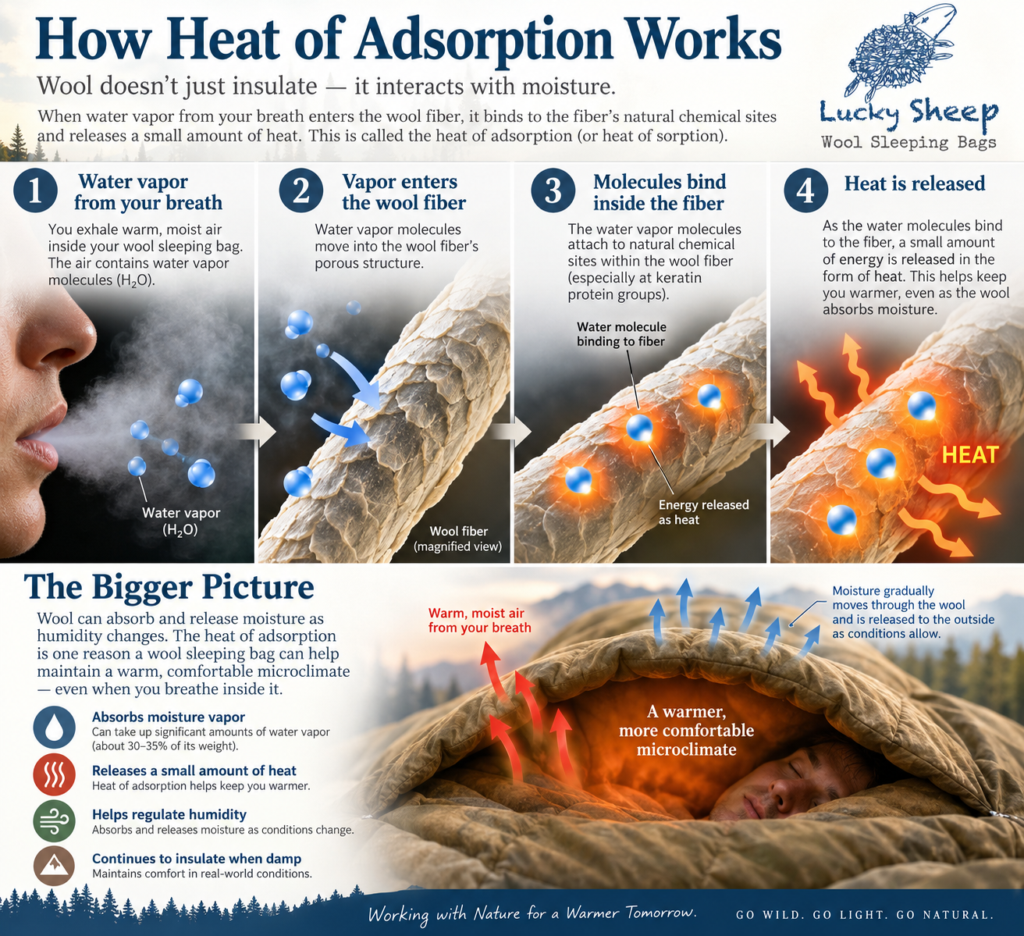
How Wool’s Heat of Adsorption Works Inside the Bag
When you breathe inside the Rewilder, you are continually adding warm water vapor to the microclimate surrounding your body.
Rather than simply allowing all of that vapor to condense into liquid moisture, wool can take up some of the water vapor into its fibers. As that moisture interacts with the wool, the sorption process releases a small amount of heat.
A Rewilder’s Guide to Outdoor Adventure describes this as one of wool’s unusual advantages in a sleep system: moisture from the camper’s breath can be taken up by the wool fibers and subsequently migrate toward the outside as conditions allow. The full explanation—how much water wool holds, why it feels warm when damp, and where the limits are—is in How Wool Stays Warm When Wet.
This doesn’t mean that wool magically makes moisture disappear, or that it can absorb an unlimited amount of water.
It means something more useful: wool buffers moisture rather than merely treating it as an enemy. That is a very different approach to staying warm.
Wool vs. Down and Synthetic Sleeping Bags
The outdoor industry typically evaluates sleeping-bag insulation by properties such as loft, temperature rating, weight and compressibility.
Those are important measurements. But they don’t tell the entire story of what happens during a real night outdoors.
Down is extraordinarily effective at trapping air for its weight, but its insulating performance suffers when the down becomes wet. Synthetic insulation handles damp conditions better and continues to provide useful insulation when wet.
Wool works differently from either one.
Wool fibers trap insulating air, but wool is also an active moisture-management material. As humidity around your body rises and falls, wool can take up and release water vapor and, in my experience, keep the microclimate around a sleeper steadier than either down or synthetic fill.
That matters because a sleeping human is not a dry laboratory heat source. We breathe. We perspire. We produce water vapor throughout the night. And the outdoor environment itself is constantly changing.
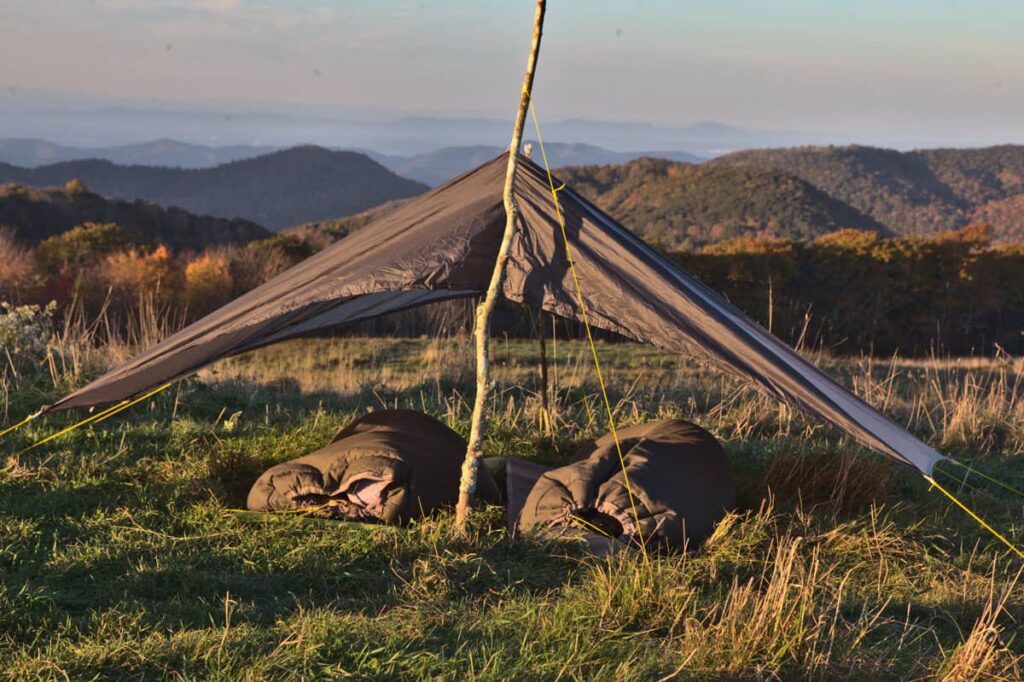
This is why I believe evaluating a wool sleeping bag solely by its warmth-to-weight ratio misses one of its most important characteristics. I will say the weight plainly: a Standard Rewilder is about 4 lb against 1 to 2 lb for a 20°F down quilt. What the extra pounds buy is a bag that still works on the damp nights when warmth-to-weight stops meaning anything—the wool vs down comparison goes through it line by line.
A Wool Sleeping Bag Creates a Different Microclimate
Think of the Rewilder less as a barrier separating you from nature and more as a small climate surrounding your body.
Your body provides the primary heat. The insulation slows the loss of that heat. Your breath adds warmth and humidity. The wool buffers some of that moisture, releasing heat during sorption and allowing moisture vapor to move through the sleep system.
And because your head can remain within this breathable environment, you can inhale air that has already been partially warmed rather than exposing your face continuously to the coldest outside air.
This doesn’t eliminate respiratory heat loss—the body still warms and conditions the air you breathe—but it can reduce your exposure to very cold inspired air while also reducing heat loss around the head and neck.
It is a simple idea, but it changes the way we think about cold-weather sleeping. It is also the reason I sleep with the shelter open: the bag manages the climate around my body, so the tarp only has to keep the rain off. That whole approach is in How to Sleep Outside.
Why Conventional Sleeping Bag Advice Says “Don’t Do It”
The conventional rule isn’t foolish. It was developed around different materials.
Mainstream sleeping-bag advice places considerable emphasis on keeping insulation dry, and for good reason. Moisture can compromise sleeping-bag performance, particularly with down, which is why outdoor guidance emphasizes drying bags thoroughly and protecting their loft.
If your insulation does not have wool’s capacity to buffer water vapor within the fiber, deliberately adding respiratory moisture to the system makes little sense.
So the conventional solution is: keep your mouth and nose outside the sleeping bag.
With the Rewilder, we can reconsider that rule because the material itself behaves differently.
Real Fibers for Real Conditions
This is part of a larger philosophy behind Lucky Sheep® outdoor gear.
Outdoor equipment is often evaluated under controlled conditions: dry insulation, standardized temperatures and carefully measured warmth-to-weight ratios. But the human body isn’t a controlled condition. Neither is nature.
Real nights involve humidity, perspiration, condensation, temperature swings, fog, rain and breath.
Wool evolved as a fiber that functions in a living, changing environment. Its ability to manage both heat and moisture is exactly what makes it so interesting as sleeping-bag insulation. The Rewilder takes advantage of those characteristics instead of trying to engineer them away.
Your body provides the heat. Your breath contributes warmth and moisture. The wool helps manage the moisture and conserve the warmth.
That is a very different way to think about a wool sleeping bag. And sometimes, getting more comfortable outdoors begins with questioning a rule that was written for a different kind of gear.
Go Wild. Go Light. Go Natural.
Reviewed September 2026 by the Lucky Sheep® team. Temperature ratings are field ratings, not ISO 23537-1 lab ratings.
Sleep warm out there — in wool
The Rewilder is a 20°F backpacking sleeping bag (4 lb, packs to 11 × 11 in) that keeps insulating when conditions turn damp. Add the merino liner for another ~10°F and a wool pad underneath for a complete natural-fiber sleep system.
-
Lightweight Wool Sleeping Bag–The Rewilder
The lightest all-natural backpacking bag
4 lb / 1.8 kg20°F / −6°C (10°F option)Packs to 11 × 11 in
Price range: $557.00 through $888.00 Select options This product has multiple variants. The options may be chosen on the product page -
Merino Wool Sleeping Bag Liner & Sleep Sack
Warm, washable wool liner for any bag
1.9 lb / 0.9 kgAdds ~10°F30 oz merino jersey
Price range: $200.00 through $235.00 Select options This product has multiple variants. The options may be chosen on the product page -
Organic Wool Sleeping Pad
Firm, breathable, machine-washable cover
¼ – 1.5 in wool felt24 – 60 in wide
Price range: $150.00 through $1,100.00 Select options This product has multiple variants. The options may be chosen on the product page