Four days in Linville Gorge in late November was the first time I carried my own gear into a group using the latest synthetic equipment: a wool sleeping bag I had sewn myself, waxed cotton shells, a two-pound open tarp. It rained. This is the field note, scored the way I scored it at the time.
Location
Linville Gorge Wilderness, Pisgah National Forest, Western North Carolina, the deepest gorge in the eastern United States. With a backpacking Meetup group: a night climb up the east rim of Shortoff Mountain, the Mountains-to-Sea Trail through Chimney Gap and up The Chimneys (a thousand feet in a mile), Table Rock, a pack-free day down to the Linville River, and a last camp by a creek near Wilson Creek.
Conditions
Day one: twilight start, a moist, unseasonably warm wind. Day two: about 50°F and rain from before breakfast until dusk, wind on the rim; that night the wind was extreme and the temperature dropped. Day three: about 40°F and blue sky. Day four: sunny, after a night at a damp creek camp, the coldest kind of camp in winter.
Equipment
We weighed packs at the trailhead. Everyone was close to thirty pounds with food and water. Mine was “almost exactly thirty pounds,” which surprised me, because my sleeping bag weighs four pounds and the average down bag weighs one to two.
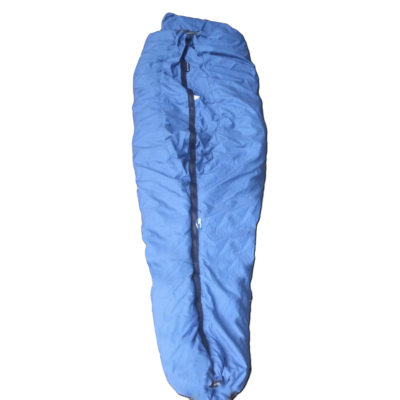
- Sleep. The Rewilder wool sleeping bag, 4 lb, a wool scarf for my head, and a closed-cell foam pad.
- Shelter. A silnylon tarp of about two pounds, open at both ends, with a net tent and a silnylon ground sheet. Silnylon and foam are modern materials I use on purpose.
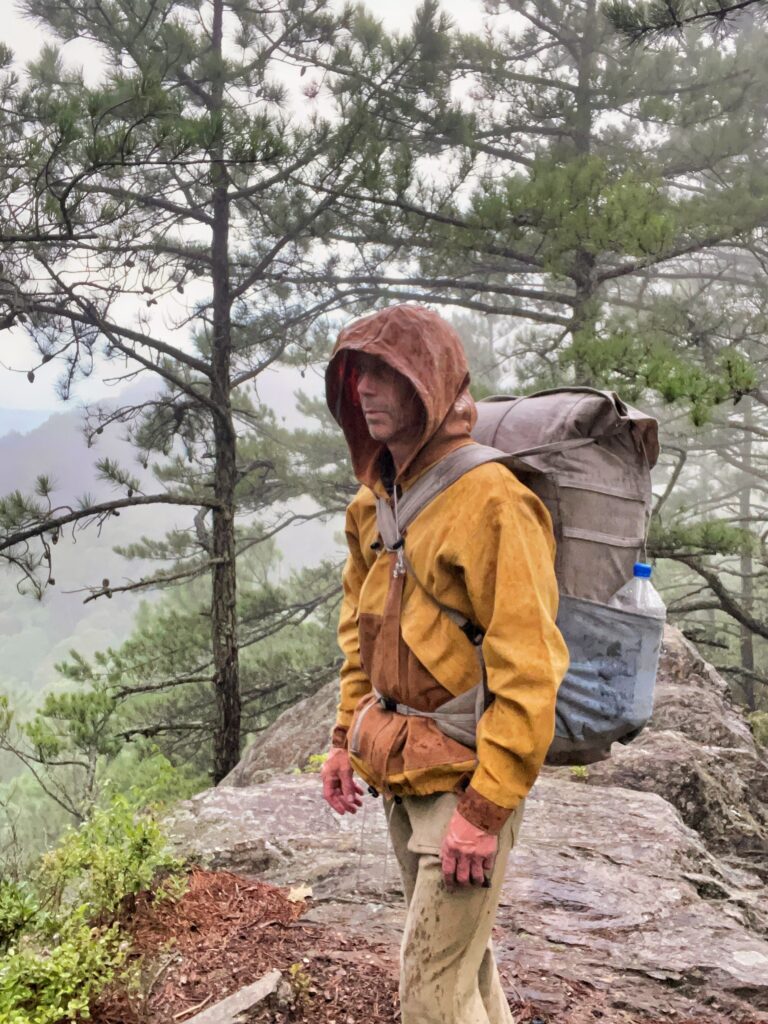
- Worn. Merino base layer, wool socks, leather minimalist boots, waxed cotton pants and parka, wool gloves, merino headwrap, wool felt hat.
- Kept dry in a silnylon stuff sack: the bag, a two-pound wool sweater, a second merino set, two pairs of socks.
What happened
The first night we hiked in by headlamp along the rim. I strung the tarp between two trees, ate pemmican by the fire while everyone else boiled water for noodles, and slept.
Day two was the test I had come for. Breakfast in the rain, then the decision every wet morning asks: what do I wear and soak, and what do I protect for later. Water was in the boots within a mile. By the top of The Chimneys my fingers were too numb to unwrap food easily. I was not thinking about whether my gear worked. I was thinking about camp.

We dropped into the gorge out of the wind and, without a word, each disappeared into our shelters. I pitched the tarp, stripped off the wet layers, put on the dry merino and sweater, got into the bag and did what my notes from that night say: “shiver my way back to life.” Then I pulled the bag over my head and breathed into it.
Two hours later the rain quit and we got a fire going on drenched wood, thanks to the leader’s waxed egg-carton fire starter, and spent the evening holding clothes near the flames. That night the wind pushed the tarp around hard and I lay there wishing I had pitched it lower. It held. I woke to blue sky.
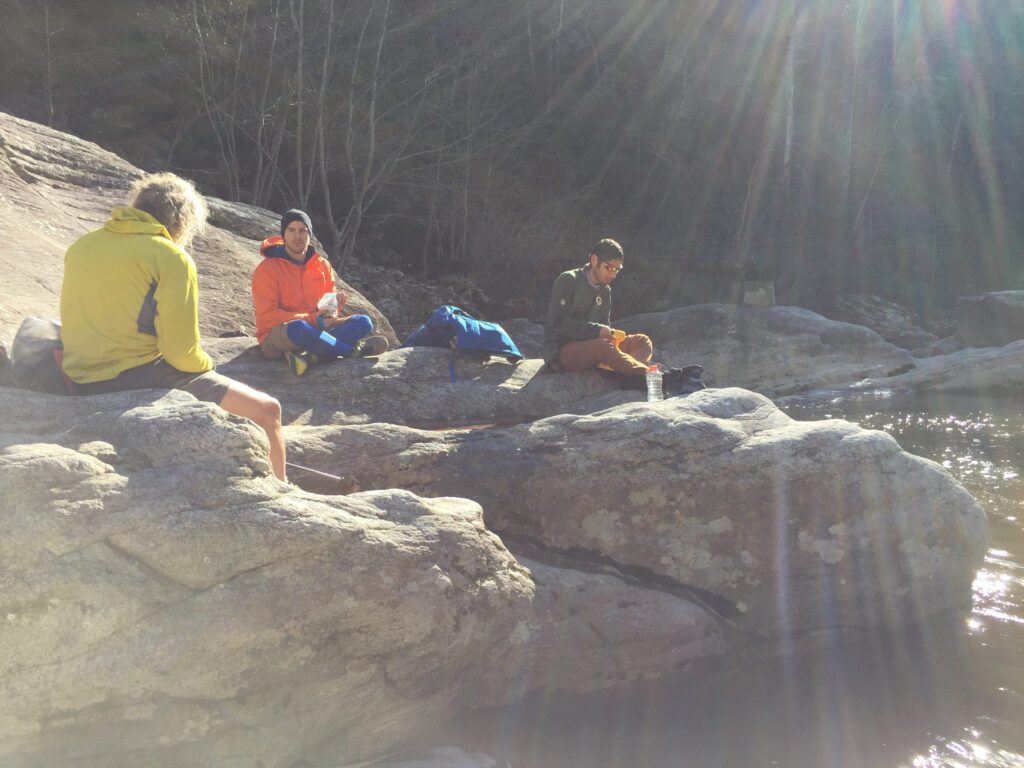
Day three we walked down to the river with no packs; I took my shoes and shirt off and hiked in the sun. Then over Table Rock to a creek camp reached in the dark. The fourth morning I slept so well the others had nearly finished packing before I woke.
What worked
Breathing inside the bag. Pull a wool bag over your head and your breath becomes a heat source: wool takes the vapor into the fiber and gives back a little warmth as it does. Try it in a synthetic or down bag and you get humid and colder. On night two I slept “using my breath as heat” and woke up dry.
Drying from the inside. My damp base layer dried on my body overnight, inside the bag, and the bag stayed warm doing it. That is the argument for four pounds of wool over one pound of down in this weather, and why damp weather feels so much colder in the wrong fibers.
The open tarp. It did not fail in the wind, and at the damp creek camp it was the better shelter: air moving through, wool around me, warm and dry. The others zipped their tents shut to keep the damp off their down. More in canvas tarp vs tent.
What didn’t
I got just as wet as everyone else. Each of us ended day two with a wet heap of clothes in the shelter and one dry set saved in a bag. The honest note reads: “We were all just as wet as the other.”
The waxed cotton pants were the weakest piece; they shed the first hour and then carried the water. I have since switched to wool pants for wet cold. I pitched the tarp too high for the wind. I had no fire kit of my own, and none of the saw, ax or emergency extras the others had. Alone, I would have needed them.
What we learned
My scorecard from the last night, unchanged:
- Pack weight: 4 of 5. A bit heavier, not unreasonably. The trade is spelled out in how much a wool sleeping bag weighs.
- Function in rain, cold and wind: 4 of 5. We all got drenched; mine dried out in the field. Others said they never felt warm the whole trip. Fix: wool pants.
- Not too much, not too little: 5 of 5. A little food left over, and I wore every piece of clothing at least once.
- Comfort: 4 of 5. Dried out when needed, slept very well. Fix: my own hatchet, matches and beeswax fire starters.
- Having everything you need: 3 of 5. No saw, no ax, thin on emergency items, and I need to get better at fire in the rain.
The lesson under the numbers: nobody stayed dry. The contest was what happened between crawling into the shelter and crawling out, and mine dried me while I slept. Weight is worth scrutinizing, but it is not the only thing that matters.
Reviewed September 2026 by the Lucky Sheep® team.
Sleep warm out there — in wool
The Rewilder is a 20°F backpacking sleeping bag (4 lb, packs to 11 × 11 in) that keeps insulating when conditions turn damp. Add the merino liner for another ~10°F and a wool pad underneath for a complete natural-fiber sleep system.
-
Lightweight Wool Sleeping Bag–The Rewilder
The lightest all-natural backpacking bag
4 lb / 1.8 kg20°F / −6°C (10°F option)Packs to 11 × 11 in
Price range: $557.00 through $888.00 Select options This product has multiple variants. The options may be chosen on the product page -
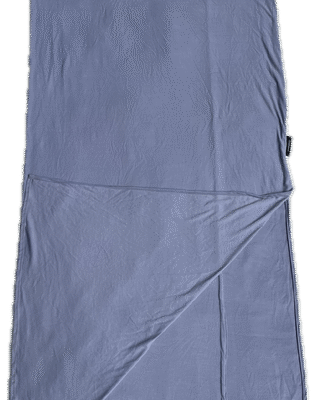
Merino Wool Sleeping Bag Liner & Sleep Sack
Warm, washable wool liner for any bag
1.9 lb / 0.9 kgAdds ~10°F30 oz merino jersey
Price range: $200.00 through $235.00 Select options This product has multiple variants. The options may be chosen on the product page -
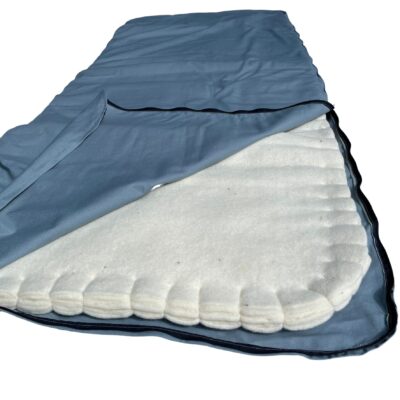
Organic Wool Sleeping Pad
Firm, breathable, machine-washable cover
¼ – 1.5 in wool felt24 – 60 in wide
Price range: $150.00 through $1,100.00 Select options This product has multiple variants. The options may be chosen on the product page