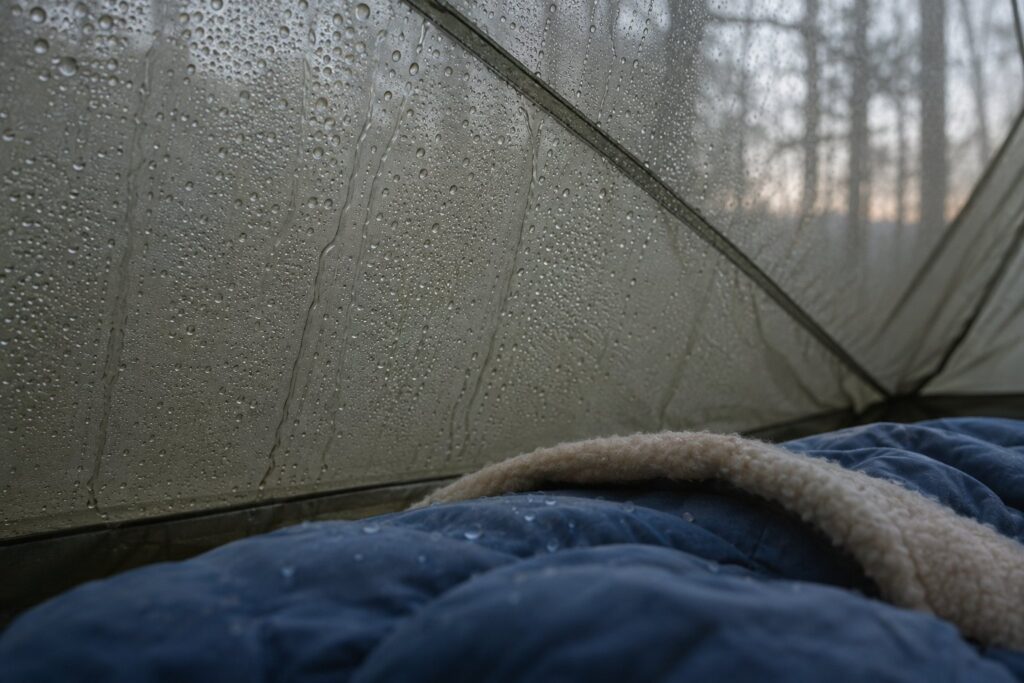
Tent condensation is the water you wake up in: droplets hanging from the shelter, dew on the gear, moisture in the air around you after a cool, damp night. The conventional solution is to fight it. At Lucky Sheep® we take a different approach—invite the weather in, and use natural materials that know what to do with it.
Seal out the weather. Vent the tent. Keep moisture away from your sleeping bag. Create a dry bubble between yourself and the natural environment. That is the standard advice, and it is not wrong for the gear it was written for.
Our approach is one of the principles behind A Rewilder’s Guide to Outdoor Adventure and the Lucky Sheep® natural sleeping system. Rather than trying to completely isolate the sleeper from humidity, dew, and the moisture produced by the human body, we use an open shelter and wool bedding that can function within those conditions.
Why Tent Condensation Happens
Condensation itself is simple.
Throughout the night, your body releases water vapor through breathing and insensible perspiration—the continuous movement of moisture through the skin even when you don’t feel sweaty. The ground and surrounding environment contribute moisture as well.
When warm, moisture-laden air encounters a sufficiently cold surface, such as the inside of a tent fly, some of that water vapor can condense into liquid droplets.
In a tightly enclosed shelter, you have created a small microclimate. Your body adds warmth and moisture while the walls of the shelter are being cooled by the outside air.
Eventually, you may wake up inside the very moisture you were trying to keep outside.
How to Reduce Condensation in a Tent
If you are sleeping in a closed tent tonight, a few things genuinely help. None of them make the moisture disappear; they move the cold surface farther from you and give the vapor somewhere to go.
- Open everything you can. Doors, vents, the fly gap at the ground. Air moving through the tent carries the vapor out before it reaches the cold wall. Rain protection comes from above, not from sealing the sides.
- Get out of the low spot. Cold air and fog pool in hollows and along creeks overnight. A slight rise with tall trees and an open understory has drier air and a breeze; a meadow gives you stars and heavy dew.
- Keep wet things and cooking outside. Wet clothes, boots and a stove inside a tent add water to a space that already has yours.
- Choose a wall that breathes. A coated nylon single wall is the worst case: cold, impermeable, and inches from your face. Breathable canvas passes vapor through the fabric; an open tarp barely has an inside at all.
- Put wool around your body. Whatever lands on the outside of the system, the layer against you should be one that stays warm when damp.
Those are the fixes. What follows is why we would rather not need them.
The Lucky Sheep® Approach: Don’t Build a Bubble
There is another way to sleep outdoors.
Instead of trying to create a miniature indoor environment inside a tent, allow yourself to remain connected to the outdoor environment.
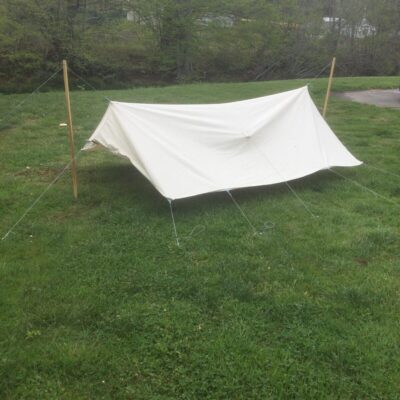
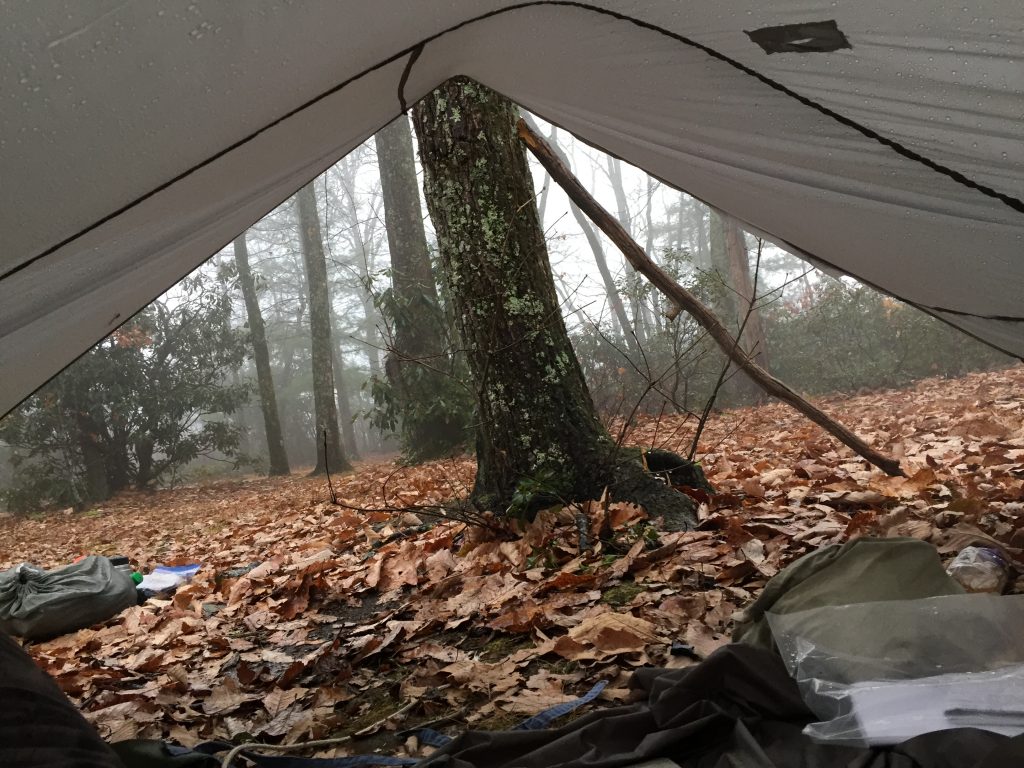
For backpacking, one of our favorite shelters is remarkably simple: a tarp open at both ends.
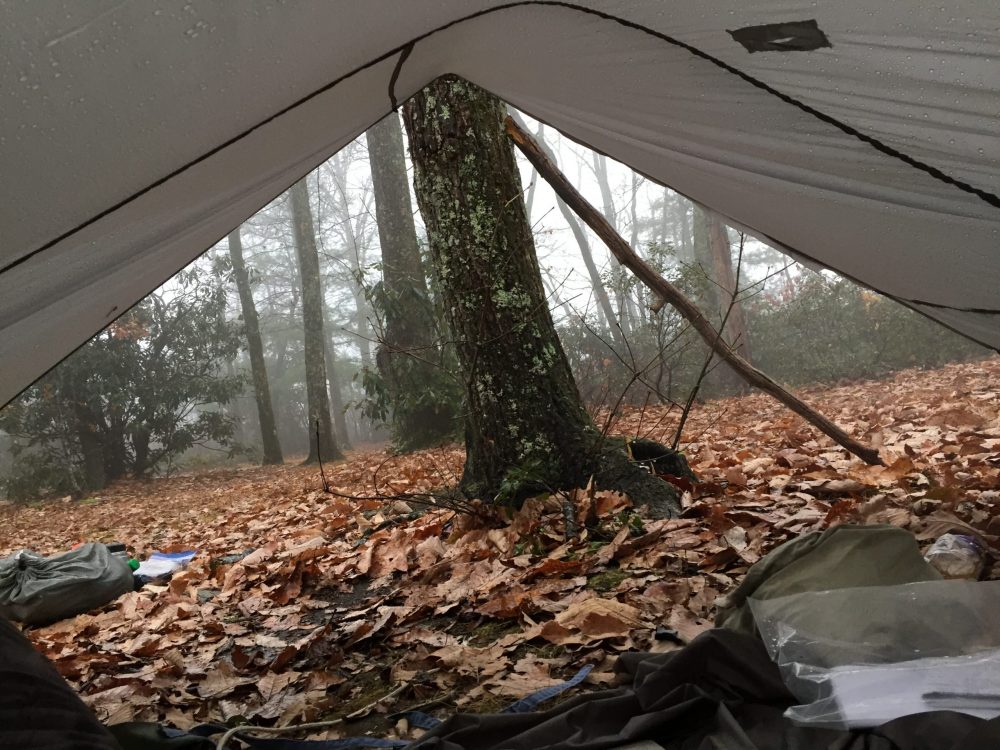
A properly pitched tarp protects you from rain coming from above while allowing outside air to move freely through your sleeping area. There is no need to carefully manage a collection of tiny vents. There is barely an “inside” to ventilate.
Humidity can move in. Fog can move in. The cool night air can move in. And the moisture produced by your own body can move out.
This doesn’t mean you will always wake up in a perfectly dry environment. On a foggy Appalachian morning when the relative humidity approaches 100 percent, everything may be damp.
And that’s okay.
The more important question is not “How do I keep all moisture away from my body?” It is “How do I remain warm and comfortable when moisture is part of the environment?”
That question leads us directly to wool.
Wool Changes the Equation
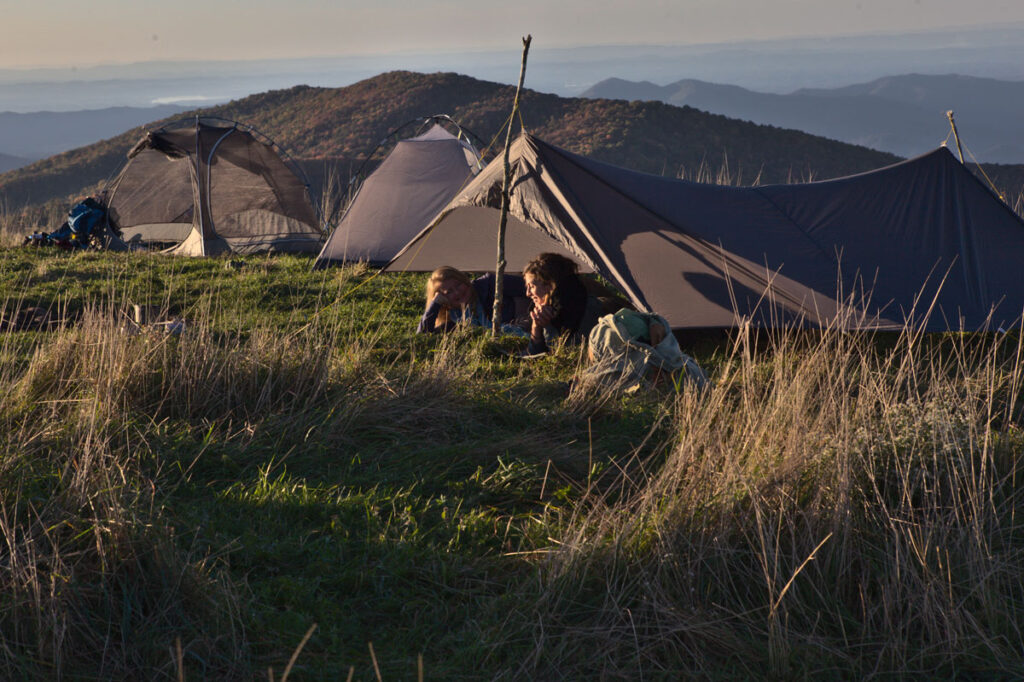
Wool doesn’t simply act as a barrier between your body and the environment. It interacts with moisture.
Wool fibers are hygroscopic, meaning they can take up substantial amounts of water vapor within their internal structure. This allows wool to buffer changes in humidity around the body without immediately acquiring the cold, clammy feeling we normally associate with wet fabric.
Something even more interesting happens as wool takes up water vapor.
It produces heat.
This phenomenon is generally known as the heat of adsorption. As water molecules interact with the chemical structure of the wool fiber, energy is released as heat. This is one of the remarkable natural properties that helps explain why wool can feel so comfortable as conditions become cool and damp.
Instead of thinking only about keeping moisture away from insulation, we can begin thinking about an insulation system that actually interacts with moisture.
Your Body Is Part of the System
This becomes especially important inside a sleeping bag.
Even when you aren’t sweating, your body continually gives off moisture vapor through insensible perspiration. Put impermeable or poorly breathable layers around the body and that moisture has fewer places to go.
The Lucky Sheep® approach is different.
The Rewilder Wool Sleeping Bag surrounds the sleeper with wool insulation and breathable fabrics, creating a system in which heat and water vapor can move rather than simply becoming trapped against the body.
As humidity within the sleeping system rises, the wool fibers can take up moisture vapor. Through the heat of adsorption, that process can also release heat. It is the same reason you can breathe inside a wool sleeping bag on a cold night without waking up damp.
This creates a very different relationship between sleeper, insulation, and environment. You aren’t trying to overpower nature. You are allowing a natural fiber to work with natural processes.
The Open-Tarp Sleeping System
This is why the open tarp and wool sleeping bag work so naturally together.
The tarp has one primary job: keep precipitation falling from the sky off you. It doesn’t need to create a sealed room. Pitching a lightweight tarp with both ends substantially open allows air and water vapor to move through the shelter freely.
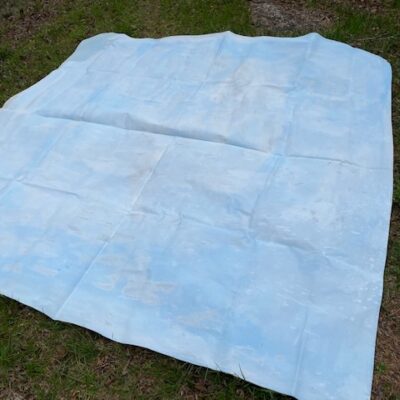
Underneath it, the Lucky Sheep® Rewilder Wool Sleeping Bag provides the insulating environment around your body. A ground sheet separates the sleeping system from wet soil. Wool clothing can extend the same moisture-buffering principle to the layers against your body.
Each piece has a simple job:
Tarp above. Ground protection below. Wool around the body. Air moving through everything.
Rather than carrying an increasingly complicated shelter system to control the outdoor environment, we build a simple system that allows us to live comfortably within it. The pitches, the weights and the honest case for a tent are in Tarp vs Tent.
What About Rain, Fog and Dew?
An open tarp obviously doesn’t make moisture disappear. Wind can shift. Fog can roll through camp. Dew can form. Rain can blow underneath the edges.
That’s part of sleeping outdoors.
The objective of the Rewilder system isn’t to guarantee that every surface remains perfectly dry. The objective is continued comfort and performance as conditions change. A few droplets of water touching your sleeping system should not automatically become an emergency.
The Rewilder combines wool insulation with a water-resistant outer shell to help protect the insulation from incidental moisture while maintaining the breathable characteristics at the heart of the system.
And when the surrounding air itself is saturated, we don’t have to pretend that we can make humidity disappear. We let the damp weather come in. Then we rely on wool to help manage the changing moisture around the body.
Where the Lucky Sheep® Canvas Tipi Fits
There are times when we want more shelter.
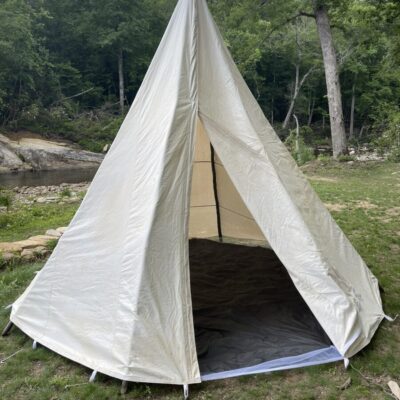
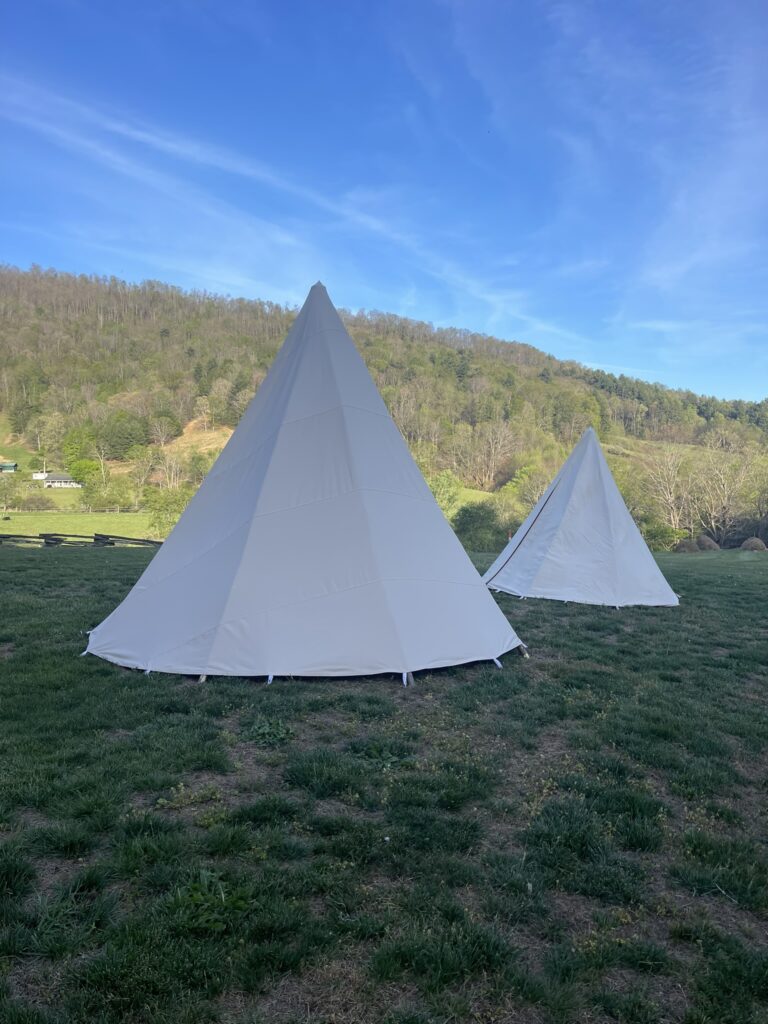
For basecamp, overland camping, extended camps, and situations where weight isn’t the primary consideration, the Lucky Sheep® Organic Canvas Tipi offers another natural-fiber approach.
Cotton canvas behaves very differently from a coated synthetic tent wall. The fabric can interact with moisture and permit vapor movement while the beeswax treatment helps the exterior shed rain. The tipi also provides generous interior volume and natural ventilation. (Canvas has its own housekeeping—seasoning, mildew, re-waxing—covered in the canvas tent care guide.)
But it serves a different purpose from our backpacking shelter. For lightweight trail travel, we favor the simplicity of an open tarp. For a more protected basecamp, we favor breathable canvas.
The philosophy behind both is the same: don’t unnecessarily seal yourself away from the environment.
Rewilding the Way We Think About Shelter
Modern outdoor equipment often begins with an assumption that nature is something we need to protect ourselves from. Cold must be sealed out. Water must be sealed out. Humidity must be removed. The body must be enclosed inside increasingly sophisticated membranes and barriers.
But humans slept outdoors long before waterproof-breathable membranes existed.
A Rewilder’s Guide to Outdoor Adventure explores another possibility: perhaps our equipment doesn’t always need to create a barrier between ourselves and the natural world. Perhaps it can help us participate in it.
That is why Lucky Sheep® puts so much emphasis on wool and natural fibers. It isn’t simply nostalgia for traditional materials. These fibers possess extraordinary functional properties. And when we understand those properties, we can simplify the entire system. The whole approach, from choosing the spot to what goes under and around you, is in How to Sleep Outside.
The Rewilder Principle
So the next time you wake up to a foggy morning and see droplets hanging from your tarp, don’t immediately assume something has gone wrong.
You are outdoors. Moisture is part of the environment. The goal isn’t necessarily to eliminate it. The goal is to remain comfortable within it.
Open the shelter. Let the night air move through. Let your body breathe. Surround yourself with wool. And invite the weather in.
Real fibers for real conditions.
Reviewed September 2026 by the Lucky Sheep® team.
The book behind these articles
A Rewilder’s Guide to Outdoor Adventure
The complete Lucky Sheep approach to time outdoors — skills, gear, food and natural sleep, from the founder. Everything the field guide covers, in one book you can take with you.
Get the book →Shelter that breathes
Organic cotton canvas sealed with beeswax instead of polyurethane: air moves through the fabric, so you wake up dry instead of under condensation. The tipi tent for basecamp, the tarp for fast and light, the ground cloth under either.
-
Organic Canvas Tent
Breathable basecamp shelter, no coatings
8 / 10 / 12 ft diameterBeeswax-sealed organic canvas
Price range: $1,250.00 through $2,100.00 Select options This product has multiple variants. The options may be chosen on the product page