Tipis and Log Cabins: Shared Era, Different Worlds
What do tipis and log cabins have in common? They are both dwellings from overlapping but very different cultural and geographic contexts in North American history.
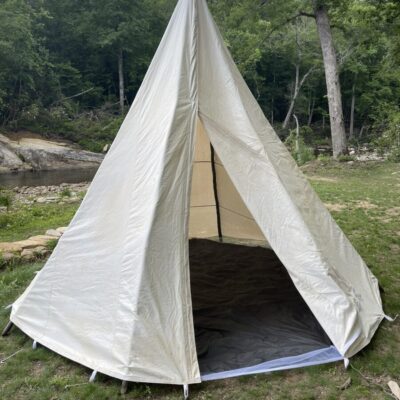
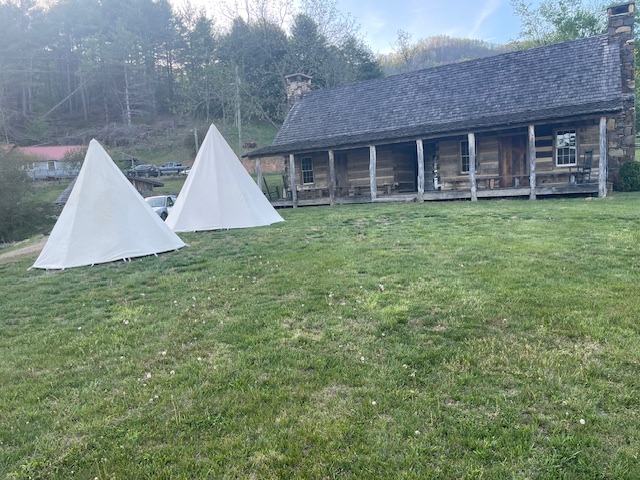
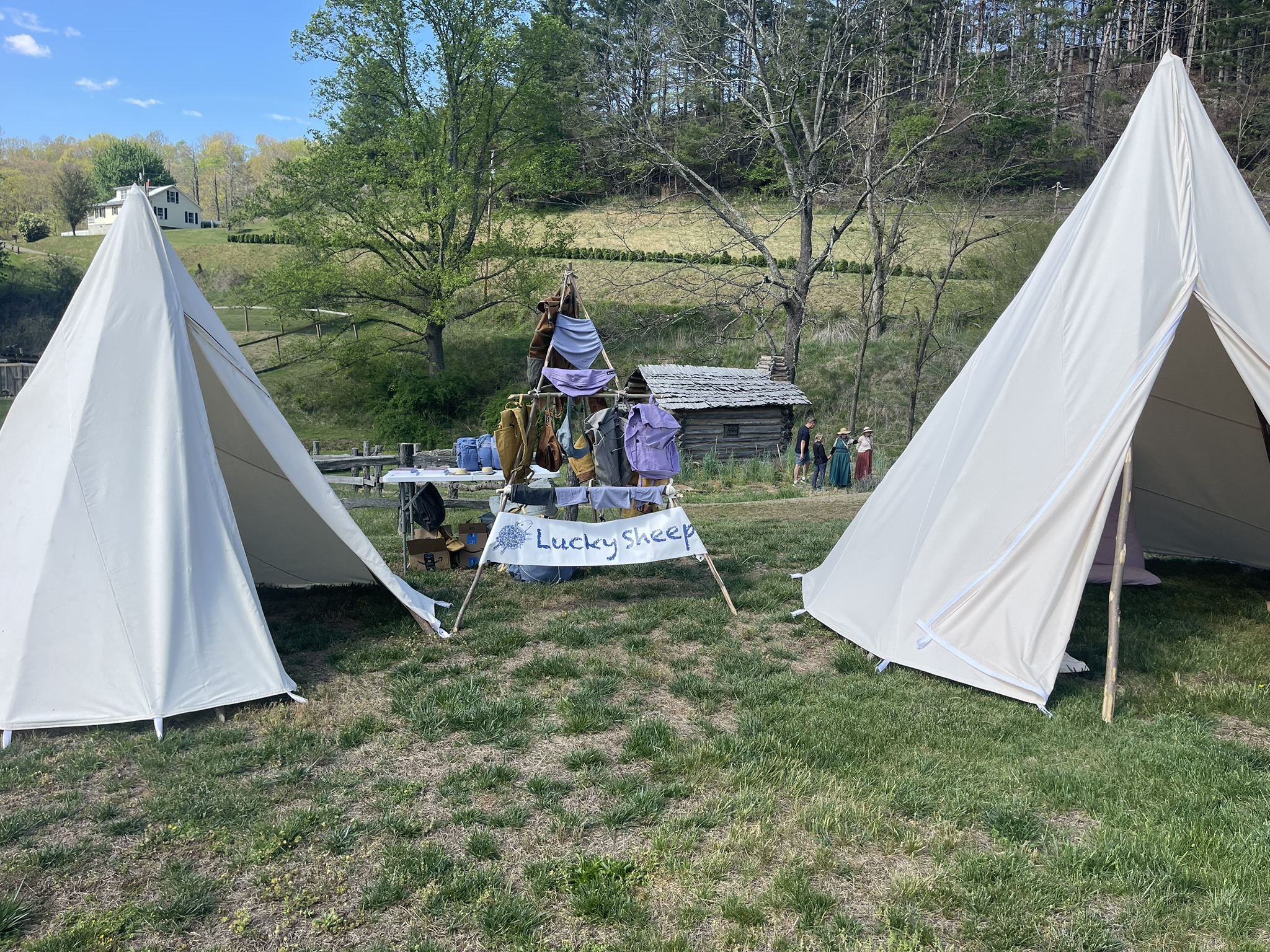
I just got back from a festival at The Center for Pioneer Living, only a stone’s throw from the Lucky Sheep headquarters in Burnsville, North Carolina. Lucky Sheep set up two tipi tents next to an ancient log cabin built in 1840. That was almost 200 years ago.
It is phenomenal that something built with axes and hand-hewn timber—drawn directly from the surrounding forest—would still be standing nearly two centuries later, preserved with so few signs of collapse. But what made the experience powerful was the juxtaposition: tipis, associated with the Plains Indigenous nations, alongside a settler log structure from the Appalachian region. Two entirely different building lineages, shaped by different ecologies, materials, and ways of life.
Even the materials we brought—canvas, wood, wool—felt like a continuation of older material traditions rather than a break from them. Natural fibers, breathable textiles, and structural wood all belong to a lineage of direct relationship with land-based resources.
This festival became a brief immersion into pre-industrial lifeways—when survival depended on reading weather, landscape, seasonal cycles, and animal behavior with precision. The human nervous system was not buffered from environment in the same way it is today; it was continuously regulated through direct exposure to light, temperature, wind, and terrain. That difference alone changes how life is experienced.
Rewilding and Ancestral Knowledge
What can be gleaned from ancestral lifeways that brings meaning and coherence into modern life? This is the heart of Rewilding—not as nostalgia, but as ecological recalibration—and I was grateful to be part of this gathering.
The Cabin, the Land, and the Cherokee
This log cabin was surprisingly comfortable and spacious. It sits on land that has long been part of Cherokee homelands in the Appalachian region. The Cherokee called this land Katuah.
It is important to distinguish here: the Cherokee did not build log cabins as a traditional form. Their built environment included a range of structures adapted to season and purpose—such as wattle-and-daub winter houses, bark-covered dwellings, and rivercane structures—each designed around local materials and seasonal needs. Log cabins, as seen here, are part of later European settler architecture.
The American Revolutionary War (1775–1783) marked the emergence of the United States as an independent nation, but for many Indigenous nations—including the Cherokee—it initiated a prolonged period of land dispossession and displacement. Over the following decades, increasing pressure from settlers and government policy led to forced removals, most infamously the Trail of Tears in the 1830s.
This landscape would have been a dense mosaic of forest ecology—mixed hardwoods, steep mountain valleys, and rich biodiversity. For early settlers, it was both resource and risk. Bears, wolves in earlier periods, wildcats, deer, and other wildlife shaped daily reality. The nervous system would have lived in constant attunement to sound, weather, and terrain.
This is why early settler families built clustered homesteads. The Wrays and Youngs, among the early European landowning families in this region of the Appalachians (Yancey County), raised 11 children by hearth light. Their subsistence pattern was direct and local: hunted game such as deer, corn cultivation, seasonal gardens, and preserved food stored in root cellars carved into the hillside. Spring water was the primary source of hydration, unmediated by infrastructure.
Personal Roots in the Mountains
In my imagination, I see a picture of this life clearly. I can almost feel it in my bones, because I grew up in a nearby valley. My first memories are of hiking trails in the same mountain ranges once traveled by the Cherokee, running barefoot through garden soil, and chasing arrows my father shot into the air after returning from teaching chemistry at Western Carolina University.
My house in Cullowhee, North Carolina was the first non-log homes built in the Wayehutta Valley around 1897. Still standing and in fine shape for over a century, it was not built as well as this chestnut log cabin at the Pioneer Center which has lasted over two centuries.
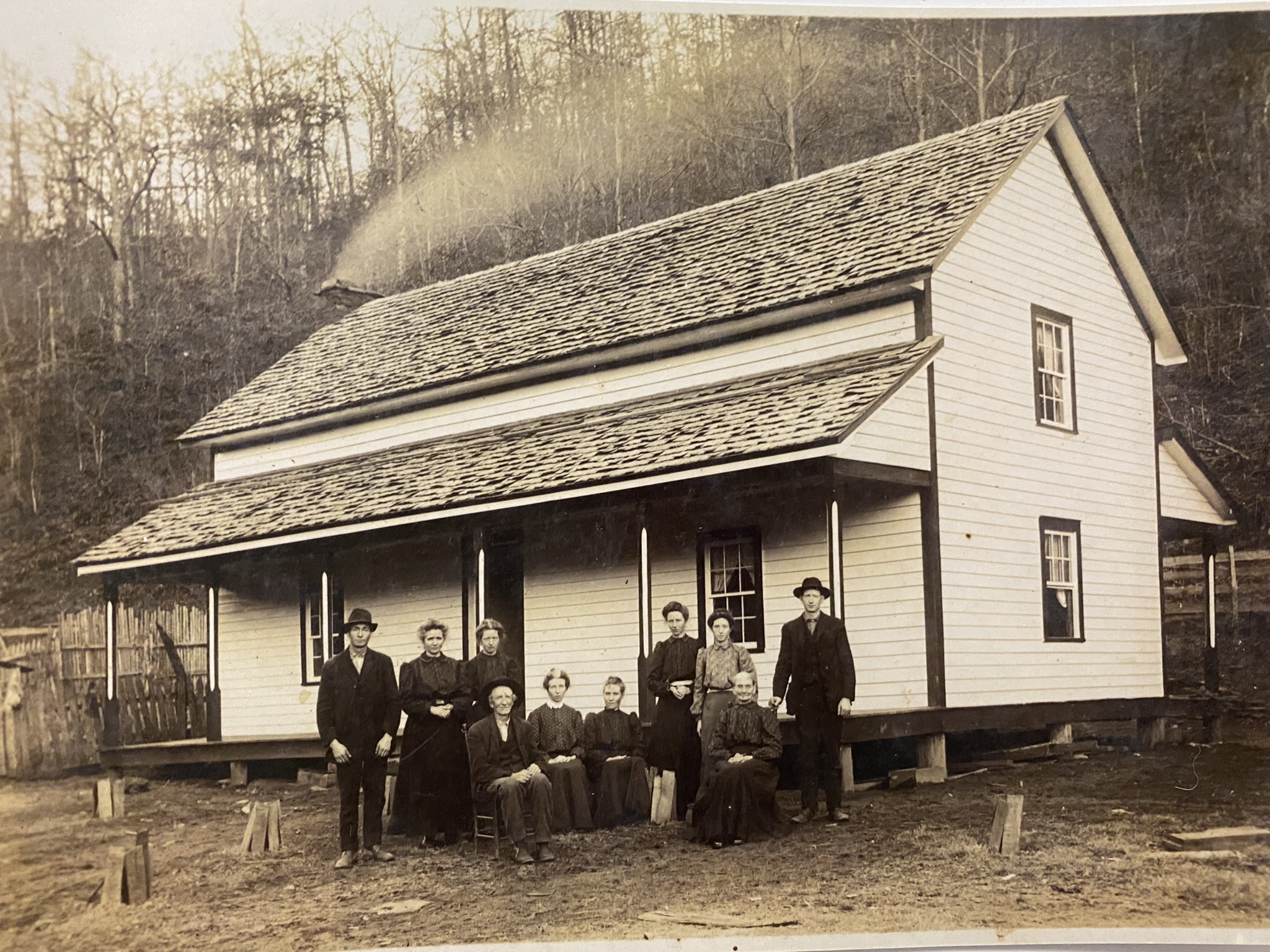
This is the house where I grew up in the 1960s. This picture was taken shortly after the house was finished in 1897. My bedroom window was the upper right.
The Tipi as Visitor from the Plains
There is a quiet contrast between the Appalachian cabin tradition and the Plains tipi tradition. The tipi originates from a very different ecological system: the Great Plains, a vast grassland biome shaped by wind, mobility, and large herbivore migration, particularly bison.
Tipis are most closely associated with several Plains Indigenous nations whose lifeways became highly mobile, especially after the widespread adoption of the horse in the 17th–18th centuries. Prior to that, transport included dog travois systems. The structure of the tipi reflects this mobility: lightweight poles, efficient assembly, and a skin covering designed for seasonal movement.
In that environment, shelter is not separation from nature—it is a calibrated interface with it. The conical shape performs remarkably well in wind deflection, and the smoke flap system at the top uses airflow and pressure differentials to regulate ventilation. Heat rises naturally through the center opening while cold air is drawn in at the base when needed, creating a dynamic thermal balance.
Placed beside an Appalachian log cabin, the tipi reads as something fundamentally different—not primitive versus advanced, but adaptive to entirely different landscapes.
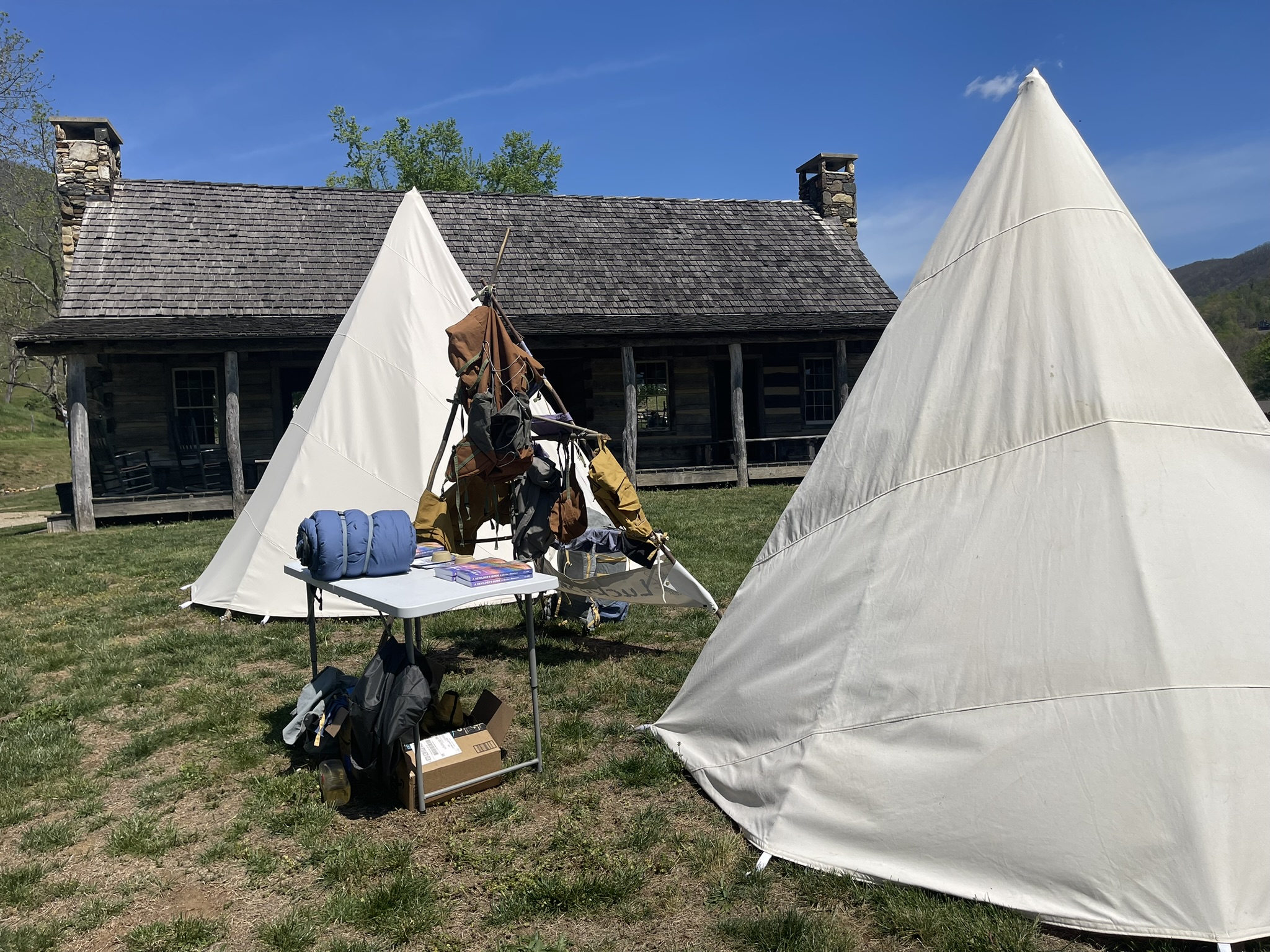
Lucky Sheep tipi tents and natural fiber gear, made from heritage fabrics for modern times.
The Inner World of the Tipi
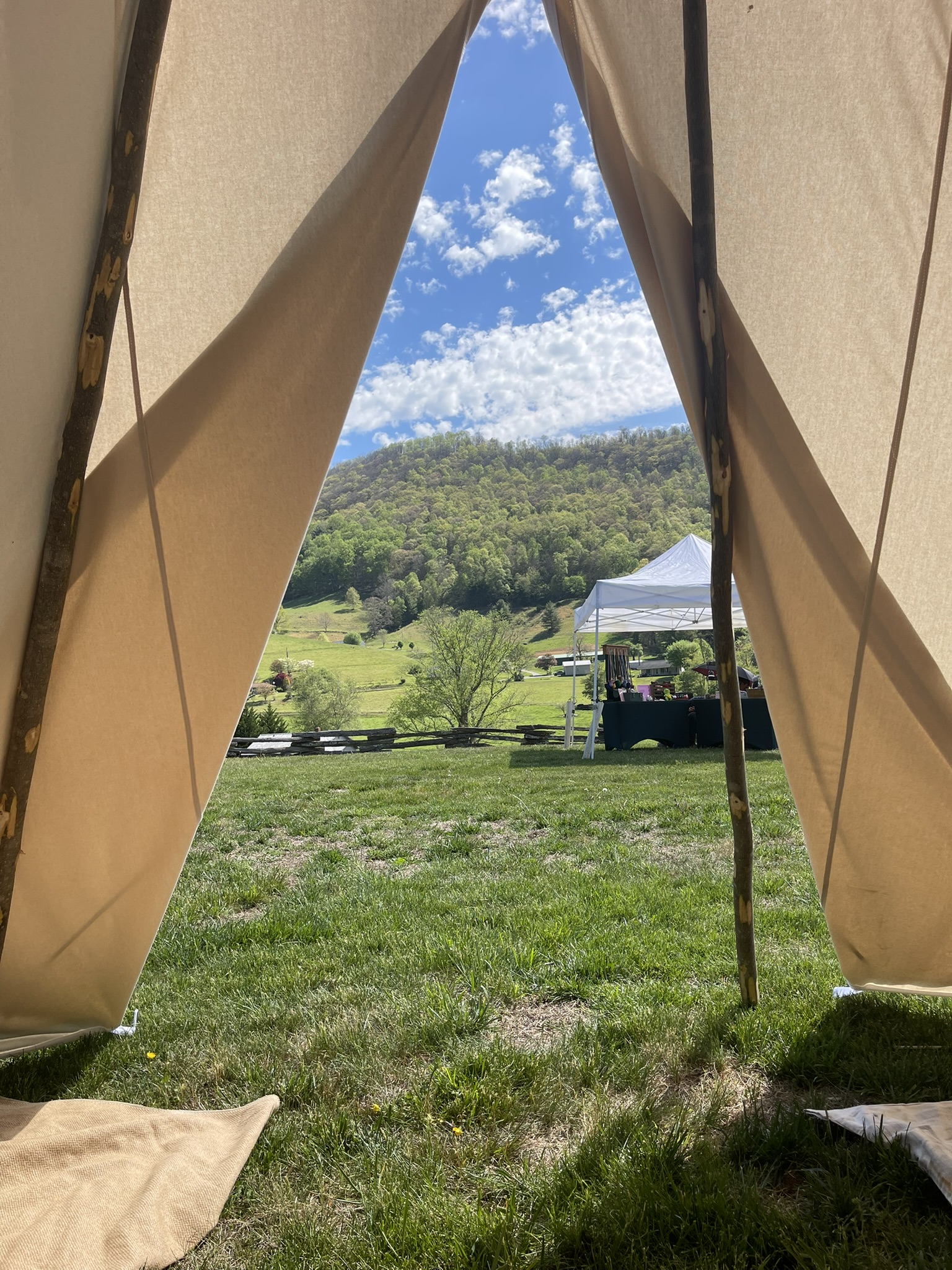
The coherent order of the universe built into the very design of the tipi can only be appreciated by entering the space itself. The spokes of the poles reflect the circle of life—the hoop of all nations. The center of the tipi, where the fire rests, becomes the sacred center of the universe.
Around this living center, life organizes itself with coherence and meaning. Without this kind of sacred geometry anchoring the inner world, there is only endless and undefined space in every direction. The nomadic life required something constant—something to orient the human psyche within an ever-changing landscape.
And beyond this, the shape and materials of the Plains tipi form a kind of pyramid structure, made from largely non-conducting natural materials, creating a distinct energetic and environmental field within. It is for these reasons that I personally see the tipi as the height of stone age technology—a dwelling, a “place lived in,” that in many ways surpasses the drafty log cabin and other structures of the time.
The central fire anchors activity, light, and heat. Around it, life is arranged in a circular spatial logic that reflects both social and environmental conditions. In a mobile, seasonal culture, the dwelling must be efficient to erect, dismantle, and transport, while also maintaining internal stability in wind, cold, and sun exposure.
The materials themselves—buffalo hide historically, and in modern analogs canvas or similar natural textiles—contribute to this microclimate by regulating moisture, breathability, and insulation. Wooden poles provide a flexible structural frame that responds rather than resists wind load.
Seen this way, the tipi is not an abstract symbol—it is a finely tuned environmental system shaped by climate, mobility, and material intelligence.
Returning Without Going Back
Taking a visit into the past like this allows us to reconnect with ancestral patterns of attention and adaptation—lives shaped by direct relationship with land, weather, and seasonality. These were not simpler lives, but differently structured ones, where survival depended on continuous ecological literacy.
It is not about returning to an earlier time. It is about allowing those patterns to inform the present—so we can see more clearly what has been lost in abstraction from the natural world.
And in doing so, something begins to return. The nervous system starts to recalibrate through exposure: sleeping outdoors, wrapped in natural fibers, walking uneven ground, building fire, watching light shift across terrain. These are not symbolic gestures—they are environmental inputs the body recognizes.
And in small but real ways, those materials and shelters still continue that lineage—through the use of natural canvas, wool insulation, and land-based building practices that keep us in conversation with the living world. This is what Lucky Sheep is all about: bringing natural fibers and closer connection to nature into the lives of our modern culture.
Shelter that breathes
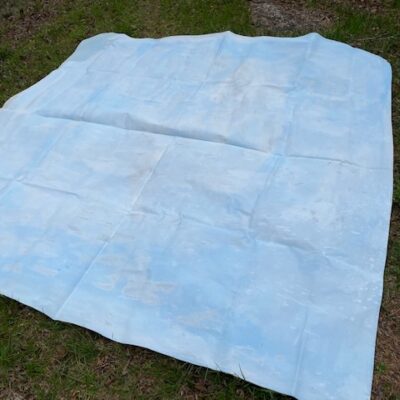
Organic cotton canvas sealed with beeswax instead of polyurethane: air moves through the fabric, so you wake up dry instead of under condensation. The tipi tent for basecamp, the tarp for fast and light, the ground cloth under either.
-
Organic Canvas Tent
Breathable basecamp shelter, no coatings
8 / 10 / 12 ft diameterBeeswax-sealed organic canvas
Price range: $1,250.00 through $2,100.00 Select options This product has multiple variants. The options may be chosen on the product page