Pull a fleece over your head in a dry tent and you’ll hear it crackle. Sleep in polyester and you wake up clammy and shocked by the zipper. Sleep in wool and neither happens. Readers find this article by asking whether wool conducts electricity, whether synthetic fabrics cause static, and which fabric to sleep in. Here are the answers — the measurable ones — and what they mean for a night outdoors.
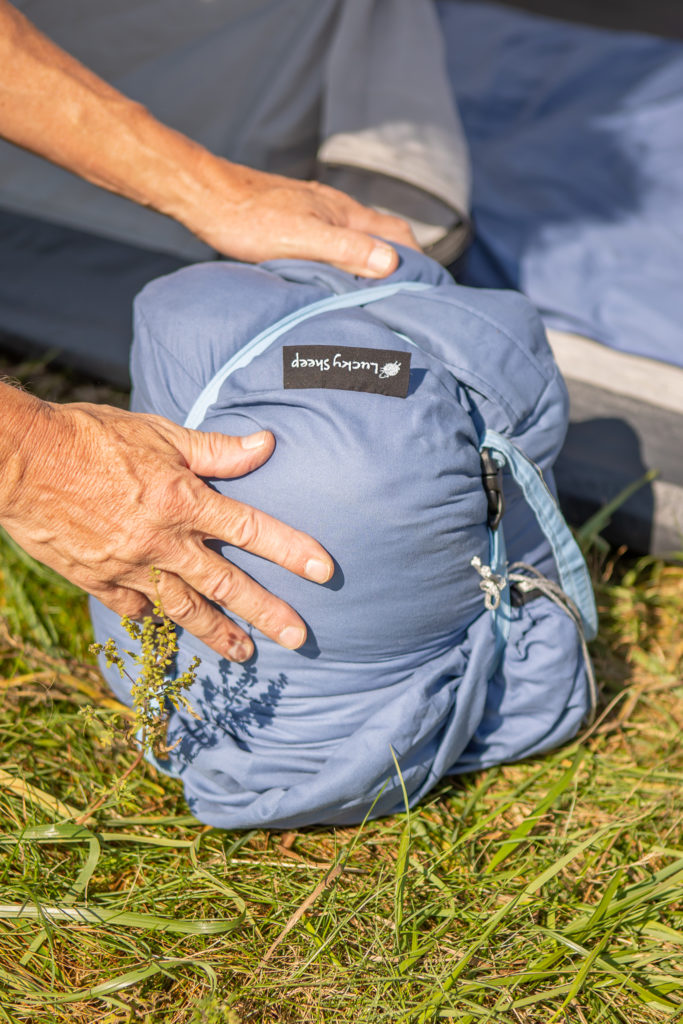
Static electricity: why synthetic fabrics crackle and wool doesn’t
Static charge builds when two materials rub and separate — the triboelectric effect. Every fabric does it. What decides whether the charge stays on you or drains away is moisture. Fibers that hold water conduct just enough to bleed charge off continuously; fibers that repel water let it pile up until it jumps to the nearest metal object.
| Fiber | Moisture regain at 65 % RH* | Static behaviour | Feel next to skin |
|---|---|---|---|
| Wool | 13–16 % | Dissipates — rarely sparks or clings | Dry to the touch, buffers sweat |
| Cotton | 7–8 % | Dissipates | Cool; feels wet when saturated |
| Silk | 9–11 % | Mild static | Smooth, cool |
| Nylon | 4–4.5 % | Builds charge | Slick, can feel cold and damp |
| Polyester / fleece | 0.4 % | Builds charge strongly — crackles, clings, attracts dust | Warm but sweat sits on the skin |
| Acrylic | 1–2 % | Builds charge strongly | Pilling, clammy |
That single column explains most of what people feel. Polyester holds almost no water, so on a dry winter night it becomes a very good insulator for electric charge — which is exactly why it shocks you. Wool at ordinary humidity carries a thin film of absorbed moisture inside the fiber that makes it slightly conductive, so charge never accumulates. Textile engineers call this the antistatic property of hygroscopic fibers, and it is why wool carpets and wool suiting were the default long before antistatic sprays existed.
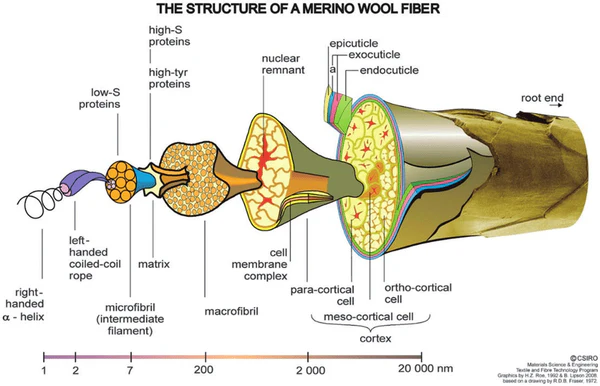
Does wool conduct electricity?
Bone-dry wool is an insulator — wool felt was once used to insulate electrical equipment. But wool is almost never bone dry: at normal indoor or outdoor humidity it holds 10–16 % of its weight in water vapour, and that moisture lets it conduct a tiny current, enough to drain static but nowhere near enough to matter for safety. So the honest answer is: wool is an insulator that behaves antistatically. It will not shock you, cling to you, or attract dust the way a fleece does.
Your skin is electrical — but clothing doesn’t change that
Nerves fire electrically, the heart runs on electrical timing, and skin has a measurable resistance that changes with sweat (that is what a lie detector or a fitness watch reads). Those facts are sometimes stretched into claims that fabrics alter the body’s “electrical field”, “frequency” or energy flow. There is no reproducible evidence for that, and this article used to repeat some of it. What clothing does demonstrably change is the skin’s microclimate — temperature, humidity and static at the surface — and that is where the real, felt differences between fabrics come from.
Moisture and sleep: the difference you actually feel at 3 a.m.
A sleeping adult loses roughly half a litre of water overnight through skin and breath. Where that water goes decides whether you sleep through the night.
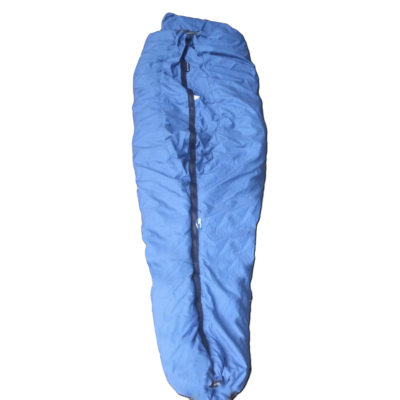
- Synthetic fill and shells can’t absorb it. Vapour condenses on the cold side of the fabric or stays on your skin as liquid sweat. The result is the familiar cycle: warm → sweaty → clammy → chilled → awake. Fleece and polyester sleeping-bag liners are the worst offenders because they sit right on the skin.
- Wool absorbs vapour into the fiber before it becomes liquid, and releases heat as it does — the heat of sorption, about 960 kJ per kilogram of water absorbed. That is why a wool bag feels warmer as the night gets damper instead of colder, and why the surface stays dry to the touch. We cover the physics in How wool stays warm when wet and the field experience in Why damp cold feels colder.
- Cotton absorbs well but holds liquid water against the skin once saturated and dries slowly — fine for a sheet in a dry house, poor for a base layer on a wet trail.
Smell, skin and the “plastic” feeling
Two more measurable differences. Polyester retains odour-causing compounds far more than wool or cotton — the reason a synthetic base layer smells after one day and a merino one doesn’t after five. And because synthetic fibers hold charge and no moisture, they attract dust and lint to the skin and can leave it feeling dry and itchy in low humidity. Neither is mystical; both are the same moisture story from a different angle.
Choosing fabric for sleeping — indoors and out
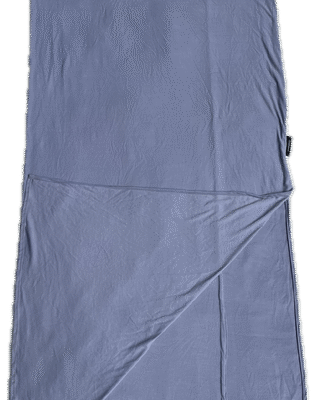
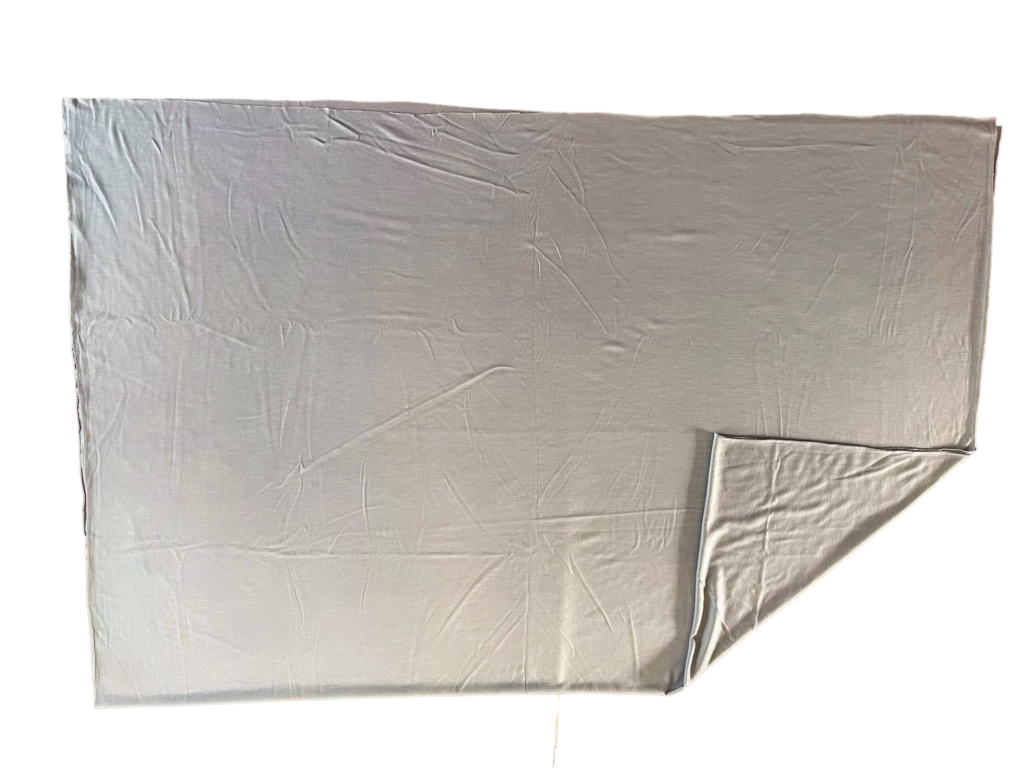
- Next to skin: merino wool jersey. It is the antistatic, odour-resistant, moisture-buffering layer. In a sleeping bag that means a merino liner (adds about 10°F and keeps the bag clean); at home it means merino or wool-blend sheets.
- Insulation: wool batting rather than polyester fill. It keeps insulating when damp and doesn’t crackle when you turn over — the Rewilder is our 20°F backpacking version at 4 lb.
- Shell: tightly woven cotton with a wax finish sheds wind and light rain while still letting vapour out; coated nylon traps it. Skip the DWR and membrane if you can.
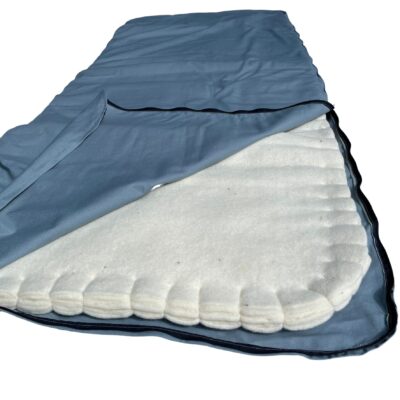
- Under you: a wool felt pad instead of closed-cell foam. Same antistatic, moisture-buffering behaviour, and it doesn’t off-gas.
- If you must use synthetics: keep humidity up (a damp tent is less staticky than a dry cabin), wear a natural layer between the synthetic and your skin, and avoid fleece directly against bare skin on dry cold nights.
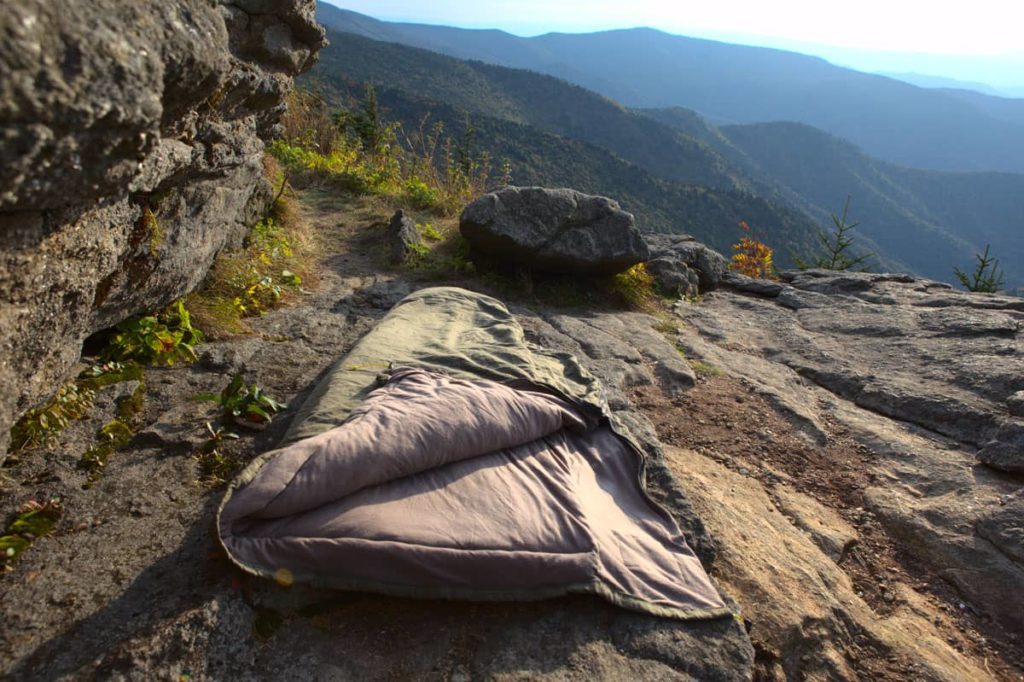
Field notes: three winters sleeping outside in wool
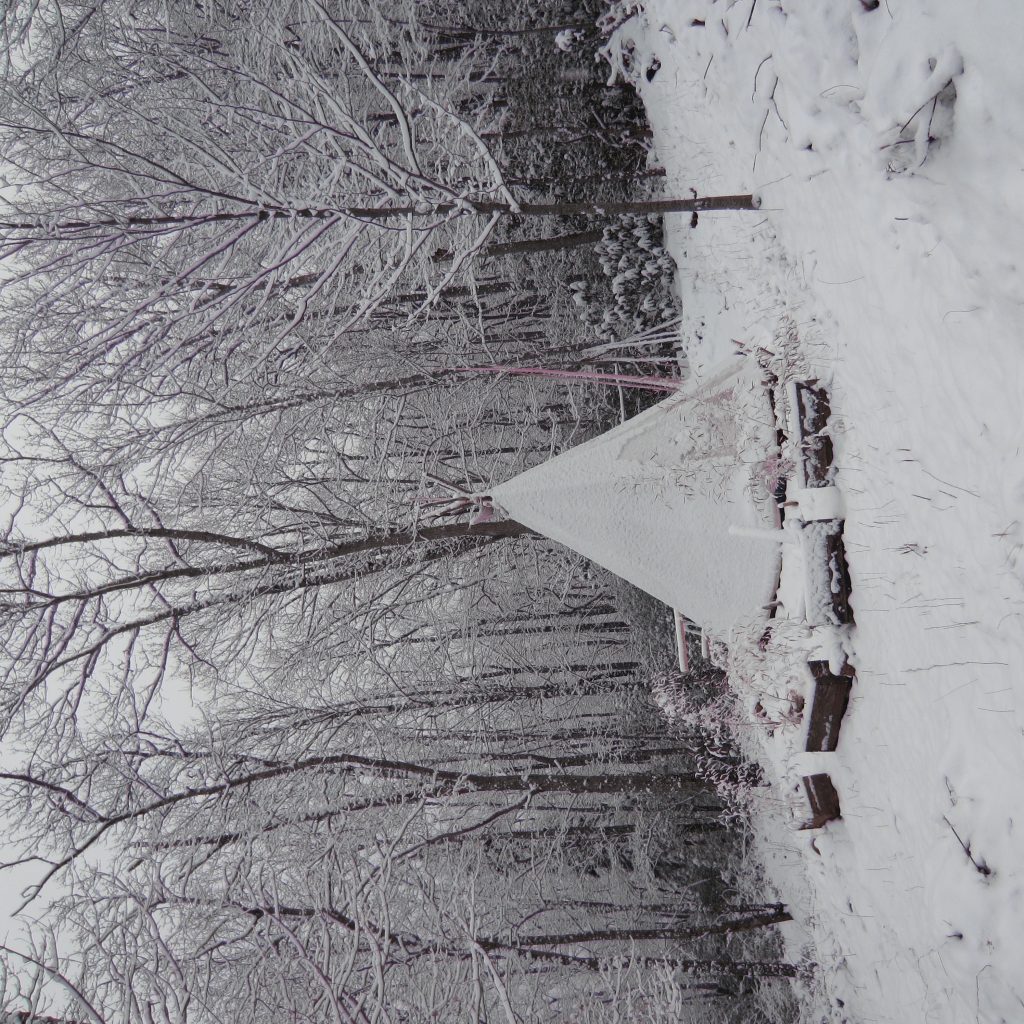
Lucky Sheep started with an experiment: could a person sleep outside through a North Carolina mountain winter in natural fibers alone, without a heated shelter? The answer — three winters in a canvas tipi, in wool bedding — was yes, and it produced the first Rewilder. The practical lessons were the ones above: the nights that went wrong were the damp ones in synthetic layers; the nights that went right were dry-to-the-touch wool, even when everything else in camp was wet. The full story is in The Tipi Experiment series.
Frequently asked questions
Is wool a conductor or an insulator?
An insulator — but a hygroscopic one. At normal humidity the moisture inside the fiber lets static charge drain away, so it behaves as an antistatic material. Completely dry wool insulates like any other textile.
Does wool cause static electricity?
Very little. Wool sits high on the triboelectric series (it gives up electrons readily), but its moisture content dissipates the charge as fast as it forms. Polyester and acrylic hold almost no moisture, so their charge accumulates — that is the crackle and cling.
Do synthetic fabrics affect sleep?
Through moisture, yes: they keep sweat on the skin and condense vapour, producing the warm-then-clammy-then-cold cycle that wakes people. Static shocks and noise are a smaller, real annoyance. Claims that they disturb the body’s electrical field are not supported by evidence.
What is the best fabric to sleep in?
Merino wool next to skin, wool or cotton bedding over it, and — outdoors — wool insulation with a breathable cotton shell. Cotton is fine indoors where it can dry; wool is the better choice anywhere it might get damp.
Revised August 2026. Earlier versions of this article included claims about clothing, “chi” and the body’s energy field that we can’t support with evidence; they have been removed. The moisture-regain figures are standard textile values (ASTM D1909 / ISO 6741 conditioning).
Sleep warm out there — in wool
The Rewilder is a 20°F backpacking sleeping bag (4 lb, packs to 11 × 11 in) that keeps insulating when conditions turn damp. Add the merino liner for another ~10°F and a wool pad underneath for a complete natural-fiber sleep system.
-
Lightweight Wool Sleeping Bag–The Rewilder
The lightest all-natural backpacking bag
4 lb / 1.8 kg20°F / −6°C (10°F option)Packs to 11 × 11 in
Price range: $557.00 through $888.00 Select options This product has multiple variants. The options may be chosen on the product page -
Merino Wool Sleeping Bag Liner & Sleep Sack
Warm, washable wool liner for any bag
1.9 lb / 0.9 kgAdds ~10°F30 oz merino jersey
Price range: $200.00 through $235.00 Select options This product has multiple variants. The options may be chosen on the product page -
Organic Wool Sleeping Pad
Firm, breathable, machine-washable cover
¼ – 1.5 in wool felt24 – 60 in wide
Price range: $150.00 through $1,100.00 Select options This product has multiple variants. The options may be chosen on the product page