
What we wear may influence more than our temperature and comfort. The human body operates through electrical signals, and the fabrics touching our skin have their own electrical properties. Could the materials we wear and sleep in affect how our bodies function?
This question has fascinated me for years. Through my experiments sleeping outdoors in natural fibers, and my research into wool, synthetic fabrics, and traditional concepts of energy flow, I’ve become increasingly interested in the relationship between clothing and the electrical nature of the human body.
Some of these relationships are well understood through textile science. Others, including the possibility that clothing influences the body’s energetic systems, remain open to investigation.
The Human Body Is an Electrical System
The human body is not simply a collection of chemical reactions. It is also an electrical system.
Our nerves communicate through electrical impulses. Our hearts beat through precisely coordinated electrical signals. Even our cells maintain electrical potentials across their membranes.
The skin also has measurable electrical properties, including resistance and electrical potential, which vary with moisture, temperature, and physiological conditions.
This raises an intriguing question: If the body is electrical, what happens when we surround it with different materials?
Clothing is one of our most continuous points of contact with the environment. We wear it throughout the day and often surround ourselves with it during sleep.
Different fabrics accumulate, retain, and dissipate electrical charge differently. This is especially noticeable when comparing natural fibers with synthetic materials.
Natural vs. Synthetic Fabrics and Static Electricity
Anyone who has pulled a polyester fleece over their head on a dry winter day has experienced static electricity.
The crackling sounds, clinging fabric, and occasional shock when touching a metal object demonstrate that clothing can accumulate electrical charge.
This phenomenon is known as the triboelectric effect. When different materials contact and separate, electrons can transfer between their surfaces, creating an electrical imbalance.
Synthetic fabrics such as polyester, nylon, and acrylic often retain this charge, particularly in dry conditions.
Natural fibers behave differently, although their properties vary.
Wool, cotton, and linen absorb moisture from the atmosphere. This moisture can help electrical charges dissipate rather than accumulate.
Wool is particularly interesting because it can absorb substantial quantities of water vapor without feeling wet.
This contributes to its ability to regulate moisture, moderate temperature, and reduce persistent static buildup under many everyday conditions.
It is important to distinguish these measurable textile properties from the larger question of whether fabrics influence internal biological electrical signaling. That relationship has not been established.
Nevertheless, the differences in the electrical behavior of fabrics are real and worth understanding.
| Fiber | Moisture regain at 65 % RH* | Static behaviour | Feel next to skin |
|---|---|---|---|
| Wool | 13–16 % | Dissipates — rarely sparks or clings | Dry to the touch, buffers sweat |
| Cotton | 7–8 % | Dissipates | Cool; feels wet when saturated |
| Silk | 9–11 % | Mild static | Smooth, cool |
| Nylon | 4–4.5 % | Builds charge | Slick, can feel cold and damp |
| Polyester / fleece | 0.4 % | Builds charge strongly — crackles, clings, attracts dust | Warm but sweat sits on the skin |
| Acrylic | 1–2 % | Builds charge strongly | Pilling, clammy |
Does Wool Conduct Electricity?
Wool is generally considered an electrical insulator, especially when dry. However, unlike polyester, wool naturally absorbs moisture from the surrounding air.
As wool absorbs moisture, its electrical resistance decreases, allowing static charge to dissipate more readily. This is why wool often produces less persistent static electricity than polyester and other synthetic fabrics.
So the answer depends on the conditions: dry wool is a poor electrical conductor, but moisture makes it more conductive. This doesn’t mean wool conducts electricity like metal or automatically grounds the body to the earth.
Clothing and Chi Flow: John Veltheim’s Experiments
An especially interesting perspective comes from John Veltheim, who served as Principal of the Brisbane College of Traditional Acupuncture and Natural Therapies in Australia.
Veltheim described experiments investigating whether different clothing materials influenced the flow of chi, the vital energy described in traditional Chinese medicine.
According to his account, sensitive equipment was used to monitor changes associated with acupuncture stimulation along the body’s meridians.
One example involved an acupuncture point known as Stomach 36, located just below the knee.
In traditional Chinese medicine, this point is associated with the stomach meridian, which extends upward through the body.
Veltheim reported that stimulation of this point produced measurable changes in the energy readings associated with the meridian.
What Happened When Subjects Wore Nylon or Cotton?
Veltheim described a series of particularly striking observations.
With the subject unclothed, the measured response to acupuncture stimulation was assigned a baseline of 100 units.
He reported the following differences:
- Unclothed: Baseline response of 100 units.
- Nylon underwear: A reduction in the measured response of up to 60%.
- Cotton underwear: A reduction of approximately 20%.
Veltheim further claimed that patients wearing nylon underwear during acupuncture treatments sometimes required twice as many treatments to obtain comparable results.
These are remarkable claims, especially considering how much of our modern clothing is made from synthetic materials.
However, the figures come from Veltheim’s account. Without independently published experimental methods, instrument specifications, controls, and replication, they cannot be treated as established measurements of biological energy flow.
Traditional chi meridians also should not be confused with the electrical pathways of the nervous system.
Still, his observations raise an interesting question: Could the electrical properties of clothing influence physiological measurements or our responses to certain therapies?
This is a question worth investigating with modern instrumentation and controlled experiments.
How Clothing Interacts With the Skin’s Electrical Properties
The surface of our skin is electrically active, and its electrical characteristics change throughout the day.
Skin conductance, for example, is influenced by sweat gland activity and is routinely measured in physiological research.
Veltheim and practitioners of bioenergetic therapies have proposed that static electricity generated by clothing may interfere with the body’s energetic systems.
The underlying observation—that synthetic fabrics can accumulate static charge—is well established.
The proposed consequences for health, however, require further investigation.
A static shock demonstrates an electrical discharge between surfaces. It does not, by itself, establish that the body’s nervous system or cellular electrical activity has been disrupted.
Understanding this distinction allows us to explore these ideas without confusing a promising hypothesis with a demonstrated fact.
My Outdoor Sleep Experiments: Three Winters in Natural Fibers
My own interest in these questions grew out of a much more practical experiment.
I wanted to discover whether a person could sleep outdoors through an entire mountain winter using natural fibers, without depending on a heated shelter.
This became an extended experiment spanning three winters in the mountains of North Carolina.
I slept in a canvas tipi using wool bedding and natural-fiber clothing, experiencing the changing temperatures, humidity, and weather conditions of the North Carolina mountains.”
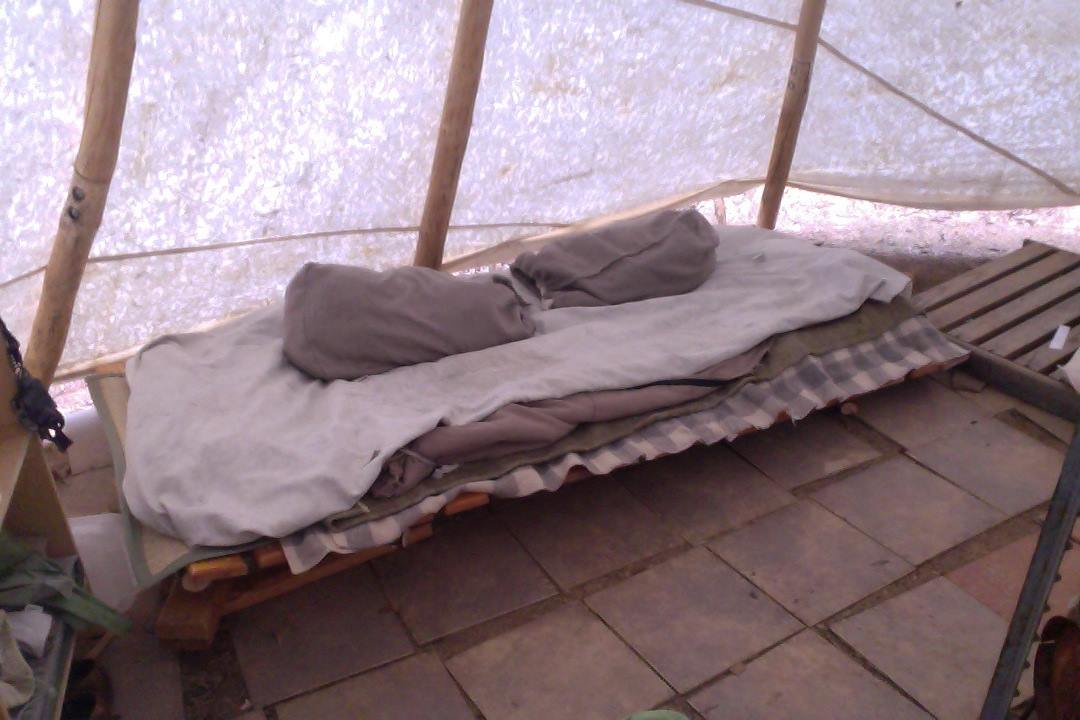
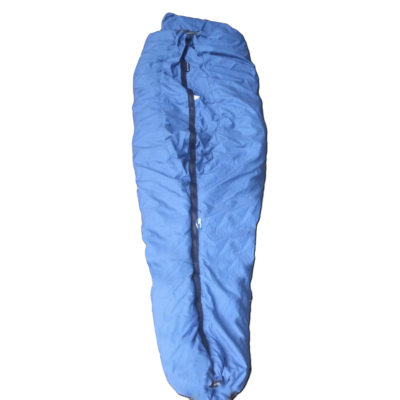
The experiment eventually contributed to the development of Lucky Sheep and the Rewilder wool sleeping bag.
One of the most important discoveries was how differently wool behaved in damp conditions.
Synthetic materials could sometimes leave me feeling clammy as moisture accumulated. Wool, by contrast, absorbed moisture vapor into its fibers while maintaining a relatively dry feel against the body. The full story is in The Tipi Experiment series.
Wool also releases a small amount of heat when it absorbs moisture vapor, a phenomenon known as the heat of sorption.
These properties became particularly valuable during cold nights when moisture management was just as important as insulation.
I began to appreciate that a sleeping system is not simply about trapping heat. It is about creating an environment in which the body can regulate temperature and moisture throughout the night.
The experience deepened my curiosity about the electrical properties of wool and whether natural materials might offer benefits beyond those already explained by conventional textile science.
Although these outdoor experiences were not controlled bioelectric experiments, they helped shape my approach to designing natural-fiber outdoor gear.
Is Wool a Grounding Fabric? The Surprising Role of Moisture
One of the most fascinating properties of wool is something we rarely think about: wool is almost never completely dry.
Even when it feels perfectly dry to the touch, wool contains moisture absorbed from the surrounding atmosphere.
At a relative humidity of 65%, wool typically holds approximately 14–18% of its dry weight in absorbed water. Compare that with polyester, which absorbs less than 1%.
When wool is worn against the skin, it is exposed to additional moisture vapor released by the body.
This moisture has an important effect on wool’s electrical properties.
Although dry wool is an electrical insulator, its resistance decreases as it absorbs moisture. This means electrical charges can dissipate more readily than they would through completely dry wool.
Scientists have studied this phenomenon for decades. Research published in Textile Research Journal in 1965 demonstrated that changes in atmospheric humidity alter the electrical conductance of wool fibers.
This raises an intriguing question: Could the moisture naturally present in wool help maintain an electrical connection between the body and its surroundings?
We know that moisture increases wool’s conductivity. We also know that electrical grounding requires a conductive pathway between the body and the earth.
Whether ordinary wool clothing or bedding can provide a meaningful grounding connection under real-world conditions is another question. The answer would depend on moisture content, electrical resistance, and what other materials separate the body from the ground.
Water itself is not automatically a good conductor. Pure water conducts electricity poorly, while dissolved salts and other ions can greatly increase its conductivity.
Wool’s ability to dissipate static electricity under suitable conditions is established. Its potential role in facilitating electrical grounding deserves further investigation.
For me, this adds another dimension to wool’s remarkable relationship with the human body. The same moisture-absorbing properties that help regulate temperature and improve sleeping comfort also influence the electrical behavior of the fabric.
Wool is not simply a passive layer of insulation. It is a natural material whose properties continually respond to the moisture and temperature of its environment.
Could Wool Also Influence Electromagnetic Radiation?
There is another intriguing possibility arising from wool’s natural moisture content.
Water interacts with electromagnetic radiation, absorbing energy at certain frequencies and changing how electromagnetic waves travel through materials.
Because wool continually absorbs moisture from the atmosphere and from the body, it raises an interesting question: Could this moisture also give wool some ability to attenuate electromagnetic radiation?
Research has demonstrated that moisture can alter the electromagnetic shielding properties of textiles. However, whether ordinary wool clothing provides meaningful protection from environmental electromagnetic fields remains to be established.
A material’s shielding effectiveness depends on several factors, including frequency, conductivity, thickness, and moisture content. The ability to absorb electromagnetic energy does not necessarily mean a fabric provides useful protection from exposure.
This opens another fascinating avenue of investigation into the relationship between natural fibers, water, and the body’s electrical environment.
Scientific reference: Effect of moisture content on the electromagnetic shielding ability of non-conductive textile structures — Scientific Reports (2021)

How Fabric Choice Affects Sleep Quality
While the influence of fabrics on internal bioelectric processes remains uncertain, there are several established ways that clothing and bedding affect sleep.
Temperature Regulation
The body must regulate its core temperature during sleep.
Wool can help buffer changes in temperature and humidity, reducing the sensation of becoming alternately overheated and chilled.
Moisture Management
Perspiration and water vapor must move away from the skin.
Wool absorbs moisture vapor into its fibers and can release it gradually as conditions change.
Static Electricity
Synthetic fabrics may accumulate static electricity, producing clinging, crackling sounds, and occasional shocks.
These sensations can be unpleasant, particularly in dry environments.
Comfort Against the Skin
Texture, breathability, fit, and moisture all influence how comfortable a fabric feels during extended contact with the body.
These factors provide practical reasons to consider natural fibers for sleep, independent of more speculative bioenergetic explanations.
For readers interested in experiencing wool’s properties outdoors, the Rewilder wool sleeping bag was developed from this philosophy of natural-fiber sleep.
Choosing Fabrics That Work With the Body
After years of working with natural materials, I have come to appreciate the importance of simplicity.
Rather than relying exclusively on synthetic membranes, chemical finishes, and highly engineered fabrics, I prefer to begin with materials that have served human beings for generations.
Wool, cotton, linen, hemp, and silk each offer distinct advantages, depending on the application.
Wool remains my preferred material for outdoor sleeping insulation because of its combination of warmth, moisture buffering, resilience, and comfort.
This does not mean synthetic materials have no useful applications. They can be exceptionally lightweight, strong, and effective in certain conditions.
The important thing is to understand the tradeoffs and choose deliberately.
Frequently Asked Questions
Does clothing affect the body’s electricity?
Clothing can affect static electricity at the skin and influence electrical charge accumulation and dissipation. Whether ordinary clothing significantly changes internal bioelectric signaling remains uncertain.
Do synthetic fabrics generate more static electricity?
Many synthetic fabrics, particularly polyester and acrylic, readily accumulate static charge under dry conditions. Fiber combinations, friction, finishes, and humidity all influence the result.
Does wool conduct electricity?
Dry wool is generally an electrical insulator. However, its ability to absorb atmospheric moisture can increase electrical conductivity and help dissipate static electricity.
Is wool a grounding fabric?
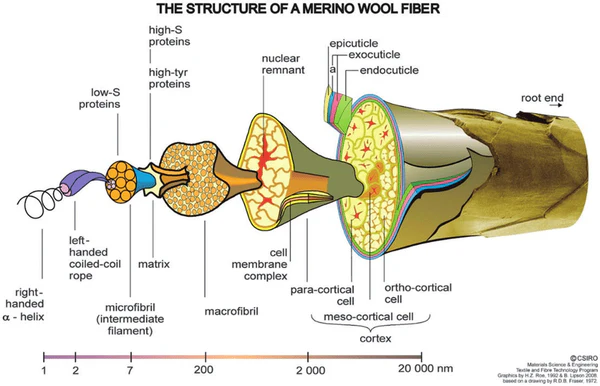
Wool’s electrical resistance decreases as its moisture content increases, but that does not automatically make it a grounding fabric. An actual grounding connection requires a sufficiently conductive pathway to the earth.
Does wool protect against electromagnetic radiation?
Moisture can change the electromagnetic properties of textiles. However, there is currently insufficient evidence that ordinary wool clothing provides meaningful protection from environmental electromagnetic exposure.
Can natural fabrics improve sleep?
Natural fabrics can improve sleep comfort through temperature regulation, moisture management, and their feel against the skin. The effect depends on the fabric, construction, environment, and individual sleeper.
The Bigger Question: What Are We Surrounding Our Bodies With?
The relationship between clothing and the electrical nature of the human body deserves further exploration.
We already know that fabrics differ in electrical resistance, moisture absorption, static charge accumulation, and thermal behavior.
We also know that the body depends on electrical activity for many essential functions.
What we do not yet know is whether the differences between everyday clothing materials meaningfully influence those internal electrical processes.
John Veltheim’s reported observations offer one hypothesis. Modern textile science provides measurable mechanisms worth studying. My own outdoor sleeping experiences have demonstrated the practical advantages of natural fibers.
The discovery that wool’s electrical conductivity changes with its moisture content opens additional questions about grounding and the electromagnetic environment.
Together, these perspectives encourage a larger conversation about the materials we place next to our bodies.
For me, this is part of a broader philosophy: the body is the first piece of gear.
Everything we wear, carry, and sleep in should begin with an understanding of how the human body functions in the natural world.
And sometimes the simplest materials offer the most interesting possibilities.
Scientific References
- Algie, J. E., and Watt, I. C. (1965). The Effect of Changes in the Relative Humidity on the Electrical Conductivity of Wool Fibers. Textile Research Journal. DOI
- Effect of moisture content on the electromagnetic shielding ability of non-conductive textile structures. Scientific Reports (2021). Read the study
- Effects of Environmental Conditions on Electrical Properties of Textile Fabrics. Read the study
- John Veltheim — reported observations concerning clothing, acupuncture, and chi flow. Original publication details to be confirmed before final citation.
Moisture and sleep: the difference you actually feel at 3 a.m.
A sleeping adult loses roughly half a litre of water overnight through skin and breath. Where that water goes decides whether you sleep through the night.
- Synthetic fill and shells can’t absorb it. Vapour condenses on the cold side of the fabric or stays on your skin as liquid sweat. The result is the familiar cycle: warm → sweaty → clammy → chilled → awake. Fleece and polyester sleeping-bag liners are the worst offenders because they sit right on the skin.
- Wool absorbs vapour into the fiber before it becomes liquid, and releases heat as it does — the heat of sorption, about 960 kJ per kilogram of water absorbed. That is why a wool bag feels warmer as the night gets damper instead of colder, and why the surface stays dry to the touch. We cover the physics in How wool stays warm when wet and the field experience in Why damp cold feels colder.
- Cotton absorbs well but holds liquid water against the skin once saturated and dries slowly — fine for a sheet in a dry house, poor for a base layer on a wet
Sleep warm out there — in wool
The Rewilder is a 20°F backpacking sleeping bag (4 lb, packs to 11 × 11 in) that keeps insulating when conditions turn damp. Add the merino liner for another ~10°F and a wool pad underneath for a complete natural-fiber sleep system.
-
Lightweight Wool Sleeping Bag–The Rewilder
The lightest all-natural backpacking bag
4 lb / 1.8 kg20°F / −6°C (10°F option)Packs to 11 × 11 in
Price range: $557.00 through $888.00 Select options This product has multiple variants. The options may be chosen on the product page -
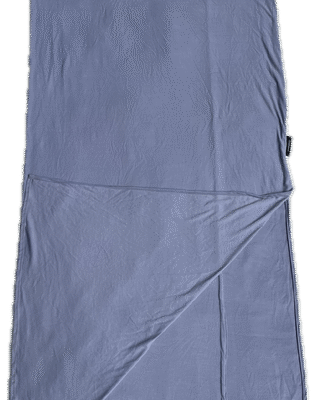
Merino Wool Sleeping Bag Liner & Sleep Sack
Warm, washable wool liner for any bag
1.9 lb / 0.9 kgAdds ~10°F30 oz merino jersey
Price range: $200.00 through $235.00 Select options This product has multiple variants. The options may be chosen on the product page -
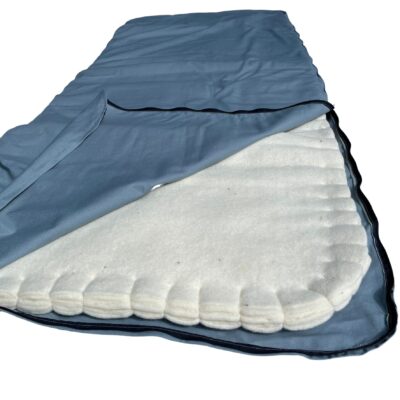
Organic Wool Sleeping Pad
Firm, breathable, machine-washable cover
¼ – 1.5 in wool felt24 – 60 in wide
Price range: $150.00 through $1,100.00 Select options This product has multiple variants. The options may be chosen on the product page