Why does damp weather feel colder? Forty degrees and raining will chill you faster than twenty degrees and clear—anyone who has spent a November night in the Southern Appalachians knows it in their bones. The plain answer is that damp air and damp clothing take more of your body’s heat to warm than dry air does, and water carries that heat away from you far faster than air. Damp cold, wet cold, cold damp weather—call it what you like, it is the condition most of us actually camp in. And the more damp and cold the night, the more it matters what your insulation does with water. Here is why damp and cold feels the way it does, and why I sleep in wool because of it.
My early lesson in damp cold on Mount LeConte
Years ago I went on a winter backpacking trip in the Great Smoky Mountains, up the leafless trail to Mount LeConte. Near the top I lost the trail, dead-reckoned my way to the Appalachian Trail right before dark, made an emergency camp and fell asleep. I woke up sweating. Snow had piled on the tent overnight and sagged down to my body, and the synthetic clothing and sleeping bag would not let my body heat vent.
I had gotten wet from overheating, then cold from being wet in the cold and wind. After a full day hiking through snow, damp and sweaty, I felt depleted and chilled—I had gone to my edge and spent my reserves. I hitchhiked to Bryson City and called a buddy to come get me. There had to be a better way.
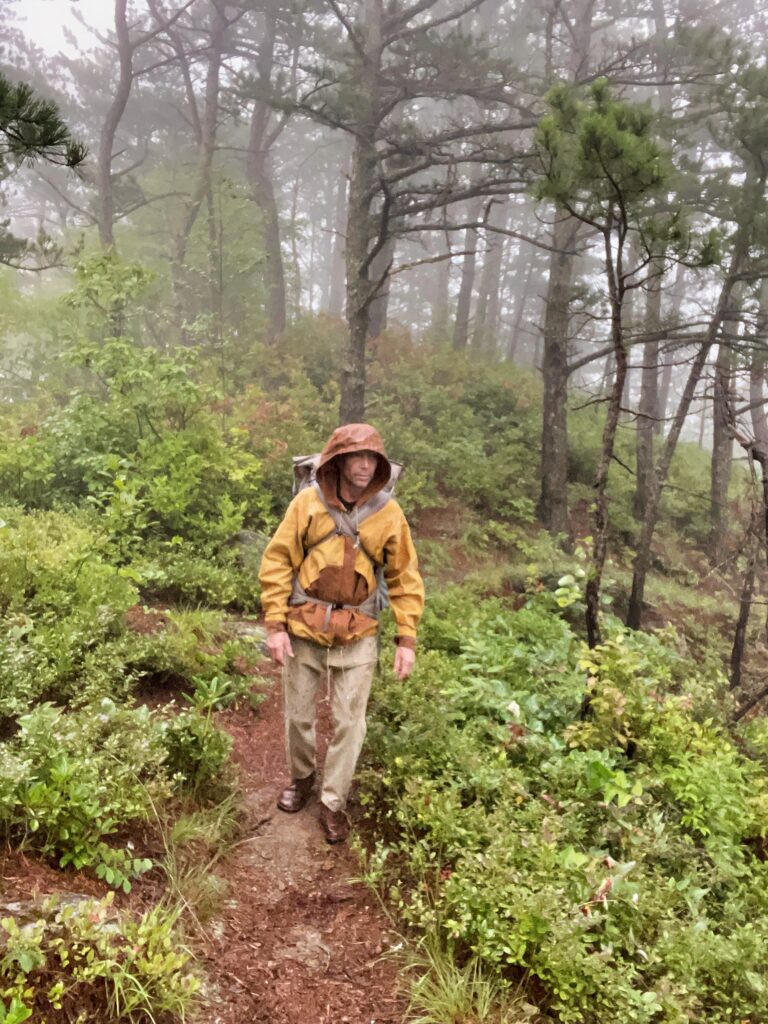
Why does damp weather feel colder? The damp day explained
What is damp weather? Air close to saturation—fog, drizzle, mist off a creek, heavy dew—so that everything porous, including your clothes, picks up water from it. Our clothing keeps us warm on cool days by trapping a layer of air between the body and the fabric. That trapped air cannot circulate and carry heat away, so the body only has to warm the layer once and then hold it.
On a very cool, damp day, that layer of trapped air contains water molecules, and the clothing itself is likely holding some water too. It takes more heat energy to warm water than to warm air—in physics parlance, water has a higher specific heat capacity. If the air next to your skin is damp, it takes more of your body’s heat to warm it. Hence the perceived temperature is cooler, whether or not a drop of rain ever falls.
Does rain make it colder?
Yes, two ways. Why is it cold when it rains, and why is rain cold? Falling rain is usually cooler than the air at ground level, and as it evaporates off leaves, rock and your jacket it takes heat with it—which is why the air feels raw. Why is it colder after it rains? Same reason: every wet surface is still evaporating. That is the small part.
The bigger part is you. Ask why does it feel colder when it rains, and the answer is that rain soaks your clothing, water replaces the trapped air, and now your body is warming water instead of air. So does rain make it feel colder? Only if it gets into your layers. And why does it get cold when it rains at night in a tent? Your own breath and sweat are trapped, and you are lying in damp air.
Does humidity make cold feel colder?
Yes, but not by the mechanism most people have in mind. On a hot day, humidity makes it feel hotter because sweat is your cooling system and sweat does not evaporate well into saturated air. When it is cool and humid, the body does not need to cool itself, so it sweats less—and that hot-day mechanism simply does not apply.
Why does humid cold feel colder, then? Because the moisture is in your trapped air and in your clothing, where it soaks up your heat—the same answer as the damp day above. And does low humidity make it feel colder? No; dry cold is the easy kind. In dry air the vapor your body gives off leaves the clothing and disperses, and your insulation stays insulation.
Why does being wet make you cold?
On a cold rainy day the falling rain soaks your clothing and you feel colder. On a cool, damp day it is less obvious, but the clothing still picks up moisture from the damp air and from your own body. Either way, wet clothing does not keep you as warm as dry clothing: water in the layers pulls heat away, and even in humid air some of that moisture evaporates, and evaporation is a cooling process. The second effect is usually small. The first is not.
And here is the thing the industry does not like to say out loud: you will get wet. Not just from rain. We all perspire and respire about a cup of water every night without sweating—insensible perspiration—and a great deal more on a hard climb. My LeConte night was not a rain failure. It was my own moisture, trapped by synthetic layers that would not breathe, turning to cold the moment I stopped moving.
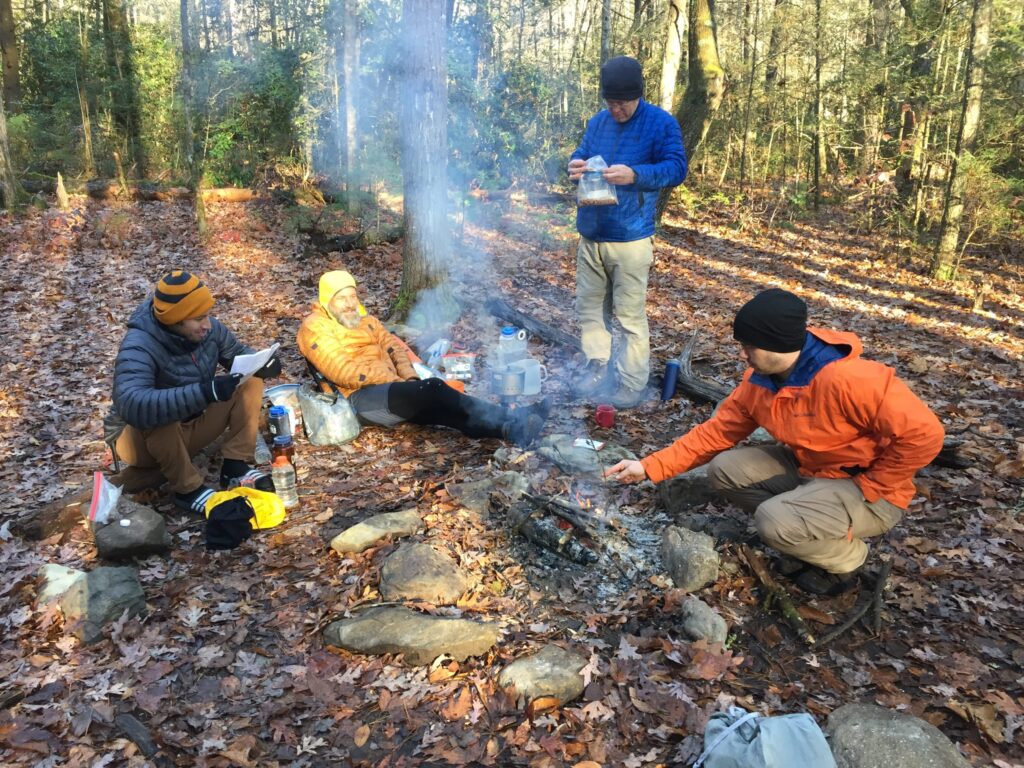
Dry cold vs wet cold
Dry cold is the easy kind. Well below freezing and still, snow brushes off, sweat vapor leaves your clothing and disperses, and insulation stays dry. Plenty of old-timers will tell you that ten degrees and calm is more comfortable than thirty-eight and raining, and my body agrees. Nearly all modern gear—and every warmth-to-weight number on a hang tag—was designed and measured for this kind of cold.
Wet cold is where most of us actually camp. The Southern Appalachians, the Pacific Northwest, the British Isles, anywhere near a creek in winter: thirty to fifty degrees with fog, dew or rain. In the wet cold vs dry cold comparison, this is the band that puts people in trouble, precisely because it does not look dangerous. Why does wet cold feel colder than the thermometer says? Because everything you own is quietly filling with water. If your camping happens here, how your sleeping bag behaves when damp matters far more than its rating in a dry lab.
Why does damp cold feel colder in a down bag than in wool?
Down is light and packs really small, but the benefits stop there. Down does not work if wet, and it cannot take humid, damp conditions, so you have to zip up inside a tent to protect it. That tent then creates a humid microclimate from your own breath and insensible perspiration, which makes you colder.
Wool takes the other road. Published textile figures for moisture regain—how much water a fiber holds from the air at 65 percent relative humidity—run wool 13–16 percent, cotton 7–8, nylon 4–4.5, polyester 0.4. Wool takes the vapor inside the fiber, where it does not feel wet, and releases heat as it does so: about 960 kJ for every kilogram of water it takes up. I lay out the whole mechanism in how wool stays warm when wet: heat of adsorption explained.
| On a damp night | Down bag | Synthetic bag | Wool bag |
|---|---|---|---|
| Where the water goes | Onto the down clusters, which clump and collapse | Between the polyester fibers, against your skin (the fiber itself holds almost nothing) | Into the wool fiber as vapor, where it does not feel wet |
| Loft when damp | Largely lost | Mostly kept | Kept |
| Warmth when damp | Poor | Partial—loft stays but water between the fibers pulls heat away | Good—the fiber keeps insulating and releases heat as it takes up vapor |
| Feel against skin | Clammy nylon shell | Clammy nylon shell | Cotton shell and merino liner; no clammy layer |
| Dries from body heat overnight | No | No—only by air or fire | Yes, gradually; the vapor keeps moving outward |
| Can you breathe inside it? | No—makes you colder | No—makes you colder | Yes; your breath becomes heat |
| After a full soaking | Needs sun or a dryer | Wrings out and air-dries fastest | Heavy and slow to dry; insulates damp, not saturated |
Wool is not magic: a saturated wool bag is a wet, heavy bag, and a synthetic one dries faster after a dunking. What wool handles is the common case—damp air, dew, condensation, a sweaty base layer—without losing its warmth or turning clammy. That is the case that ruins most nights, and the best sleeping bag for wet weather is the one built for it.
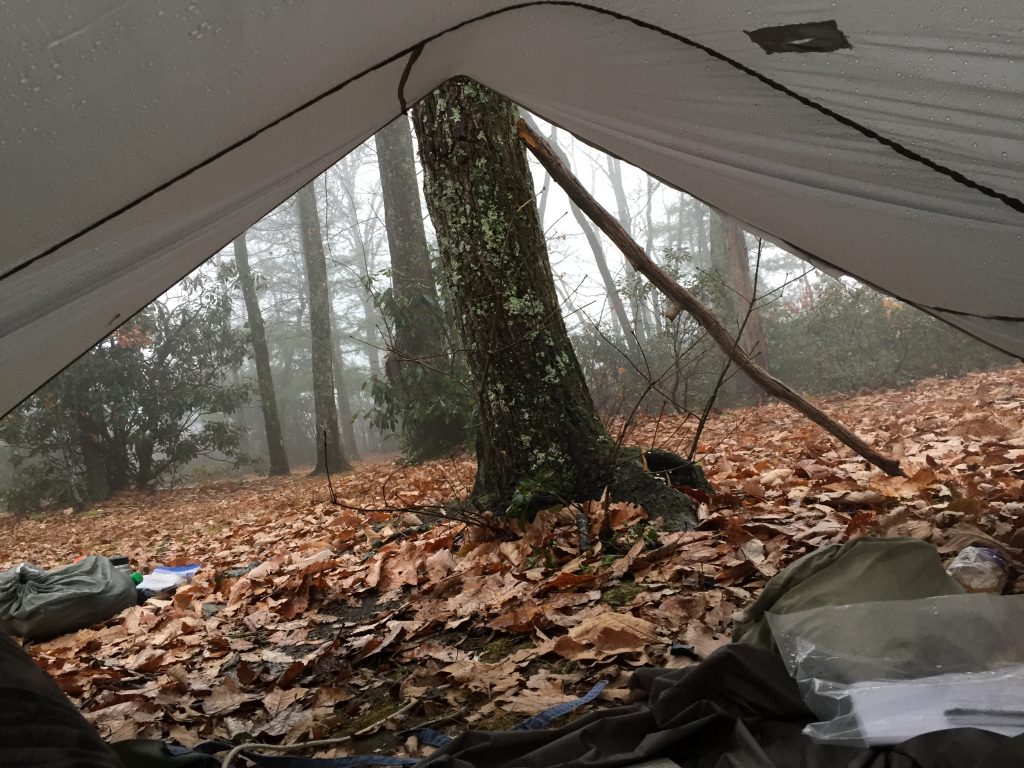
How I stay warm on damp and cold nights
The conventional answer is to fight the damp: seal the tent, seal the jacket, build a dry bubble. I did that on LeConte and it nearly did me in. At Lucky Sheep® we take a different approach—invite the weather in, and use natural materials that know what to do with it. In practice that looks like this.
- Let yourself get wet from the waist down. Wool shorts in summer, wool pants in cold weather. They get wet, keep you warm without overheating, and dry on you as you walk.
- Keep one set of clothes dry for camp. Merino top and bottom, wool socks, hat and sweater in a silnylon bag inside the pack—one place I use synthetic, and gladly. Never sleep in the base layer you hiked in.
- Wool against the skin, wool over that, then a shell that breathes. Merino base, nested wool sweaters, and a loose, ventable outer of waxed cotton. Our waxed canvas rain jacket sheds rain and wind, lets your vapor out, and dries fast by the fire without fear of a flying ember.
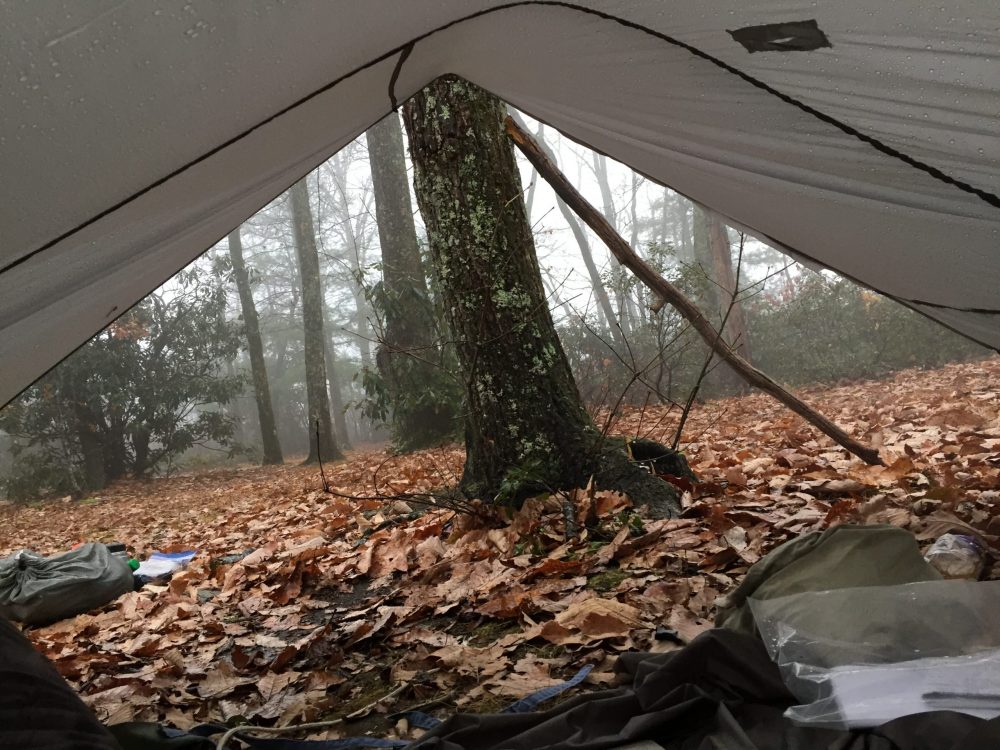
- Don’t build a bubble. My shelter is a tarp open at both ends. Humidity can move in, fog can move in, and the cup of moisture my body makes can move out. A zipped-up tent traps it, and you wake up inside the very dampness you were trying to keep outside.
- Get off the wet ground. A ground cloth below, then a closed-cell foam pad when backpacking—synthetic, but the only practical thing I know of for the trail. At basecamp, wool felt under me instead.
- Breathe inside the bag. On the coldest nights I pull the wool bag over my head and use my breath as heat. The wool takes the moisture and passes it outward. Only wool lets you do this.
Tarp above. Waterproof barrier below. Wool around you. Air moving through everything. Protection where you need it, ventilation where you want it, and wool where moisture and temperature matter most.
Choosing cold weather sleeping bags for damp country
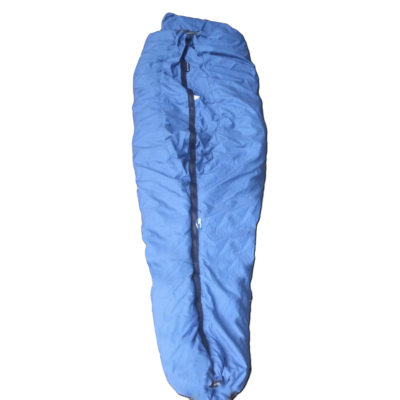
If you camp mostly in dry cold—the Rockies in January, the desert—down’s warmth-to-weight is hard to argue with, and I say so. If your nights fall in that thirty-to-fifty-degree band with fog, dew and rain, the arithmetic changes. A bag that stays warm damp, puts no clammy nylon against your face, and dries from your own body overnight is worth its extra weight. The Rewilder wool sleeping bag is 4 pounds in Standard 2-inch loft with a 20°F field rating—about three times a 20°F down quilt, and I will not pretend otherwise. What the pounds buy is a bag that behaves the same on the fourth wet night as the first.
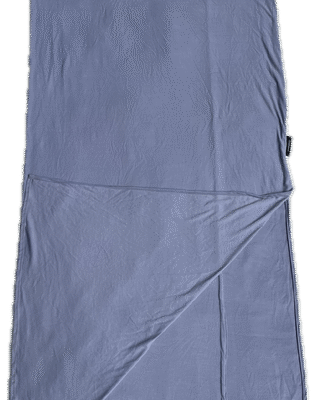
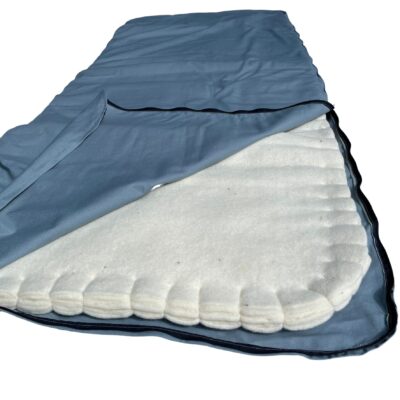
For basecamp, cabin and truck camping, where weight does not matter, the Aurora Borealis is the same wool system with 2, 3 or 5 inches of loft, field rated to about 20, 10 and minus 5. Both use US wool batting inside a beeswaxed organic cotton shell with a merino jersey or WeatherWool® liner—no synthetic fill, no PFAS, no DWR. Our ratings are field ratings from years of nights in the Blue Ridge, not ISO lab numbers. A wet sleeping bag in the lab is a different thing from a damp one under a tarp, and we rate for the second.
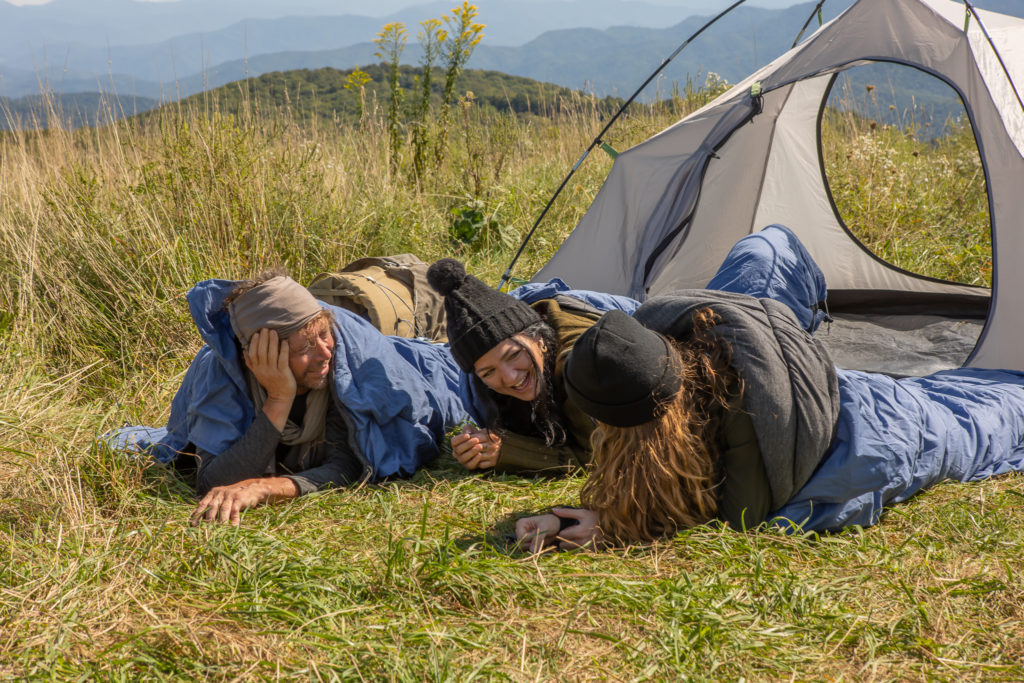
What I’d tell you
Some of the best night-sky viewing is in open meadows and balds, and those are exactly the places you will wake up covered in dew. I spent decades struggling with that until I discovered wool. Damp weather is not the enemy. It is the weather. Sleep in a fiber that knows what to do with it.
Real fibers for real conditions.
Reviewed September 2026 by the Lucky Sheep® team.
Sleep warm out there — in wool
The Rewilder is a 20°F backpacking sleeping bag (4 lb, packs to 11 × 11 in) that keeps insulating when conditions turn damp. Add the merino liner for another ~10°F and a wool pad underneath for a complete natural-fiber sleep system.
-
Lightweight Wool Sleeping Bag–The Rewilder
The lightest all-natural backpacking bag
4 lb / 1.8 kg20°F / −6°C (10°F option)Packs to 11 × 11 in
Price range: $557.00 through $888.00 Select options This product has multiple variants. The options may be chosen on the product page -
Merino Wool Sleeping Bag Liner & Sleep Sack
Warm, washable wool liner for any bag
1.9 lb / 0.9 kgAdds ~10°F30 oz merino jersey
Price range: $200.00 through $235.00 Select options This product has multiple variants. The options may be chosen on the product page -
Organic Wool Sleeping Pad
Firm, breathable, machine-washable cover
¼ – 1.5 in wool felt24 – 60 in wide
Price range: $150.00 through $1,100.00 Select options This product has multiple variants. The options may be chosen on the product page