In 2019 I wrote a short guide called The Art of Sleeping Outdoors: For Vitality, Health and Freedom. It has lived on this site as a ten-page PDF ever since. This page is its home: the guide’s own sections, lightly updated, and what has changed at Lucky Sheep® since. Read or download the original 2019 PDF here.
How Did I Learn to Love Sleeping Outdoors?
Staying with new friends who offered me the choice of several rooms in their house, I asked if I could sleep in their yard. I consider the outside my favorite room in the house.
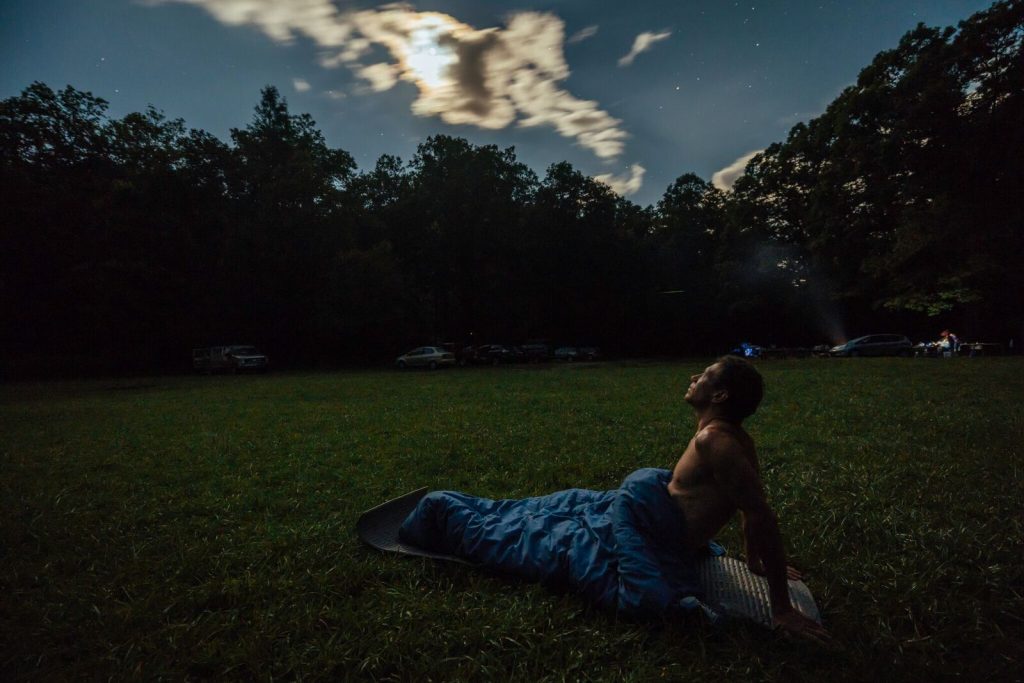
When I was 15 I started sleeping outside on the lawn of the apartment complex where I lived. I slept much better and woke up more alert. Sleeping outside to me wasn’t so much about sleeping as about being one with the night — stars, clouds, wind, fog or rain, whatever wants to happen.

Benefits of Sleeping Outdoors
The list as I wrote it in 2019. I hold a couple of these more loosely now.
- Earthing on the ground — which I hedge more than I did in 2019; it depends on where you are and who you are.
- Away from the hum of the house: wiring, screens, climate control.
- Negative ions from moisture in the air, especially near moving water.
- Fresh air, all night, continuously renewed.
- Away from building materials and furniture that off-gas.
- A hard surface, which lets the spine move with the breath. (See Sweet Dreams on a Hard Surface.)
- Cooler temperatures, and the relaxation of cold conditioning.
- A feeling of oneness with the universe, because we are connecting with our source.
- Attunement to the moon and the seasons.
- The primal experience of living with almost nothing.
10 Steps to Sleeping Outside Naturally
1—Location
Find a good place. A private backyard, deck or porch puts you ahead of most of us.
Widow makers. Look up. Broken limbs or leaning trees can come down in a big wind.
Inclined surface. I find it beneficial to sleep on a slight incline, head uphill — up to about 11 degrees.
Water drainage. Imagine a rain. Low spots become ponds; dry creek beds flow from storms miles away. The ideal spot sits slightly above the ground around it.
Air circulation. Stagnant air fosters mold. Look for tall trees and open ground. The most auspicious place for air quality is next to a moving stream.
Wilderness etiquette, privacy and safety. Camp at least 200 feet from the trail — Leave No Trace etiquette — and let everyone have the solitude they came for.
2—Dew and Frost
The best night-sky viewing is in open meadows and prairie — exactly where dew finds you and can leave you drenched and cold by morning.
The remedy is wool bedding instead of cotton, down or synthetic. In 2019 I wrote that wool “keeps you dry”; I would say it differently now. Wool takes water vapor into the fiber and gives back heat, so it feels warm even when damp, and the beeswaxed cotton shell sheds what settles on top. The result is the same: with wool you can wake up with no idea the area is covered in a dense fog or dew until you get out of your sleeping bag.
3—Rain Protection
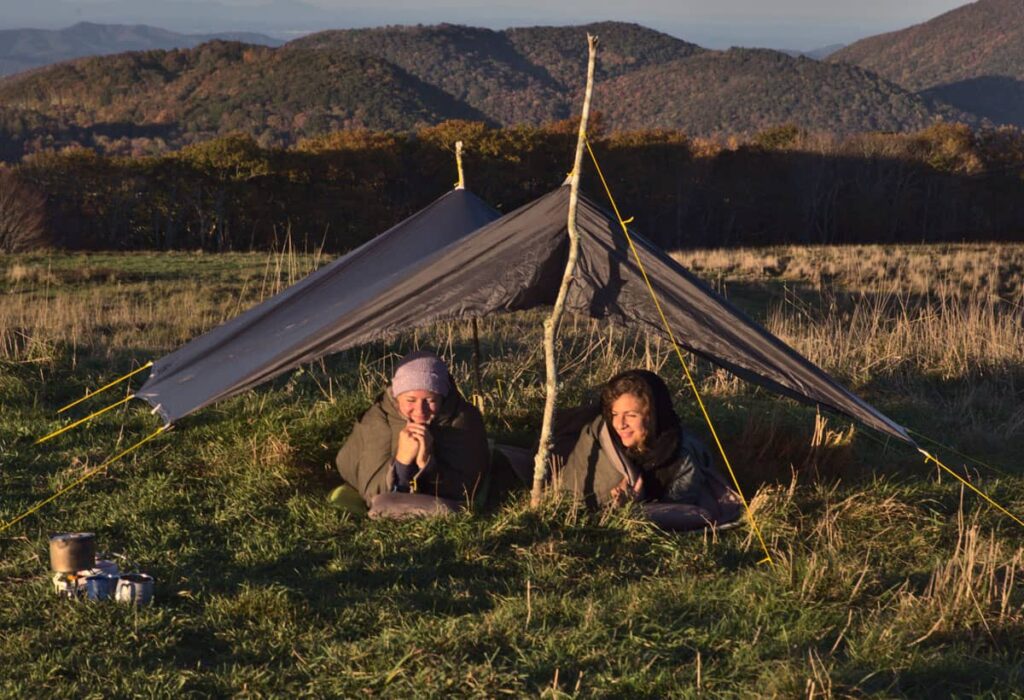
In good weather the open sky is the ultimate. Otherwise my favorite shelter is a rain tarp — one to two pounds, fits two people plus gear, air from all directions. Under it: a ground sheet and, for backpacking, a closed-cell foam pad.
For non-backpacking camping, the ultimate tent is canvas, which keeps wind and rain out but lets air pass through. Sleeping in canvas is almost as good as sleeping under the open sky. Lucky Sheep® makes an organic canvas tipi tent for exactly this; The Tipi Experiment chronicles the winters I spent in one.
4—Learn How to Relax on a Hard Surface
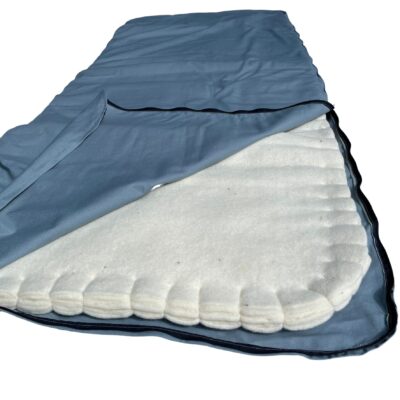
On a firm surface we breathe deeper and sleep deeper, and the spine moves all night with the breath. Sleep at home the way our ancestors did — no mattress, simple padding — and your body will already know the ground. For backpacking I use a closed-cell foam pad; for a permanent outdoor bedroom, a slatted wooden frame with a wool felt sleeping pad on top.
5—Use Your Indoor Environment to Train for the Outdoors
Keep your home cold in winter and the windows open, to the degree it makes sense. Set up a tent or tarp in the backyard. Or consider a tipi.
6—Things That Go Bump in the Night
This is our fear of animals, and underneath it the fear of the dark. There are real precautions: in bear country, hang all food and dishes ten feet off the ground. In the Eastern US that is sufficient.
This is where the wild enters your rewilding. Most of these fears are mere fears, and the only cure is to face them. At first every twig snapping is cause for alarm. Then you realize you are out here living with all these creatures, and it is okay. My first night without a tent I barely slept; that one night proved nothing was going to happen. That is about what it takes for most of us.
7—Insects
Perhaps the biggest deterrent to sleeping outside. Use netting or protective clothing; citronella and lemongrass oils help. Often the easiest remedy is crawling inside the sleeping bag with your head covered — which can only be done in a wool bag, because a synthetic one gets wet from your breathing. I avoid DEET.
8—Set Your Circadian Rhythms Before You Leave
Get a head start at home: avoid blue light at night, go to bed early, eat real food in season, cold-condition in increasing doses, get morning sunlight, and move during the day.
9—Biohacking for Noise and Light
Some nights you could hear a pine needle drop; others bring ferocious wind and pelting rain. The best biohack is silicone earplugs. For moonlight, a piece of extra clothing or a merino bandana over your eyes.
10—My Own Checklist of Outdoor Sleeping Gear
- Ground sheet — silnylon, one of the places I use a synthetic.
- Sleeping pad — closed-cell foam for backpacking; at camp, the wool felt pad.
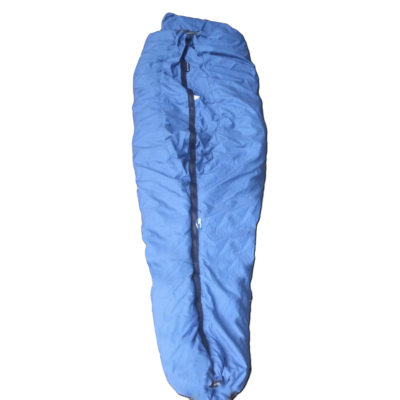
- Wool sleeping bag — the Rewilder.
- Tarp or tent.
- Pillow — extra clothing in a sack, or the camp pillow.
- Bed clothing — a merino base layer, kept dry for sleeping.
- A headlamp with a red setting, to keep your night vision.
What Has Changed Since 2019
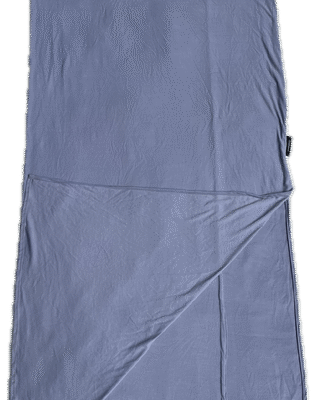
The bag. The tipi prototype became the Rewilder: US wool batting in a beeswax-treated organic cotton shell, merino or WeatherWool liner, no synthetic fill. Field-rated to 20°F / −6°C at 2 inches of loft or 10°F / −12°C at 3 inches — my field ratings, not ISO lab tests. About 4 lb, roughly three times a down quilt of the same rating; packs to about 11 × 11 inches. What the ounces buy: you can pull the bag over your head and breathe inside it.
The finder. The five-question sleep-system finder tells you which layers you need and which to leave at home.
The writing. This one-off guide has grown into The Lucky Sheep® Rewilding Guide — field notes from real nights out, graded honestly — and the book, A Rewilder’s Guide to Outdoor Adventure. For the step-by-step version with current gear, start with How to Sleep Outside: The Natural Way to Sleep Outdoors.
Conclusion
I have met people who have never slept outdoors, and some who say, “I wish I could do that.” The thing is, you can. It is mostly a matter of breaking down psychological and logistical obstacles. Sleeping outdoors is everyone’s birthright, and it is as natural as walking.
People have told me, “I feel sorry for you out there all alone in the cold.” My reply is that I am not alone. I am with the dew and the process of dew forming, with the frost painting a layer on my sleeping bag as I watch the moon and stars sail across the sky. There is nothing to fear, and so I feel at home anywhere.
Sweet dreams.
Reviewed September 2026 · originally published as a PDF in June 2019.
Sleep warm out there — in wool
The Rewilder is a 20°F backpacking sleeping bag (4 lb, packs to 11 × 11 in) that keeps insulating when conditions turn damp. Add the merino liner for another ~10°F and a wool pad underneath for a complete natural-fiber sleep system.
-
Lightweight Wool Sleeping Bag–The Rewilder
The lightest all-natural backpacking bag
4 lb / 1.8 kg20°F / −6°C (10°F option)Packs to 11 × 11 in
Price range: $557.00 through $888.00 Select options This product has multiple variants. The options may be chosen on the product page -
Merino Wool Sleeping Bag Liner & Sleep Sack
Warm, washable wool liner for any bag
1.9 lb / 0.9 kgAdds ~10°F30 oz merino jersey
Price range: $200.00 through $235.00 Select options This product has multiple variants. The options may be chosen on the product page -
Organic Wool Sleeping Pad
Firm, breathable, machine-washable cover
¼ – 1.5 in wool felt24 – 60 in wide
Price range: $150.00 through $1,100.00 Select options This product has multiple variants. The options may be chosen on the product page