How much does a wool sleeping bag weigh? Ours run from 4 lb to 15 lb depending on the bag, the size and the loft. The one you would carry — the Rewilder in Standard 2″ loft, field rated 20°F — is 4 lb / 1.8 kg, which is about three times the weight of a 20°F down quilt. I will not argue with that number. Instead I will tell you what happened when we put my pack on the scale, where the pounds come from, what three pounds costs you on the trail, and why I carry them anyway.
Thirty pounds at the trailhead, same as everyone
Not long before sunset, I pulled into a remote trailhead above Linville Gorge to meet a group of backpackers in slick, bright-colored synthetic everything — teal, red, dark blue. I pulled out my light green canvas backpack. At one time I had been a gear junkie too, and I was honestly not sure how my wool and waxed cotton would measure up. When you are the only one saying something works, you start to ask whether you are deluding yourself.
We weighed our packs. Everyone’s came in close to thirty pounds with food and water. Mine was almost exactly thirty pounds. So far, so good. My sleeping bag weighed four pounds against their one-to-two-pound down bags, and my clothes were heavier too, so I must have saved elsewhere — my two-pound tarp instead of a tent, for one. But we have to bear in mind (pardon the pun) that weight isn’t the only thing that matters. Weight was only the first of five tests my gear would face that week.
How much does a wool sleeping bag weigh? Every Lucky Sheep® bag by size and loft
| Product | Loft / field rating | Size | Weight | Packed |
|---|---|---|---|---|
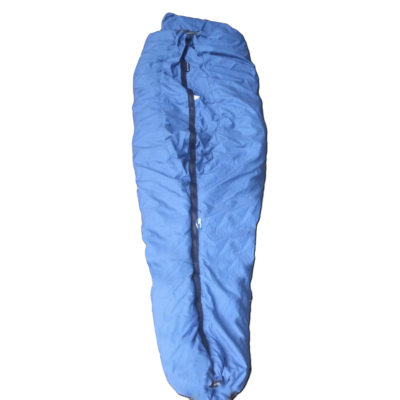
| Rewilder (backpacking, tapered) | 2″ / 20°F | Standard 80 × 54 in (to about 5′10″) | 4 lb / 1.8 kg | About 11 × 11 in with straps |
| Rewilder | 2″ / 20°F | Long 86 in (5′11″–6′3″) or Wide 64 in | Heavier than Standard, between 4 and 5.5 lb | Slightly larger |
| Rewilder | 3″ / 10°F | Standard to Long Wide | Up to about 5.5 lb / 2.5 kg | Larger |
| Aurora Borealis (rectangular, basecamp) | 2″ / 20°F | Single | About 7 lb | Not for carrying |
| Aurora Borealis | 3″ / 10°F | Single | About 10 lb | Not for carrying |
| Aurora Borealis | 5″ / −5°F | Single | About 15 lb | Not for carrying |
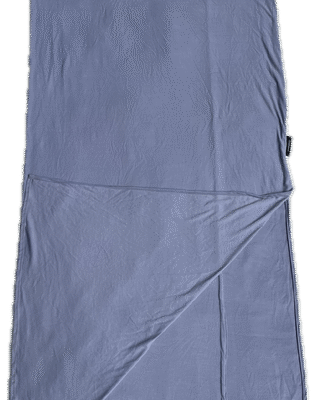
| Merino liner | Adds about 10°F; summer bag alone | 28″ or 33″ girth | 30 oz / 0.85 kg | Small |
| Wool felt bedroll | Blanket, over-quilt, pad | 50 × 76 in | 4 lb | Rolled |
| Wool sleeping pad | ¼ in felt | 24 × 76 in | 32 oz / 0.9 kg | About 6 × 12 × 12 in |
Exact weights for each Rewilder size and loft are on the product page; the range above is honest about the fact that a Long Wide 3″ is a much bigger bag than a Standard 2″. Wool weights also drift a little, because wool takes on moisture from the air until it comes into equilibrium with it; a bag weighed after a foggy night is not quite the bag weighed in a dry room. Every bag is made in Burnsville, North Carolina, for anyone looking for sleeping bags made in USA.

Where the weight comes from
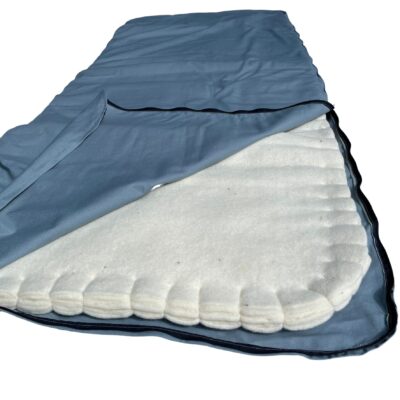
Insulation is trapped air, and the question is how much fiber it takes to hold two inches of air still. Down answers that question with a cloud of clusters that weigh almost nothing. Wool answers it with a dense, crimped mat — the Rewilder 20 carries about two pounds of wool batting — and that mat is exactly what lets the bag keep its loft when damp, hold water vapor inside the fiber and spring back after years of compression. The weight and the wet performance are the same property seen from two sides.
The shell is the second pound. A down bag is wrapped in the thinnest coated nylon that will hold feathers. The Rewilder is wrapped in beeswax-treated organic cotton, with a merino jersey or WeatherWool® liner inside instead of more nylon. What that buys is a shell that breathes, sheds dew, is silent, is never cold to the touch, and can be re-waxed and sewn for decades. The zipper is PFOS-free plastic and the thread is polyester.
How much does a down sleeping bag weigh, and what is average?
The average down sleeping bag for backpacking weighs about one to two pounds or less at a 20°F rating; the lightest 20 degree sleeping bag on the market is a hoodless down quilt well under that. A synthetic bag at the same rating sits somewhere between down and wool. So the average sleeping bag weight a backpacker is used to is one to three pounds, and the Rewilder at 4 lb is roughly three times the quilt. Which is right for you depends on where you sleep, not on the scale — see wool vs down sleeping bags.
What is a good sleeping bag weight for backpacking?
The industry answers this with base weight — everything in the pack except food, water and fuel. Traditional backpacking is 30 lb and up; lightweight is under 20 lb; the lightest class is under 10 lb. A good backpacking sleeping bag weight is whatever keeps you inside the class you have chosen, and new synthetic fabrics and treated down have driven an obsession with getting there — though some people give up on the lightest levels because of the compromises in comfort and safety.
My answer is different. Do not weigh the bag; weigh the system. A 20 degree backpacking sleeping bag is one line in a list, and my list is short. Under me, a silnylon ground sheet and a closed-cell foam pad. Over me, a two-pound tarp open at both ends and a net tent when the bugs are out. Around me, the Rewilder, a merino base layer and a wool sweater. No tent poles, no rain fly, no second puffy — the bag opened flat is the camp blanket — and no bivy, because the beeswax cotton shell sheds dew on its own. That is how a 4 lb bag rides in a 30 lb pack alongside everyone else’s.
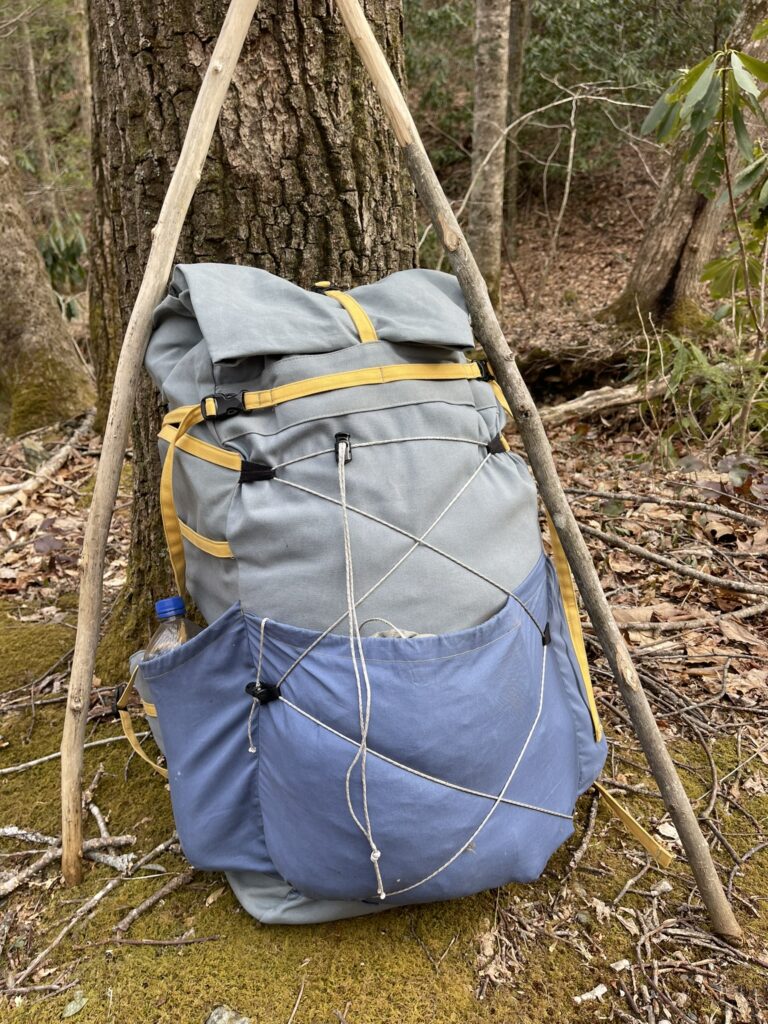
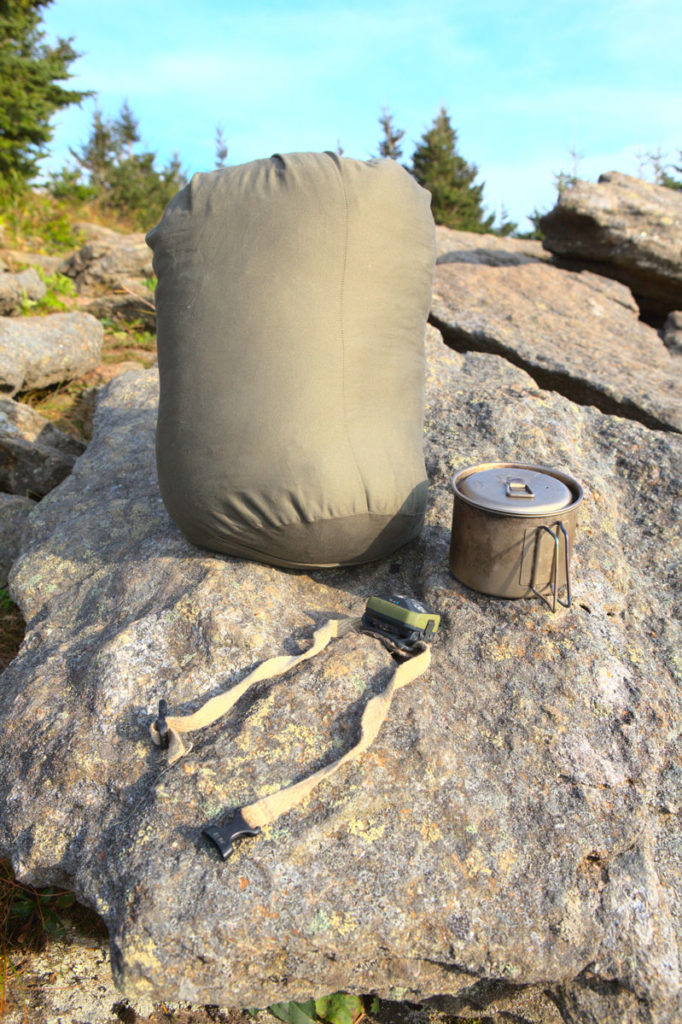
The Rewilder, a wool sweater, one merino set and two pairs of wool socks all go into a waterproof silnylon stuff sack in the bottom of the pack — this is one place I use synthetic, deliberately, so the sleep set is dry at camp whatever the day does. The 65 L canvas pack is frameless and weighs 2 lb; for a fixed camp the folded wool pad is its frame.
Three pounds costs you three-quarters of a mile
There is good reason to scrutinize weight. Each ounce burns calories, and there are only so many calories in you before you are done hiking for the day. Adding three pounds to the pack will cost you about three-quarters of a mile on a twenty-mile trek. That is the honest price of a 4 lb wool bag over a lightweight sleeping bag for backpacking; know it before you buy.
Now put the other side on the scale. When we focus only on warmth-to-weight, we leave out the rest of what makes gear good: how it deals with adverse conditions, comfort, sleep quality, environmental stewardship. On that Linville trip, in wool, I dried out through the night from my own body heat while others complained about never feeling warm the whole trip. I would trade three-quarters of a mile a day for that every time, and I slept so well on the last morning that my friends had finished breakfast before I woke up.
Is a thick sleeping bag warmer?
Yes, if the thickness is loft that stays lofted. Warmth is the still air the batting holds, so a thick sleeping bag with 3″ of wool is warmer than one with 2″ — the Rewilder 3″ is our 10°F bag — and the Aurora at 5″ is a heavy duty sleeping bag rated to −5°F. The catch is that thickness only counts if it survives the night. Down loses loft as it takes on your moisture; wool keeps it. That is why our thick bags are heavy — 10 and 15 lb for the Aurora — and why the Aurora is a basecamp and cabin bag, not meant to be carried anywhere.
Sleeping bag weight guide by season
The weight of sleeping bag for backpacking you need is set by the coldest night you expect. Here is how I match our bags to the seasons.
| Season | Lowest night | Bag | Weight | Carried or driven |
|---|---|---|---|---|
| Summer, hostels, travel | Above 50°F | Merino liner alone | 30 oz | Carried |
| Three-season | 30–50°F | Rewilder 2″ (20°F) | 4 lb Standard | Carried |
| Shoulder, early winter | 15–30°F | Rewilder 2″ plus liner, or Rewilder 3″ (10°F) | About 6 lb, or up to 5.5 lb | Carried |
| Winter camp, cabin | 0–15°F | Aurora 3″ (10°F) plus liner | About 12 lb | Driven |
| Deep winter basecamp | Below 0°F | Aurora 5″ (−5°F) plus liner | About 17 lb | Driven |
Who should not carry a wool sleeping bag
I will say this plainly. If you are a thru-hiker on a five-month schedule, working to a sub-10-pound base weight, carrying the bag on a climb, or living out of a pack under about 50 liters, the extra pounds and the 11-inch packed size are the wrong trade and a down quilt is the right answer. Take the merino liner inside it — 30 oz, about 10°F, wool at the skin — and go with my blessing. Everyone else: count your damp nights. If most of your trips are in the East, the Pacific Northwest or anywhere with fog, dew and rain, the pounds pay for themselves on the second night.
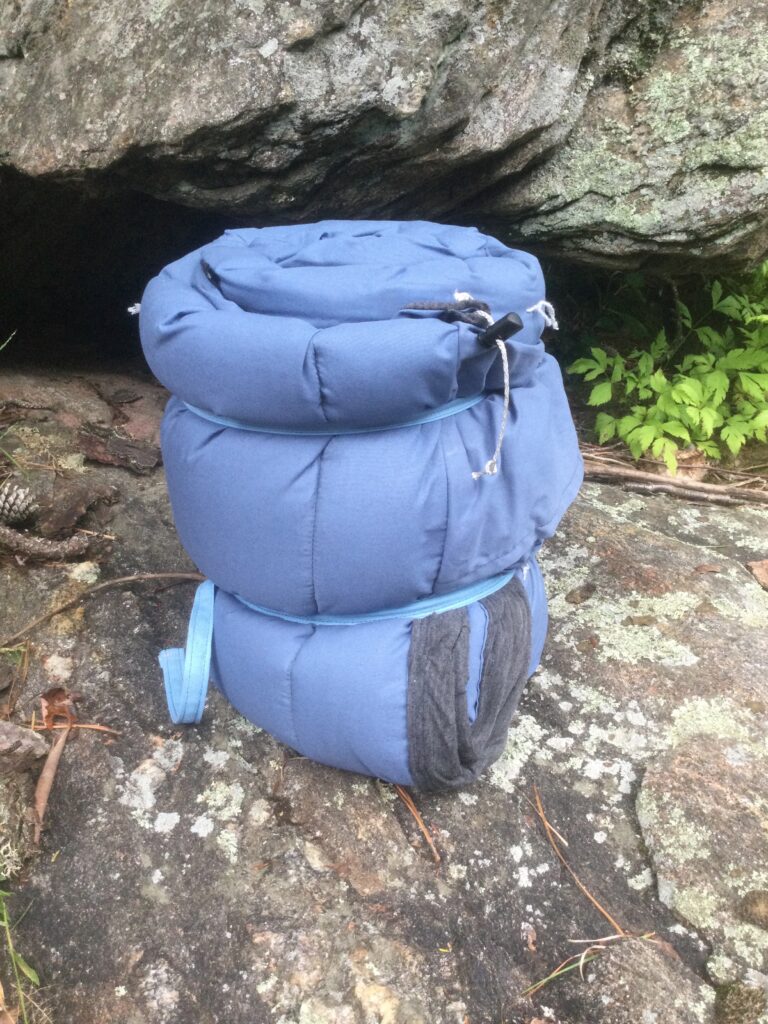
What I carry. Four pounds of wool, two pounds of tarp, a foam pad, a dry merino set in a silnylon sack, pemmican. Thirty pounds all in, the same as the group’s, and I come home restored instead of depleted — which was the whole point of going. Our field ratings are not ISO-tested; sleeping bag temperature ratings explained says what they are. Weigh your own pack, count your own damp nights, and decide for yourself.
Go Wild. Go Light. Go Natural.
Reviewed September 2026 by the Lucky Sheep® team.
Sleep warm out there — in wool
The Rewilder is a 20°F backpacking sleeping bag (4 lb, packs to 11 × 11 in) that keeps insulating when conditions turn damp. Add the merino liner for another ~10°F and a wool pad underneath for a complete natural-fiber sleep system.
-
Lightweight Wool Sleeping Bag–The Rewilder
The lightest all-natural backpacking bag
4 lb / 1.8 kg20°F / −6°C (10°F option)Packs to 11 × 11 in
Price range: $557.00 through $888.00 Select options This product has multiple variants. The options may be chosen on the product page -
Merino Wool Sleeping Bag Liner & Sleep Sack
Warm, washable wool liner for any bag
1.9 lb / 0.9 kgAdds ~10°F30 oz merino jersey
Price range: $200.00 through $235.00 Select options This product has multiple variants. The options may be chosen on the product page -
Organic Wool Sleeping Pad
Firm, breathable, machine-washable cover
¼ – 1.5 in wool felt24 – 60 in wide
Price range: $150.00 through $1,100.00 Select options This product has multiple variants. The options may be chosen on the product page