
Sleeping on a hard surface is the part of my outdoor system people are most afraid to try, and the part that has done the most for my sleep. For most of my adult life I have slept on a firm surface: a wood floor, a slatted platform, a wool pad on the ground of a tipi, and more than a few boulders. This guide explains why sleeping closer to the ground works, what I learned living in a tipi through three winters, how to make the change at home without misery, and what to put under you when you take it outside.
Why a firm surface sleeps better than a mattress
For thousands of years humans slept on minimal surfaces without mattresses. In a few decades of advertising we have come to think of sleep and mattresses as the same thing. Nobody questions it, so nobody studies it.
I believe the mattress won for simple reasons. The perceived comfort is an adaptive response: after years of chair sitting and soft beds the body becomes front-loaded and tight, and when it stretches out on a firm surface those tight muscles get noticed. A mattress also looks thick and plush, so it must be comfortable.
What I have found is the opposite. On a firm surface the body lengthens, the natural kickback of breathing against the surface gently realigns you as you sleep, and the relaxation goes deeper. The people I have informally interviewed say the same thing: they complain that it is hard, and then they sleep very well and wake up refreshed.

What sleeping closer to the ground taught me: three winters in a tipi
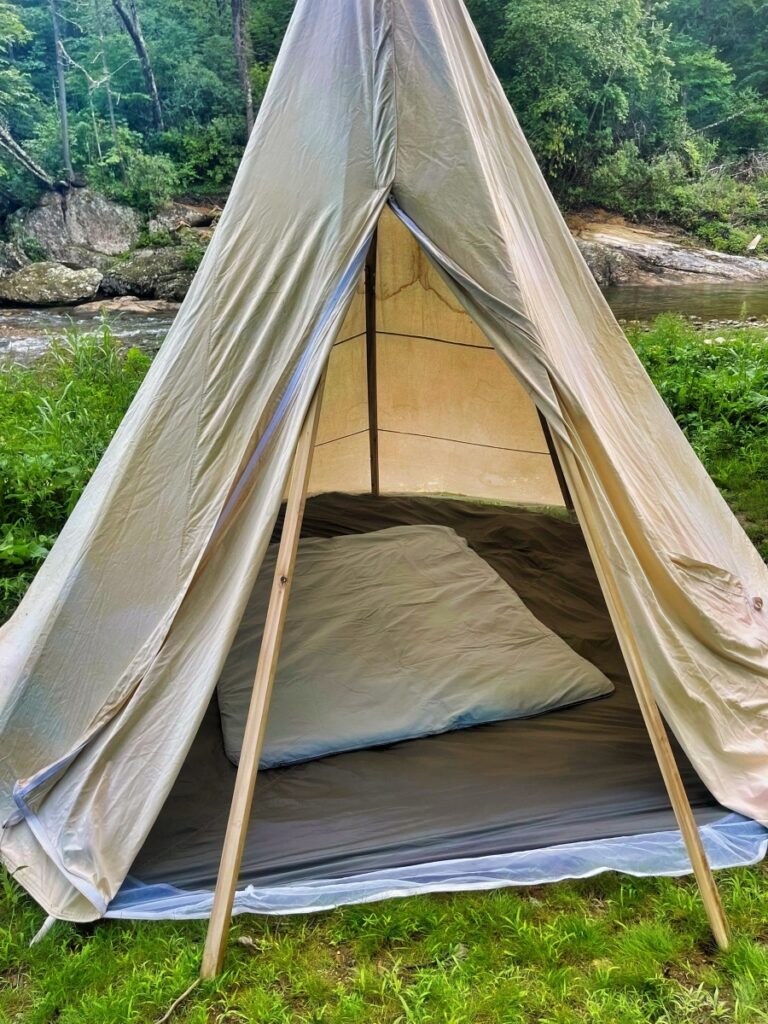
I wanted to see how all these theories actually worked in real life. So I moved into a tipi with my first prototype wool sleeping bag, natural-fiber clothing and bedding, and a wooden platform with a wool pad on top. My aim was to sleep outdoors almost full-time, and I lived there, on and off, for three years.
The results were undeniable to me. My sleep improved dramatically; the moment I lay down I would relax, and it was as though I was drinking the air. The cold never bothered me, even when the temperature inches from my skin dropped below freezing. I walked or biked several miles to work, greeted the sunrise, and dove into the icy river a few mornings a week. My hands stopped going numb, and I felt more alert than I ever had indoors.
Friends would say, “It makes me cold just to think about it.” Having used my own body as the test subject, I am confident about what I found. The whole story is in the tipi experiment series.
What a hard surface actually means
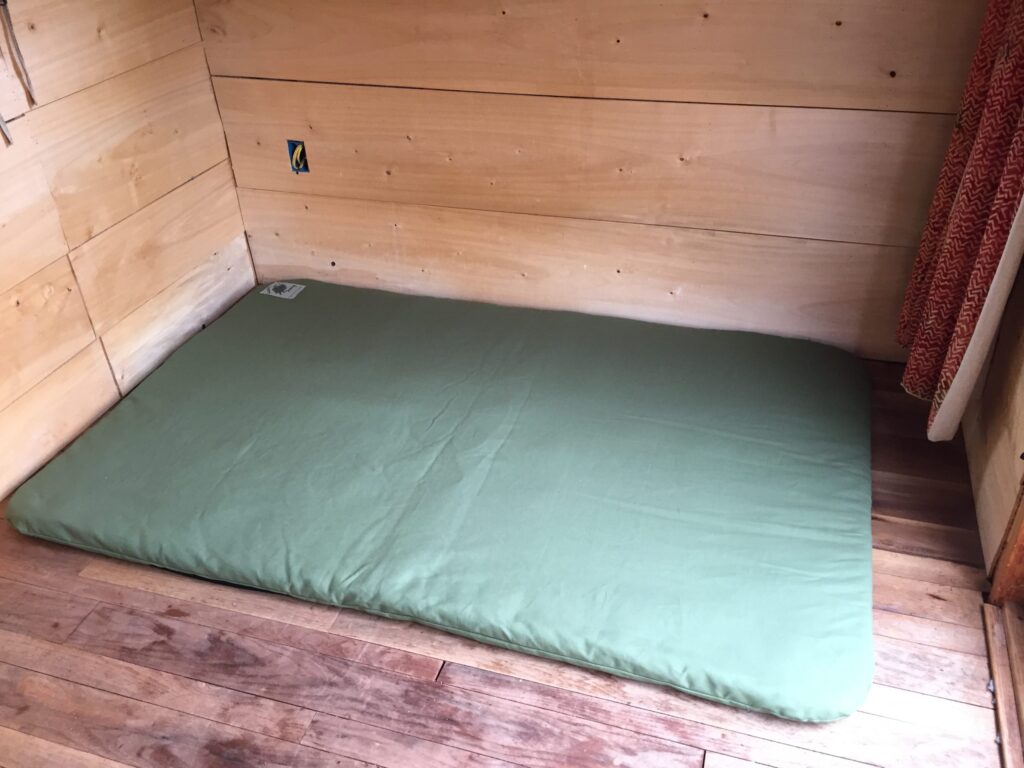
I have tested beds, futons and natural surfaces over several decades, and what mattress makers call firm does not come close to a traditional Japanese futon. The best description is a thick quilt on a floor or a board: about one to two inches of compressed padding.
That much padding will not let the hips sink in and misalign the spine, yet it buffers the bones somewhat. From my own experimenting and from interviewing people, this is the firmness that works for most Americans changing how they sleep.
You can sleep on the floor or on a platform bed: a raised slatted surface with a mat on it and no true mattress. The Japanese put a tatami mat under the futon so air moves underneath and the bedding does not get damp with your own perspiration. A slatted surface a few inches off the floor does the same job.
How to sleep on a hard surface: the tricks that make it comfortable
After a lifetime of mattress use you will probably feel uncomfortable at first. That is normal. Start with napping, then try a night, and give it more than one night before you judge it.
- On your side. Extend the bottom leg straight out, bend the knee of the top leg and let it rest over the bottom leg. This takes the load off the hip bone.
- On your back. Place a rolled-up sock in the small of your back. That little bit of support is the difference between fidgeting and sleep.
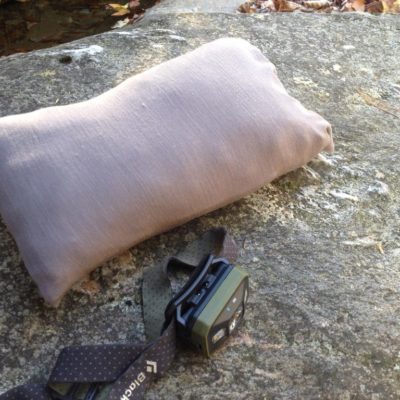
- The pillow. Outdoors, stuff extra clothing into your stuff sack. For side sleeping the pillow should keep your head level with your shoulder; with no pillow at all, extend the bottom arm and your bicep becomes the pillow. For back sleeping make it smaller and place it only at the neck, so it supports the neck without pushing the head up.
- Head uphill. Find a slope no greater than eleven degrees, about a six-inch rise from head to toe, and put your head on the uphill side. I find this lowers the heart rate and enhances sleep and dreaming, and in the mountains a slope is easier to find than a flat spot. I sleep on a sloped surface at home too.
- Relax evenly. The real skill is letting every muscle rest against the surface so no single pressure point carries the load. A little bodywork (Feldenkrais, yoga, the Alexander Technique) speeds this up.
Benefits of sleeping on a hard surface: what I have found
I will not tell you a floor cures anything. What I can tell you is what I have observed in myself and in the people who have tried it. In my experience the relaxation response and deeper sleep come from a few things working together.
- Alignment. The breathing action against the surface re-aligns the body as you sleep.
- Breathing. A body that is lengthened rather than curled into foam has more room to breathe.
- Training. Sleeping on a firm surface at home prepares you for the transition when you venture into the wilderness. Learn to sleep on hard surface at home and the ground becomes easy.
You will need to experiment for yourself. Go gradually to a harder surface and compare the results. And if an injury or a mere preference keeps you on a soft bed and it makes you happy, so be it.
Sleeping on the ground outside: cold, damp and what goes under you
Indoors, a hard surface is about comfort. Outdoors, the ground also pulls heat out of you and sends moisture up into your bedding all night. That is where most bad nights come from, not the bag.
When I am backpacking I use a closed-cell foam pad. It is synthetic, but it is the only thing I know of to date that is really practical for carrying, and wool can absorb moisture in a way that does not lend itself to the trail.
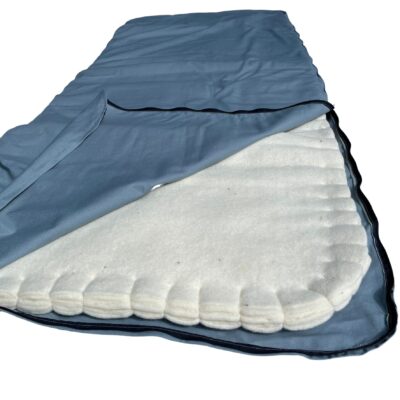
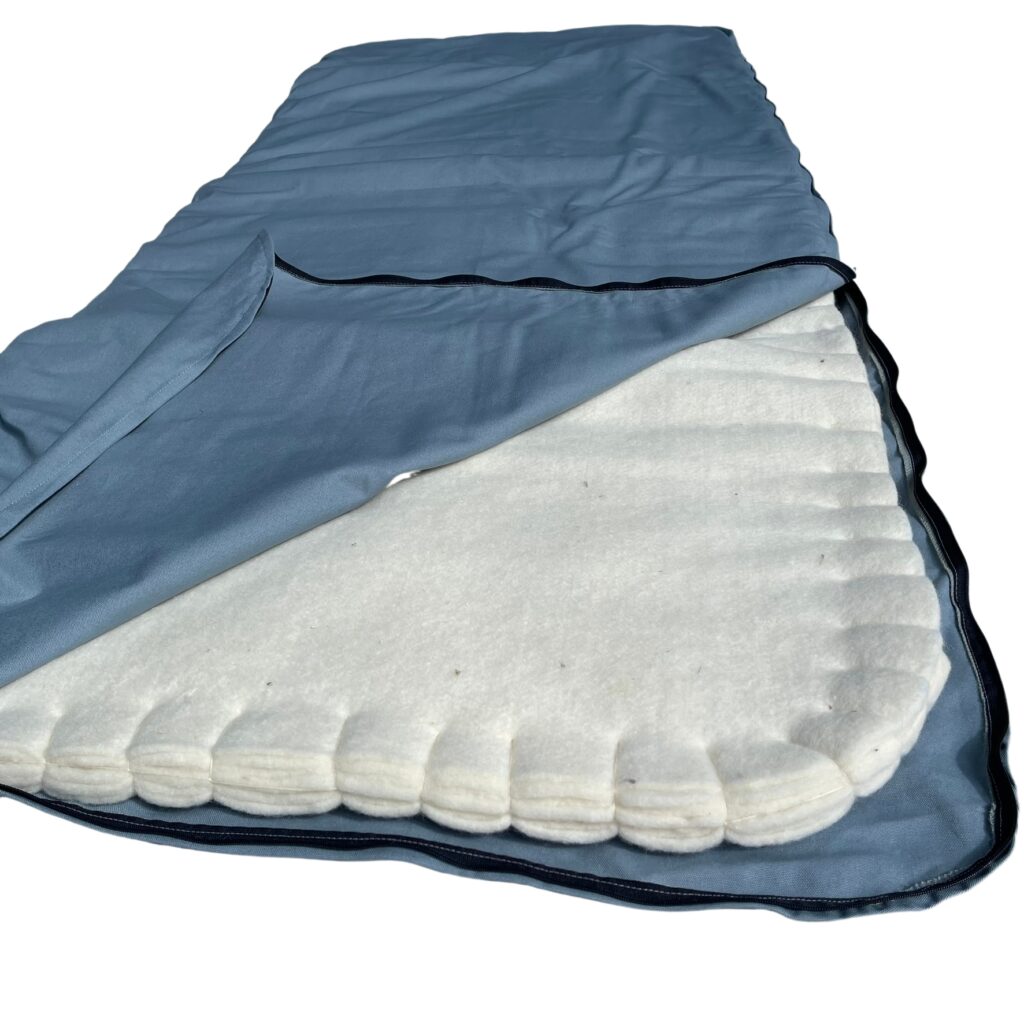
At a fixed camp, in the tipi or at home, I use the natural wool sleeping pad: dense US wool felt in a washable organic cotton cover. One layer (¼ in, 32 oz) is the thin version; three layers (¾ in) takes the chill out of a tipi floor; six layers (1.5 in) is the floor bed most people end up on. Whether a foam pad cuts you off from the earth, and why I am not sure that matters as much as people think, I take up in wool sleeping pad vs foam and inflatable pads.
In a more permanent camp, get the bedding up off the ground: a slatted bed frame of even-diameter limbs, which the Native Americans practiced, or a mattress of piled leaves covered with a tarp. Moving camp every day, you just air out the bag, ground cloth and tarp whenever you can.
Part of the Lucky Sheep® Sleep System
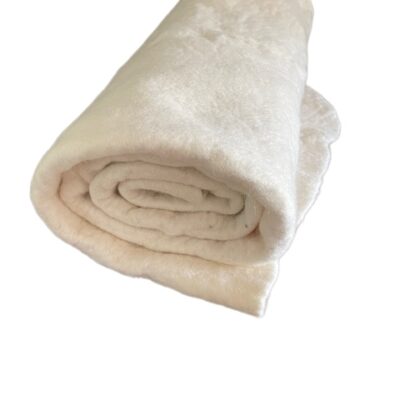
We approach the bed a little differently. Tarp above. Waterproof barrier below. Wool under you and around you: a wool pad, or a wool felt bedroll folded double at basecamp, with the Rewilder wool sleeping bag around your body. Air moving through everything. The surface is the one part of that system you can practice on your bedroom floor tonight.
Questions people ask about sleeping on a hard surface
Is it better to sleep on a hard surface?
“Is sleeping on hard surface good?” is the question I get most, and for me the answer is yes, as it is for most of the people I have talked into trying it. It is not black and white: it depends on your body and your history. Go gradually and let your own sleep tell you.
Is sleeping on a hard surface good for you?
I believe it is, for the reasons above, but I cannot point you to a study; as far as I know nobody has run one. My evidence is decades of my own nights and the refreshed faces of people who tried it. If you have a back or joint condition, ask someone qualified first.
Does sleeping closer to the ground make you colder?
Outdoors, yes. The ground pulls heat and cold air pools in low places. Fix it with more under you (felt, foam, leaves or a slatted frame), not with a thicker bag. Indoors the difference is small.
Is it better to sleep closer to the floor?
The floor and a low platform are the same surface; the platform is for people who do not want to get down to floor level. The firmness is what matters.
How do you sleep on a hard floor?
One to two inches of compressed padding, the positions above, a small pillow at the neck, and patience. Start with naps.
What I do, and what I would tell you
If possible, sleep on your deck, your porch, or in a tent in the yard. Keep the windows open and the room cool. The best sleeping I know is a freezing winter night under enough layers of wool on a firm surface; I found that out in my tipi days, and I still practice it.
A question for contemplation: what would it be like to go on a “living in nature” trip rather than a camping trip, and to bring a little of that home to your floor?
Reviewed September 2026 by the Lucky Sheep® team.
A firm, breathable, foam-free place to sleep
Our wool sleeping pad is dense US wool felt in a washable organic cotton cover — a non-toxic sleeping pad for the tent or the floor at home. Pair it with the wool felt bedroll and a camp pillow.
-
Organic Wool Sleeping Pad
Firm, breathable, machine-washable cover
¼ – 1.5 in wool felt24 – 60 in wide
Price range: $150.00 through $1,100.00 Select options This product has multiple variants. The options may be chosen on the product page -
Wool Felt Bedroll Blanket
Blanket, quilt, pad or liner
4 lb / 1.8 kg50 × 76 inUS wool felt
Price range: $275.00 through $325.00 Select options This product has multiple variants. The options may be chosen on the product page