
Editor’s note: This essay was written during an earlier phase of my rewilding journey, when my life and experiments were more extreme than they are today. While my circumstances have evolved, the insights, questions, and design principles explored here remain foundational to my work, my writing, and the creation of Lucky Sheep.
An early Forest Bathing experiment in natural fibers, minimal shelter, and embodied living
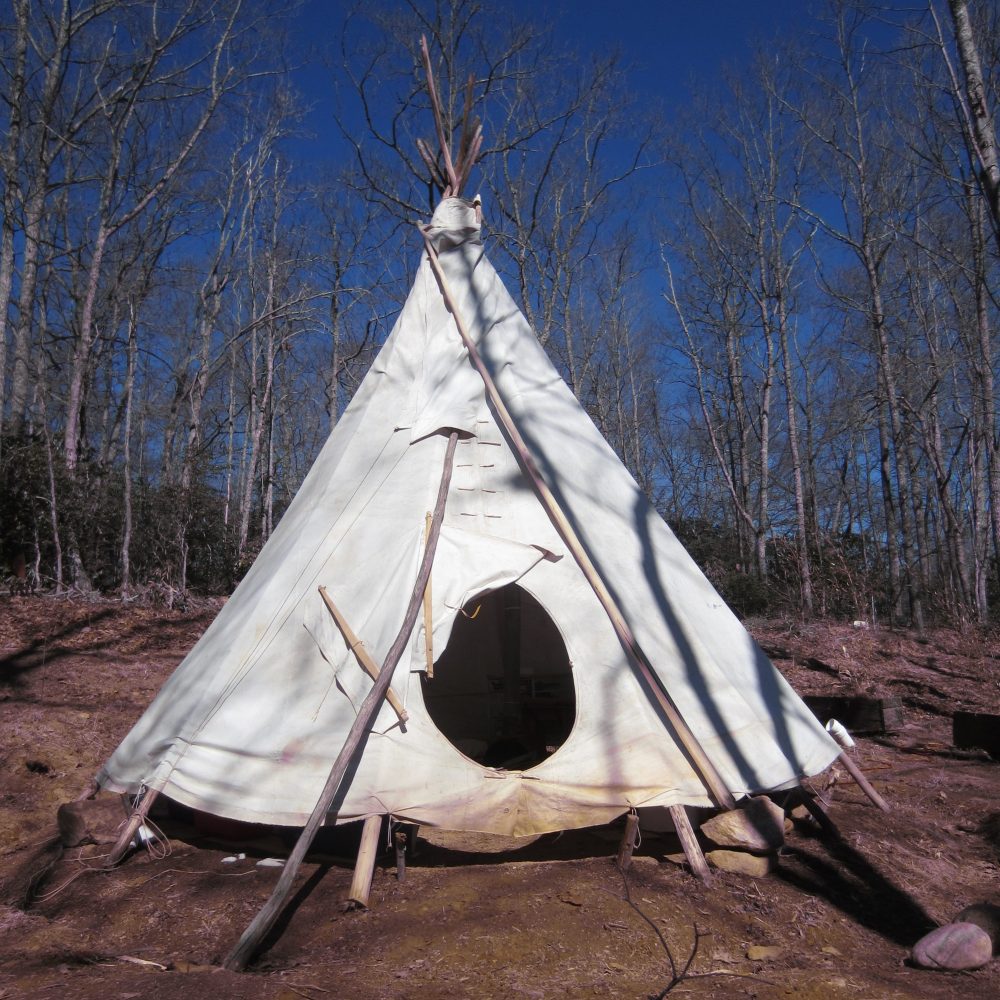
There is nothing like waking up to the forest as my house, deep down close to the bossom of Mother Earth, in the quiet, still pounding of the soft heartbeat, where I can hear my own presence merging with that of the whole of nature. Here I was camping on the forest floor, listening to the sweet sounds of nature waking up in early spring.
As I sat on the side of the mountain watching the sun in the early morning, I was so deeply present with my life and feeling into the future in that magical neutral place where I can listen to inner guidance. I was holding the excitement and beauty of moving back into my tipi and yet, holding the magic of my friends and community in the city. How amazing these beautiful people have effected my life and allowed me to grow and blossom. And yet, for now, I was feeling so welcome and so whole out here alone in the exquisite forest sunlight whispering sweet words into my ears.
Why a Tipi?
The reasons to live in a tipi—or not—are less dramatic than people assume. A tipi is a nomadic dwelling. You can enter it, leave it, or move it entirely with relative ease. What fascinated me was the contrast between imagining tipi life from the outside and actually living inside one. That contrast revealed insights about Western civilization that I do not believe can be discovered any other way.
Thinking outside the box while living inside the box is nearly impossible. My “tipi quest” became an experiment in minimalist design, embodied cognition, and lived philosophy. I think with my body as much as my mind. I test ideas somatically. Instinct and intuition are not abstract concepts to me—they are tools.
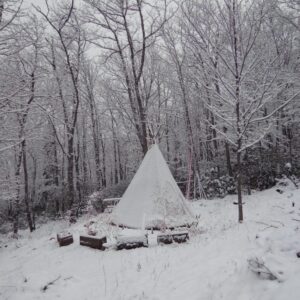
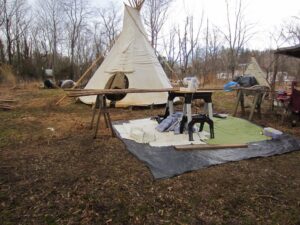
The first phase of this experiment lasted about a year. I moved in and out of the tipi as I learned how to manage it, repair it, and adapt to a level of minimalism that bordered on ascetic. Heavy rains eventually revealed structural issues that required significant maintenance, and I temporarily moved back indoors—into a conventional house, with running water, appliances, cell towers, and traffic noise.
Living in a tipi without the right systems in place can be inefficient by modern standards. I was losing productive work time, so I regrouped: earning a living indoors while, in my spare time, refining the tipi itself—preparing for a return under better conditions.

The Call of the Wild
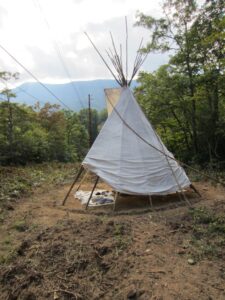
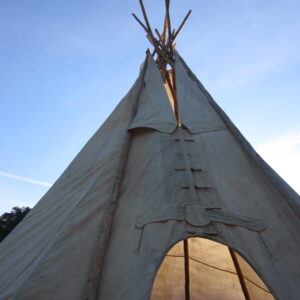
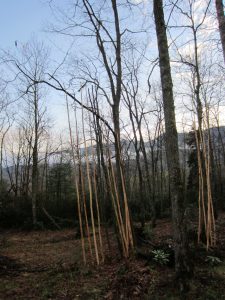
During this “down time,” I continued long backpacking trips into the Nantahala and Pisgah National Forests and the Great Smoky Mountains. I used a small backpacking tipi I designed and built myself—just large enough for me and my gear, weighing about seven pounds when dry. Those trips reawakened something vital in me. Cold mountain streams, starlit nights, and the discipline of carrying only what mattered restored a vitality I had never known.
Friends worried I might disappear into the woods for good. To be honest, I wondered the same thing. The call was strong. Ultimately, I kept returning because I had not yet learned to fully feed myself from the land—and because I did not have a village willing to go with me. So I returned, again and again, to civilization.
It was not that I disliked people. It was that the modern lifestyle felt foreign—constructed almost entirely around fear of nature. Remove that fear, remove our inability to live comfortably in the elements, and the assumptions underlying modern life reverse themselves.
Reversing the Paradigm
To me, modern life often feels like the tail wagging the dog: work inside a box, think inside a box, live inside a box—so we can buy things made in boxes. The tipi inverts this logic. Nature is invited back in, not as a threat but as a collaborator.
You do not need to decorate the walls when the world itself is the art. Sound, wind, light, weather—all become part of daily life. Fear dissolves into intimacy.
A tipi is not the best shelter if your goal is complete separation from the environment. There are easier, tighter, more sealed structures. But that is precisely the point. A tipi is a doorway—into the Earth, into sensation, into instinct. It offers full-body immersion rather than insulation from life.
Fire, Wind, and Presence
Some challenges were practical: learning how to read wind, anchor poles, and manage the structure so it could withstand storms. Plains cultures lived in tipis through brutal conditions; I knew the knowledge existed.
The fire at the center of the tipi is its heart. In Plains Indian cosmology, it is the ritual center of the universe. In lived experience, it teaches presence—that home is not a structure but a state of being. You can be at home anywhere.
A tipi keeps you just warm enough, just dry enough, just sheltered enough to maintain homeostasis. You are never fully indoors. You hear the rain. You feel the mist. Wind rattles the canvas; smoke drifts upward through the opening. Eventually, you realize rain and cold are not enemies. The ground becomes a companion rather than a monster.
Design Lessons from the Body
Over time, my guiding hypothesis became clear: the body is the primary dwelling. Human physiology evolved in direct relationship with natural forces. The architectural paradigm that treats nature as dangerous—and walls as salvation—is rarely questioned.
This insight shaped everything:
- Materials: Synthetic fabrics were out. Wool, cotton, leather, wood, bone, beeswax—materials that cooperate with the body’s electrical and thermal systems—were essential.
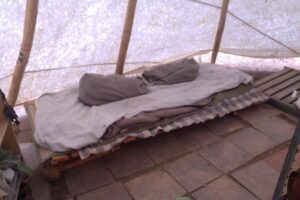
- Bedding and clothing: Wool is unrivaled. It insulates even when wet and regulates temperature naturally.
- Food: High-fat, nutrient-dense foods became non-negotiable. Pemmican—dried meat, fat, and berries—proved timeless for a reason.
- Cold exposure: The body adapts. Cold thermogenesis, now well-documented, reshapes metabolism and immune function.
- Circadian rhythms: Light, darkness, temperature, and grounding synchronize the nervous system far more effectively than artificial substitutes.
The tipi was not about survival. It was about luxury redefined: warmth from a small fire, clarity from simplicity, and vitality from direct engagement with the elements.
Minimalism as Freedom
Living in a tipi forced a radical downsizing of belongings. Everything I owned had to earn its place. This process—rooted in principles found in backpacking philosophy, Feng Shui, and lean systems—dramatically improved my efficiency and sense of freedom.
With fewer objects, nothing was lost. Time expanded. Clutter disappeared. Movement became easy. I could relocate without disorientation, like a turtle carrying its home.
A Bridge Between Worlds
People often asked whether I was homeless, eccentric, or born in the wrong era. What I came to understand is this: I am a bridge. I move between modern society and primordial nature, translating lessons from one world into the other.
This path is not comfortable. It challenges collective assumptions and surfaces projected fears. But it continues to answer the deeper question that matters far more than houses or possessions:
Who am I, without the boxes?
That question—asked daily—is the real shelter. And for me, the tipi was never an escape from responsibility. It was a way back into life itself.
“Go to the place where your deep gladness and the world’s deep hunger meet.”
— Frederick Buechner
A quiet next step
If this way of living resonates with you, my book A Rewilder’s Guide to Outdoor Adventure explores how to bring these principles into everyday life—without needing to live in a tipi. It is a practical and philosophical bridge between modern responsibilities and our ancestral relationship with nature.
Much of the gear I design at Lucky Sheep—wool sleeping systems, natural fiber packs, and minimalist shelter concepts—emerged directly from experiments like the one described above. They are tools shaped by lived experience, not theory.
If nothing else, I hope this essay encourages you to ask the deeper question for yourself: Who am I when I remove the boxes?
Recommended products
-
Book: A Rewilder’s Guide to Outdoor Adventure
$24.00 -
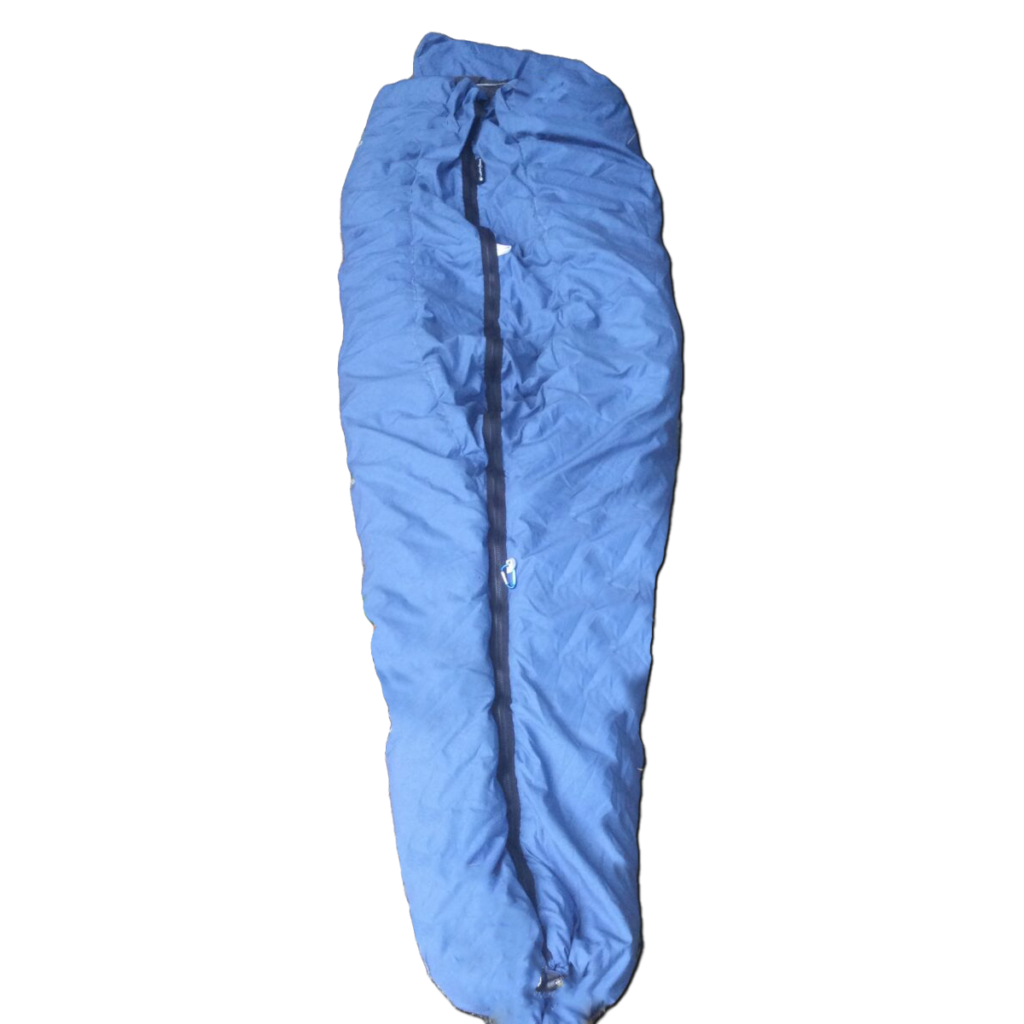
Lightweight Wool Sleeping Bag–The Rewilder
Price range: $557.00 through $888.00 -
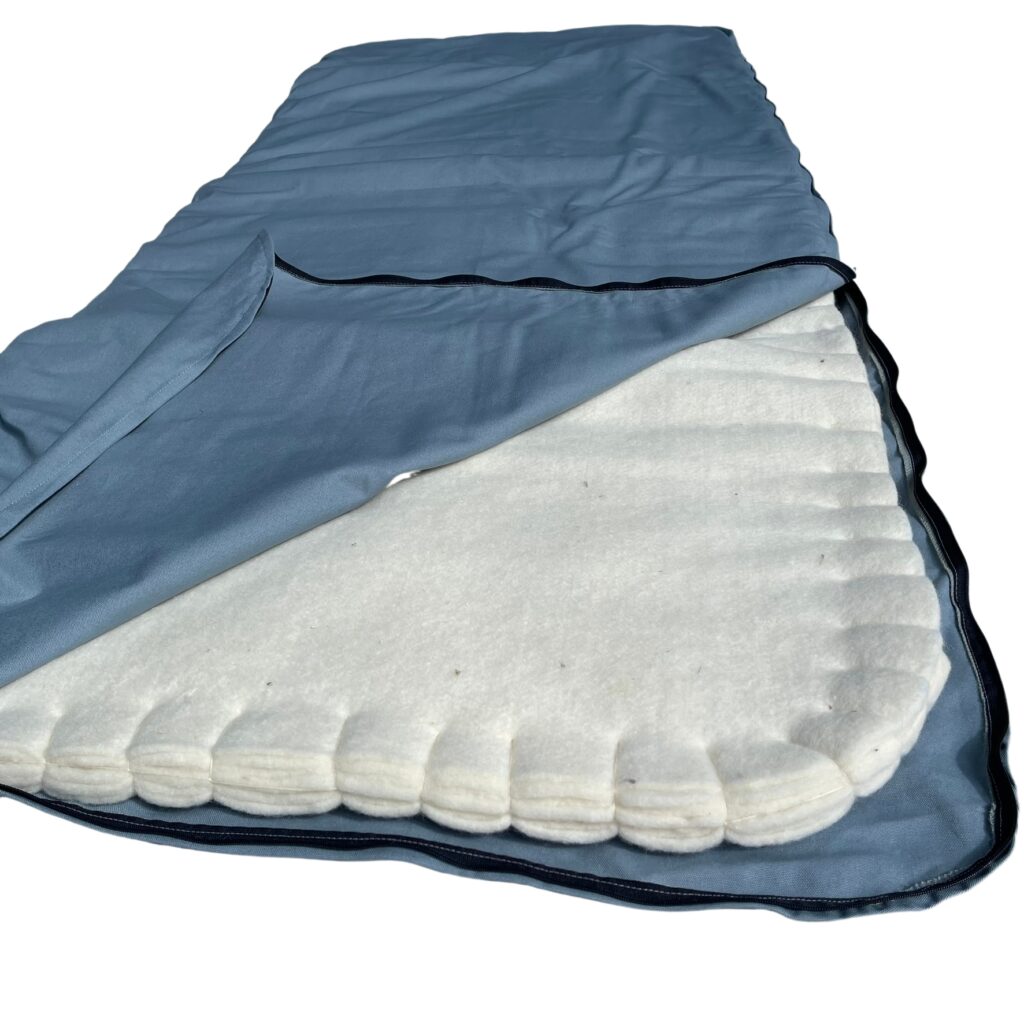
Organic Wool Sleeping Pad
Price range: $150.00 through $1,100.00 -
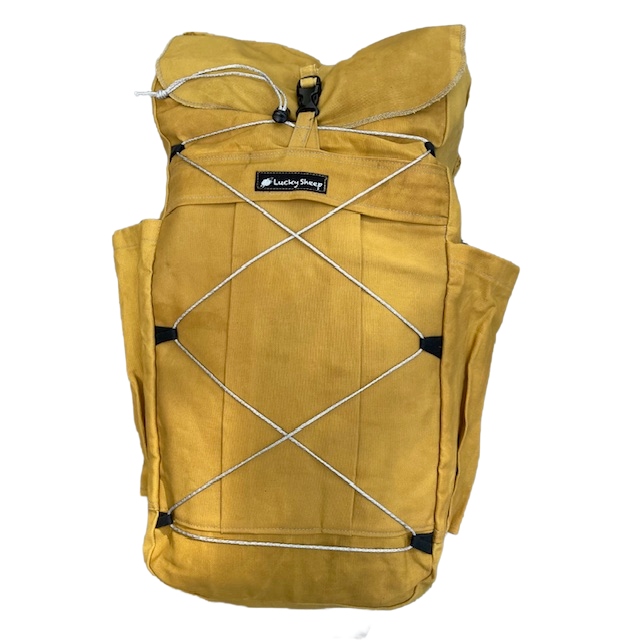
Eco-Friendly Canvas Daypack
$249.00 -
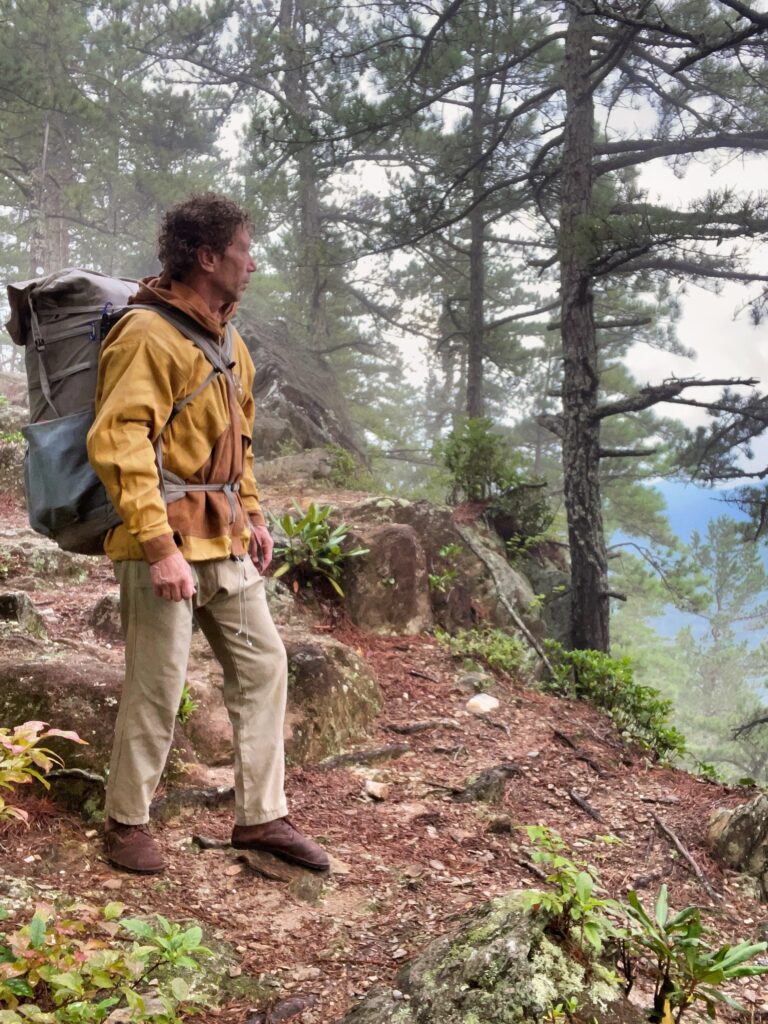
Lightweight Waxed Canvas Rain Jacket
$525.00
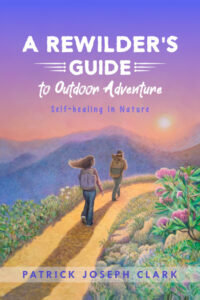
The book behind these articles
A Rewilder’s Guide to Outdoor Adventure
The complete Lucky Sheep approach to time outdoors — skills, gear, food and natural sleep, from the founder. Everything the field guide covers, in one book you can take with you.
Get the book →