Who invented the sleeping bag? Nobody, and everybody who ever slept where it was cold. When were sleeping bags invented? Thousands of years before the first patent, in the Arctic, where the Inuit sleeping bag (what older books call an Eskimo sleeping bag) was a caribou hide sewn fur-side in. Ask when was the sleeping bag invented, or who invented sleeping bags, and most sleeping bag history answers 1876 and a Welsh wool blanket, the first sleeping bag anyone mass-produced. Here is the history of sleeping bags as I understand it, from fur and wool to nylon and back, from someone at Lucky Sheep® who sews wool bags for a living.
Who invented the sleeping bag? The short answer, and the lens I bring to it
If you need one name for a quiz, it is Pryce Pryce-Jones of Newtown, Wales, whose Euklisia Rug of 1876 is usually credited as the first mass-produced sleeping bag. The honest answer is that the sleeping bag was invented several times over: by Arctic peoples who sewed fur into sacks, by the nineteenth-century explorers who copied them, and by twentieth-century manufacturers who swapped in down, zippers and finally nylon and polyester.
I should say where I stand. I cut my teeth with Paul Petzoldt, the founder of NOLS and the Wilderness Education Association, in the Nantahala National Forest in 1983, when I was eighteen and he was seventy-six, teaching one of his last courses. Paul had made the first American attempt on K2 in 1938, long before synthetic fibers existed, and he still favored wool for nearly everything. He gave me first pick from a pile of wool sweaters, was all about moisture-wicking and ventilation, and warned us to stay away from down. Keep that in mind, because the materials changed and the problem did not: a body gives off heat and moisture all night, and the bag has to handle both.
Before the bag: the Native Americans were the ultimate backpackers
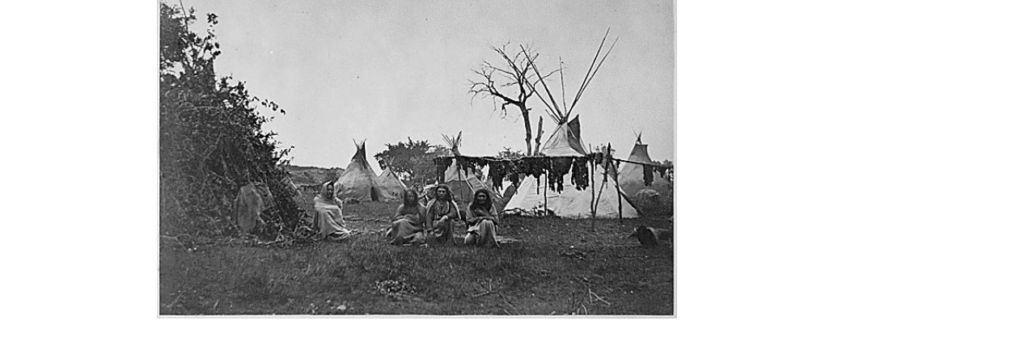
I wrote that line in my book about pemmican, but it applies just as well to bedding. For most of human history nobody carried a sleeping bag because shelter and bedding were one system. A robe was a coat by day and a blanket by night. A hide with the fur left on went between the sleeper and the ground, which is what the felted wool pad copies today, and in a longer camp a slatted bed of poles kept the bedding off the damp earth.
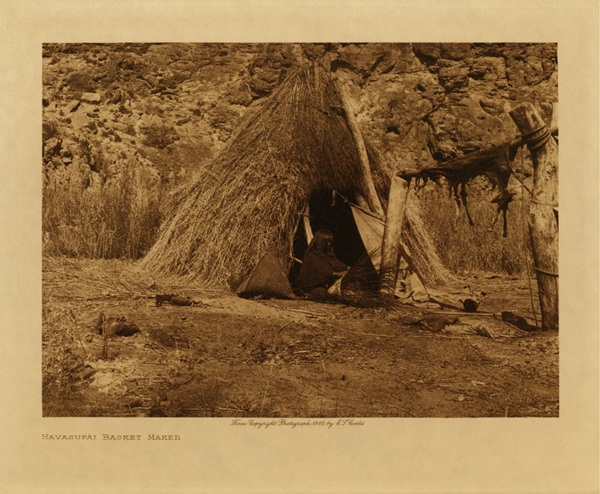
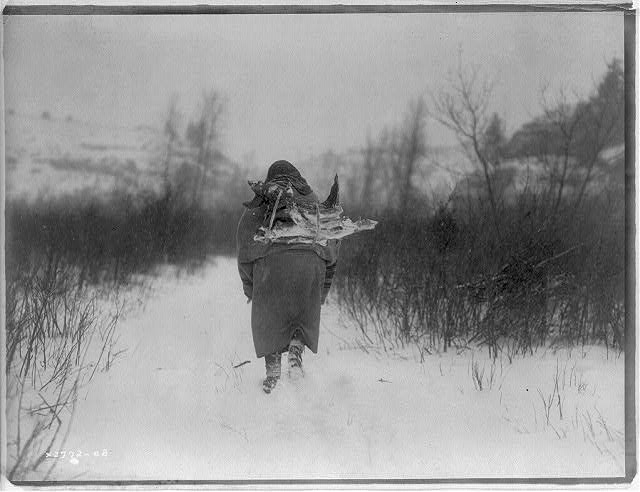
What did the Inuit sleeping bag look like? The Eskimo sleeping bag of the Arctic
The first true sleeping sacks come from the Arctic, where a robe alone is not enough. Inuit and Yupik peoples of Greenland, Canada and Alaska sewed caribou skins into bags with the fur facing inward. Caribou hair is hollow and traps air, and the whole bag could be turned inside out in the morning so the frost from breath and sweat could be beaten off before it melted back in.
That last detail is the one I care about. Fur and skin are not sealed from the inside. They accept the body’s vapor, hold it as frost near the outer surface, and give it up when aired. The bag stays usable for weeks because the moisture has a way out.
When were sleeping bags invented? The explorers’ bags of the 1800s
Europeans began carrying purpose-made sleeping sacks in the nineteenth century, and they carried what the Arctic had shown them. Fridtjof Nansen’s 1888 crossing of Greenland used reindeer-skin bags, including a three-man bag so the party could share warmth. Scott’s and Shackleton’s Antarctic expeditions two decades later still slept in reindeer fur. On long journeys the bags iced up from the inside with frozen breath. So when was the sleeping bag invented? As expedition gear, the 1880s; as an idea, long before.
Alongside the fur bags ran a cheaper tradition: the blanket bag. Soldiers, shepherds and walkers folded a wool blanket in half, pinned or stitched the foot and side, and slept in the envelope, often on a waxed or rubberized ground sheet. It is the direct ancestor of everything we make.
The history of sleeping bags, 1876: the Euklisia Rug and the first sleeping bag made by the thousand
Pryce Pryce-Jones was a draper in Newtown, mid-Wales, who sold Welsh wool goods by catalogue. In 1876 he patented the Euklisia Rug: a wool blanket with a pocket sewn at one end holding an inflatable rubber pillow, folded over the sleeper and fastened along the edge. It was warm, cheap to make on Welsh looms, and the first sleeping bag anyone produced by the thousand.
His biggest customer was the Russian army, which ordered about 60,000 rugs for the Russo-Turkish War; when Plevna fell in 1877 the order was cancelled with around 17,000 still in stock. No original is known to survive. What matters to me is what it was made of: wool, rubber and thread, every part of which could be repaired. In the American West the same idea took the form of the canvas sleeping bag, a waxed canvas tarp rolled around wool blankets, which I have written about in the cowboy bedroll.
A page of sleeping bag history from 1917: an old camper explains warmth
Years ago, digging for how people slept outdoors before nylon, I found the page below. It is the January 1917 issue of Forest and Stream, and the article is titled “Keeping Warm: an important eight hour question that concerns every out-of-doors sleeper,” signed only “Old Camper.”
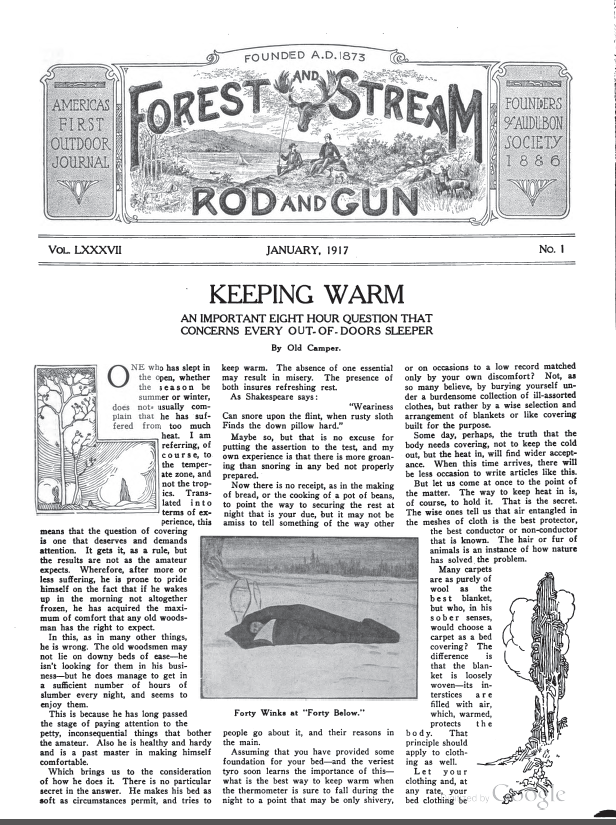
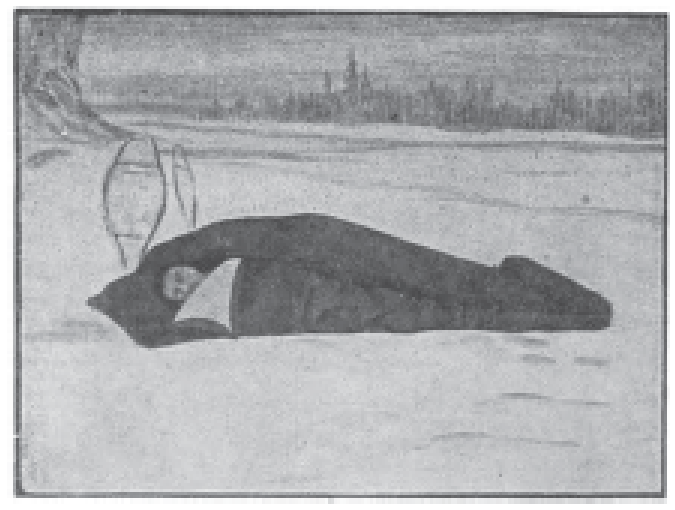
Read it closely and the physics is already there. Warmth is not a property of the blanket but of the still air trapped in it; and “the hair or fur of animals is an instance of how nature has solved the problem.” He also warns against too much covering, which makes the sleeper sweat and then chill. That is a moisture argument, and the same one Paul Petzoldt made to me in 1983.
Down sleeping bags, then the synthetic boom (1930s to today)
Between the wars, down-filled bags became the choice for serious mountaineering because nothing else gave as much loft per ounce. The zipper replaced the pins and ties of the blanket bag. The tapered mummy shape cut the volume of air the body had to heat.
Down is light and packs really small, but the benefits stop there. Wet down clumps and stops insulating, and a down bag cannot be dried by a fire without cooking the shell, so a down sleeper has to zip into a tent to protect it, and the tent then traps the breath that got the down damp in the first place. It is a fine trade at altitude, where the air is dry, and a poor one in a damp Appalachian forest at 35°F, which is where most of us actually camp.
After the war, nylon replaced cotton and wool shells because it was lighter, stronger for its weight and did not rot. Polyester fill followed in the 1960s and 1970s. The backpacking boom put a nylon-shelled mummy bag in every outfitter, and after my 1983 course the next few decades saw such an explosion of synthetic fibers that there was hardly a stitch of wool left in an outdoor shop. When I started exploring natural fibers again around 2010, I had to piece my wool together from thrift stores.
What the synthetic bag gave up is less advertised. Nylon holds about 4 percent of its weight in moisture and polyester less than 1 percent, against 13 to 16 percent for wool, according to published textile data. A nylon shell over polyester fill does not take up the night’s vapor; it condenses it against the inside of the shell, which is the clammy feeling of waking in a synthetic bag.
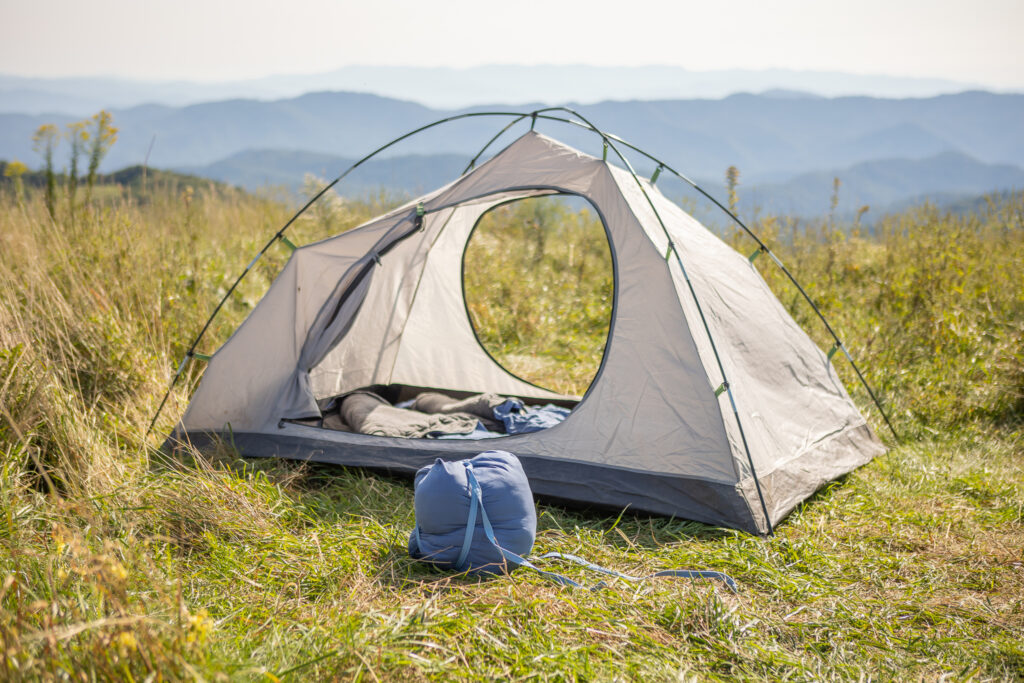
The wool revival: a wool sleeping bag that breathes again
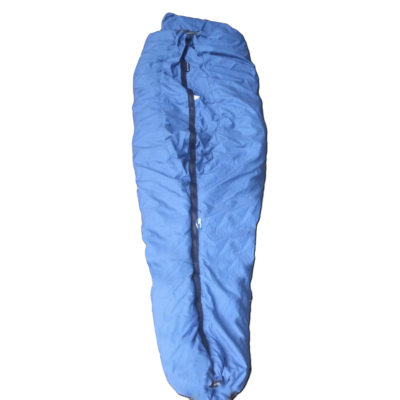
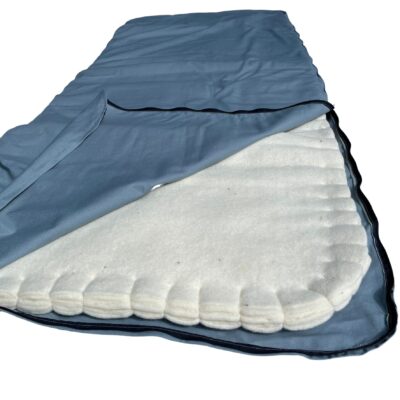
The Rewilder wool sleeping bag is, structurally, the 1917 blanket bag with a century of tailoring: a tapered backpacking cut, two or three inches of US wool batting, a beeswaxed organic cotton shell and a merino or WeatherWool liner, sewn in Burnsville, North Carolina. It is field-rated to 20°F in the two-inch loft and 10°F in the three-inch; those are my ratings from use, not ISO tests. A Standard two-inch bag weighs four pounds, roughly three times a 20°F down quilt. That is the honest cost, and it is the same cost Nansen paid.
What the weight buys is what the old designs had. Wool takes the vapor into the fiber and gives back heat as it does, which is why it feels warm even when damp (see heat of adsorption). I can crawl into the bag, pull it over my head and breathe, using my breath as heat; try that in down or synthetic and you simply get humid and colder. If you want the case in full, it is in why wool is better.
So who invented sleeping bags, and when was the sleeping bag invented?
The people who lived where it was cold and wet, and who understood that the bag has to breathe as well as insulate. The century of nylon was a detour that solved weight brilliantly and moisture not at all. Something to contemplate the next time you shop: are you buying the newest thing, or the oldest one that still works?
Reviewed September 2026 by the Lucky Sheep® team.

The book behind these articles
A Rewilder’s Guide to Outdoor Adventure
The complete Lucky Sheep approach to time outdoors — skills, gear, food and natural sleep, from the founder. Everything the field guide covers, in one book you can take with you.
Get the book →Sleep warm out there — in wool
The Rewilder is a 20°F backpacking sleeping bag (4 lb, packs to 11 × 11 in) that keeps insulating when conditions turn damp. Add the merino liner for another ~10°F and a wool pad underneath for a complete natural-fiber sleep system.
-
Lightweight Wool Sleeping Bag–The Rewilder
The lightest all-natural backpacking bag
4 lb / 1.8 kg20°F / −6°C (10°F option)Packs to 11 × 11 in
Price range: $557.00 through $888.00 Select options This product has multiple variants. The options may be chosen on the product page -
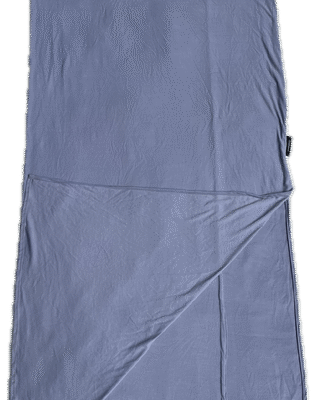
Merino Wool Sleeping Bag Liner & Sleep Sack
Warm, washable wool liner for any bag
1.9 lb / 0.9 kgAdds ~10°F30 oz merino jersey
Price range: $200.00 through $235.00 Select options This product has multiple variants. The options may be chosen on the product page -
Organic Wool Sleeping Pad
Firm, breathable, machine-washable cover
¼ – 1.5 in wool felt24 – 60 in wide
Price range: $150.00 through $1,100.00 Select options This product has multiple variants. The options may be chosen on the product page