People ask me how to sleep outside as if it were a technique. It is closer to a homecoming. The benefits of sleeping outdoors—deep sleep, clear mornings, a body that stops fighting the night—come from letting the natural environment in rather than sealing it out, and the same simple system works whether you are sleeping outside at home on the porch or a day’s walk into the Pisgah backcountry.
How I Started Sleeping Outside
I started sleeping outside when I was about fifteen years old.
At the time, my family lived in an apartment complex, so I didn’t exactly have a wilderness at my doorstep. I would take my sleeping bag and pad outside and sleep on the lawn, surrounded by buildings and dozens of windows.
It probably looked strange.
But something happened when I slept outside.
I slept deeply. I woke up clear and alert. And I began to discover something that would follow me for the rest of my life: the outdoors isn’t simply a place we visit during the daytime. It can also be where we sleep.
That sounds obvious. Human beings have been doing it for almost our entire existence. Yet in modern life, sleeping outdoors has become something unusual—something requiring a tent, an air mattress, specialized equipment, and sometimes a considerable amount of courage.
I eventually began questioning all of that.
What would happen if instead of trying to reproduce an indoor bedroom in the wilderness, we learned how to sleep with the natural environment?
That question eventually became what I call Natural Camping, and much later it became one of the foundations of A Rewilder’s Guide to Outdoor Adventure and the gear I developed at Lucky Sheep®.
Natural Camping is not about conquering nature or insulating ourselves from it.
It is about learning how to belong there again.
Sleeping Outside Changes Your Relationship With the Night
When I began exploring farther from home as a teenager, first on foot and later by bicycle, knowing that I could sleep outside gave me an extraordinary kind of freedom.
I didn’t need to get somewhere before dark.
I just needed to find a place to sleep.
I became fascinated with the Native American lifeways I was reading about, including accounts of walking barefoot, sleeping close to the earth, and developing physical resilience through continual exposure to the natural environment.
So I experimented.
I slept in forests, fields and along waterways. I learned what different places felt like after sunset. I learned about cold air settling into low areas, dew forming in open meadows, wind moving through forests, and the remarkable difference between sleeping beneath a roof and sleeping beneath the sky.
Gradually, sleeping outside stopped feeling like an activity.
It became normal.
And this is one of the central ideas behind rewilding: many of the things we regard as uncomfortable are uncomfortable partly because we have become separated from them.
Cold is one example. Darkness is another. Firm ground is another.
The answer does not always have to be another technological barrier between ourselves and the environment.
Sometimes the answer is adaptation.
Don’t Try to Turn the Outdoors Into a Bedroom
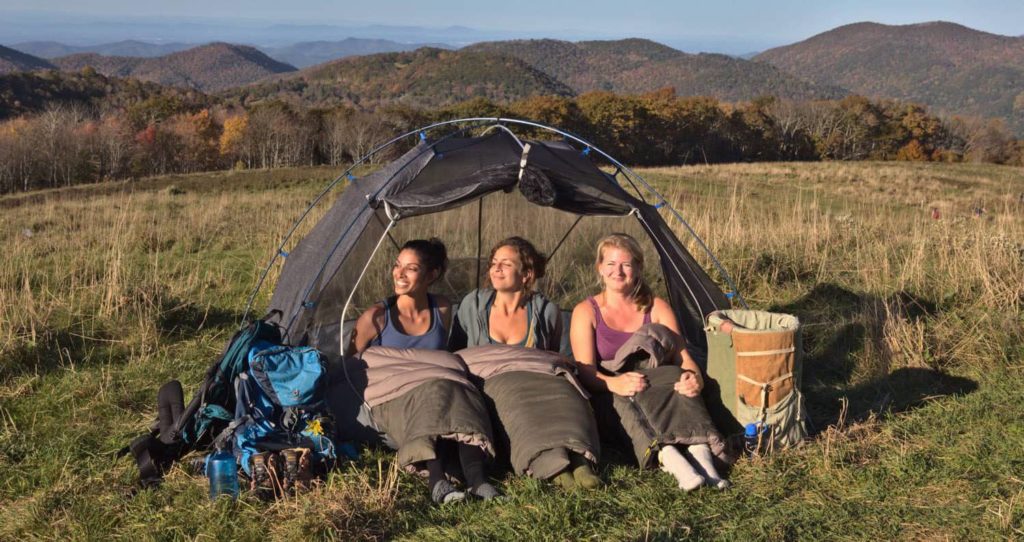
A lot of conventional camping equipment is designed around a simple assumption: the wilderness is hostile, so we need to create a protective bubble around ourselves.
Thick inflatable mattresses separate us from the ground. Tents separate us from the night air. Synthetic sleeping bags create another enclosure around the body. Waterproof-breathable clothing attempts to seal weather outside while somehow allowing moisture to escape from within.
My approach gradually moved in the opposite direction.
Instead of asking how much I could isolate myself from nature, I began asking how little separation I actually needed.
That changed everything.
My shelter became simpler. My sleeping surface became firmer. I began using natural fibers against my body. I paid more attention to airflow, moisture, temperature and the actual terrain beneath me.
The body became part of the system.
This is why one of the central ideas in A Rewilder’s Guide is:
The body is the first piece of gear.
Your clothing, sleeping bag and shelter should support what the body already knows how to do—not replace it.
Start Sleeping Outside at Home
You don’t need to hike ten miles into the wilderness to learn how to sleep outside naturally.
In fact, I recommend the opposite.
Sleeping outside at home is the easiest start there is. Start in your backyard if you have one. Sleep on a porch or deck. Set up your sleeping system somewhere familiar.
This removes many of the psychological barriers at once. If you become uncomfortable, your house is right there. But you may be surprised by how quickly the outdoor environment begins to feel familiar.
Listen to what happens after dark. Feel the temperature change. Notice the moisture in the air. Watch the light disappear from the sky instead of switching on a lamp.
Then wake up with the morning.
That transition from darkness to daylight is part of the experience. You are no longer simply camping. You are allowing your biological rhythms to meet the rhythms of the place around you. (My older one-page version of all this, The Art of Sleeping Outdoors, is still online as a PDF.)
Learn to Sleep on a Firmer Surface
One of the biggest obstacles for many modern campers isn’t the cold.
It’s the ground.
We have become accustomed to increasingly thick mattresses, so when people go camping they often try to recreate their mattress with an inflatable pad.
I took another approach. I trained myself to sleep comfortably on progressively firmer surfaces.
A firm sleeping surface allows the body to move and reposition itself naturally through the night rather than sinking deeply into a mattress. With practice, what initially feels hard can begin to feel remarkably supportive. This is something you can practice at home before ever going camping—the two-week progression is in my guide to sleeping on a firm surface.
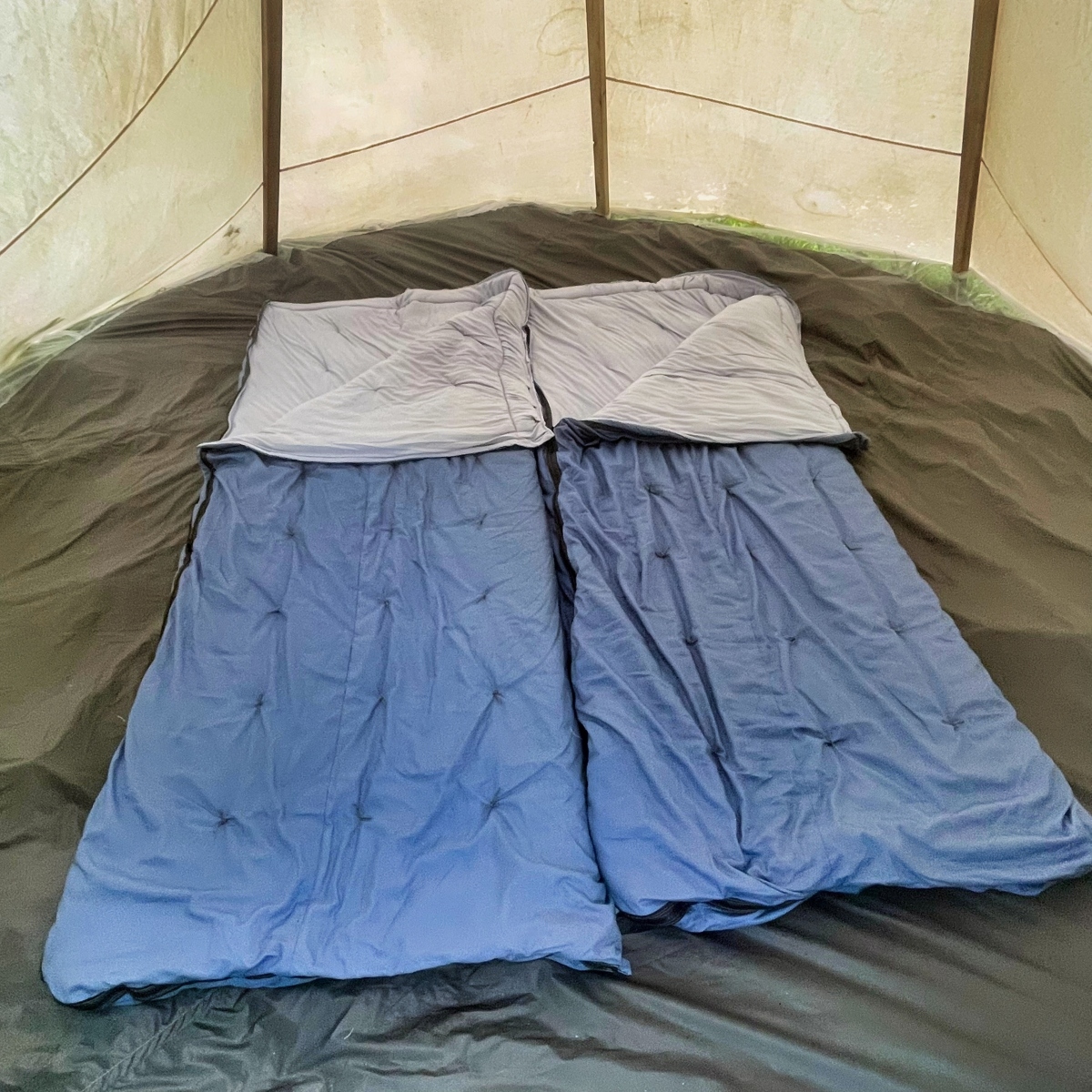
Outdoors, I generally use only enough padding to provide the insulation and cushioning I actually need. A simple closed-cell foam pad works well for lightweight backpacking. Wool felt can provide a beautiful natural sleeping surface when weight is less critical.
The objective isn’t suffering. The objective is adaptation. There is a big difference.
Wool Changes the Outdoor Sleeping Equation
My experiments with outdoor sleeping eventually led me to wool.
And wool changed everything.
One of the biggest challenges of sleeping outside isn’t simply temperature. It is temperature combined with moisture.
Your body continually releases water vapor while you sleep. The surrounding air may contain dew, fog or high humidity. Temperatures can drop rapidly after sunset. The entire sleeping system has to manage this changing microclimate.
Wool is remarkably well suited to that environment.
Rather than simply attempting to exclude moisture, wool can absorb water vapor into the internal structure of the fiber while still maintaining a comparatively dry-feeling surface. During moisture adsorption, wool also releases a small amount of heat—the heat of adsorption I explain elsewhere.
That means wool doesn’t need the environment to remain perfectly dry in order to function.
This became fundamental to the sleeping system I eventually developed at Lucky Sheep®. Instead of fighting moisture, we learn how to live with it.
That distinction becomes especially important on damp nights. You might wake to find the grass covered in dew, fog hanging in the trees, or frost on the outside of your sleeping system—yet remain warm and comfortable inside.
This is a completely different relationship with weather.
You Can Even Breathe Inside a Wool Sleeping Bag
Here is one of the most unconventional things I discovered.
Conventional sleeping-bag advice tells you not to breathe inside your sleeping bag, and there is a good reason for that advice. Your breath contains a considerable amount of moisture. In a down sleeping bag, repeated moisture accumulation can compromise the loft that provides insulation, and moisture can create problems in many synthetic sleep systems too. So conventional outdoor wisdom says: keep your mouth and nose outside the bag.
But wool behaves differently.
I began pulling my wool sleeping bag completely over my head. This created an enclosed pocket of warm air around my face. Instead of continually drawing very cold outside air directly into my lungs, I was breathing air that had already been partially warmed inside the sleeping environment, while the wool buffered the moisture from my breath.
It feels almost like a little climate of its own, and it is especially noticeable on very cold nights. This is why the Rewilder is cut 12 to 14 inches longer than the sleeper—long enough to disappear inside completely. I wrote a whole piece on breathing inside a wool sleeping bag and why it cannot be done in down or synthetic.
Don’t Be Afraid of Damp Weather
Another major difference between Natural Camping and conventional camping is our relationship with dampness.
Modern outdoor culture tends to frame moisture as the enemy. Keep it out. Seal the tent. Waterproof everything. Stay dry.
But nature isn’t dry.
There is humidity in the air. There is moisture coming from your body. There is dew on the grass, fog in the valleys, rain dripping from trees and frost forming before dawn.
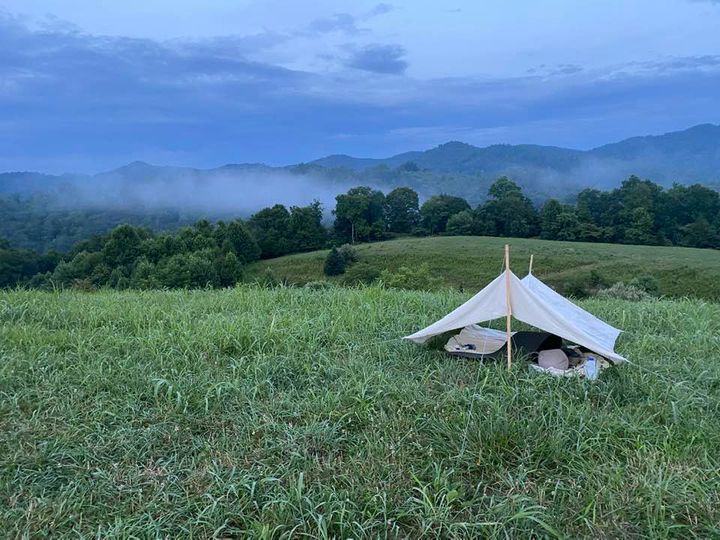
Rather than trying to create a completely dry artificial environment, I prefer a sleeping system that can breathe with those conditions. That is why, for backpacking, I like a simple tarp pitched open at the ends. The tarp stops rain from falling directly on the sleeper while allowing generous airflow through the shelter.
There is no need to trap ourselves inside a sealed little room.
Let the damp air come through. Let the wind move. Let the wool manage the microclimate immediately around your body. (If you have ever wondered why damp weather feels colder, that piece explains what is going on and why wool copes with it.)
We don’t have to push nature out. We can invite it in. That idea is at the heart of the Lucky Sheep® approach.
How to Choose Where to Sleep Outside
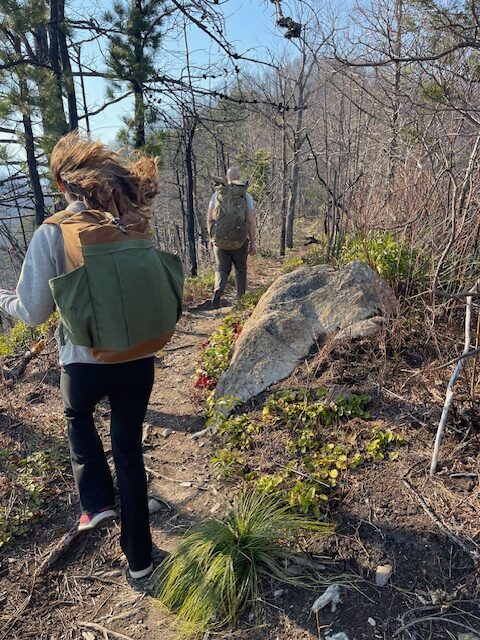
Once you stop sealing yourself inside a tent, campsite selection becomes more important—and more interesting.
You begin reading the landscape.
A meadow may give you an extraordinary view of the stars, but it may also collect heavy dew. A low spot may become colder during the night as cold air settles. A place beside moving water may feel completely different from a dry ridge.
However, in all of these situations, when sleeping with the wool system and open tarp, the humidity is hardly a problem. In my experience the dew, fog and mist carry something extra, too—the negative ions I write about in the book—and I sleep better in that air, not worse.
A forest with tall trees and an open understory can provide wonderful airflow while still giving protection from wind. The specifics I look for:
- Look up before you look down. Dead limbs overhead and leaning trees—widow-makers—are the one part of a campsite that can really hurt you.
- Air that moves and water that drains. Tall trees, little undergrowth, a slight slope. Brushy low spots hold stagnant air and become ponds; avoid drainage channels and anywhere that could flood.
- Head uphill. A gentle slope, no steeper than about eleven degrees—roughly a six-inch rise from head to toe. I find I sleep and dream better this way.
- Season and wind. Summer is the time for the mountain top. In winter get down off the ridge and out of the wind tunnels.
- Wildlife. Understand the animals where you are and store food appropriately—in bear country mine hangs ten feet up a limb, well away from where I sleep.
Then pay attention to something less measurable: how does the place feel? I have found places where I seemed to relax almost immediately and others where I simply didn’t sleep as well.
Campsite selection becomes an art. The more nights you spend outside, the better you become at it.
What About Rain?
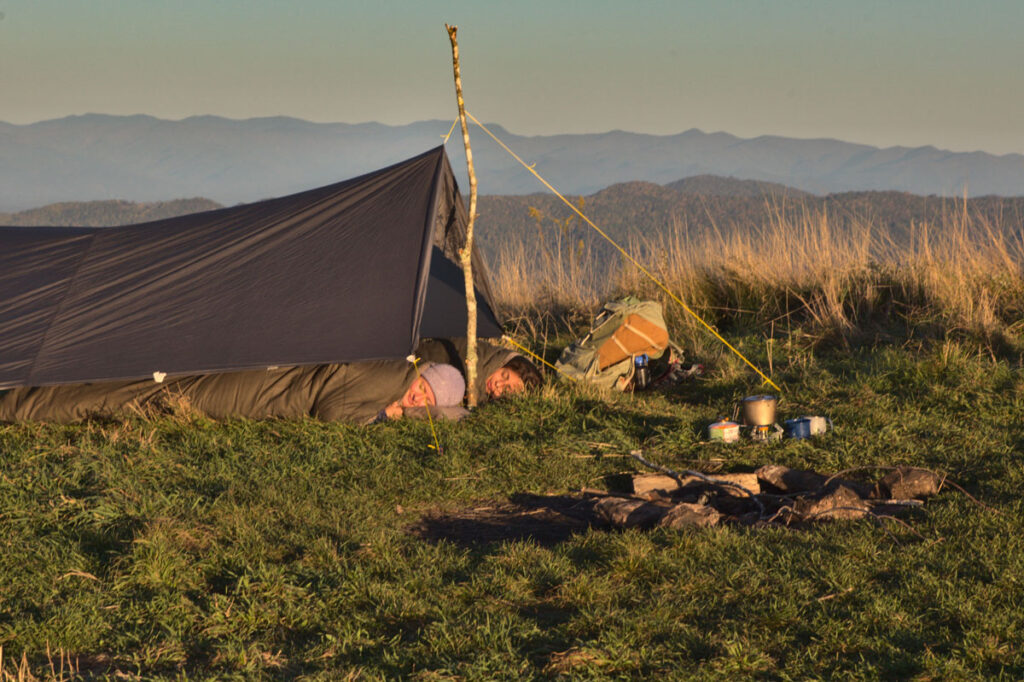
Rain doesn’t mean you have to retreat into a sealed tent.
For lightweight hiking and backpacking, my preferred system is simple: a tarp overhead, a ground sheet below, a sleeping pad for ground insulation, wool clothing, and a wool sleeping bag.
Pitch the tarp so air can move through both ends. You are protected from falling rain without losing your connection with the surrounding atmosphere. The pitches, and the honest case for a tent, are in Tarp vs Tent.
In dry weather, you can simplify even further. Sometimes the best shelter is no shelter at all.
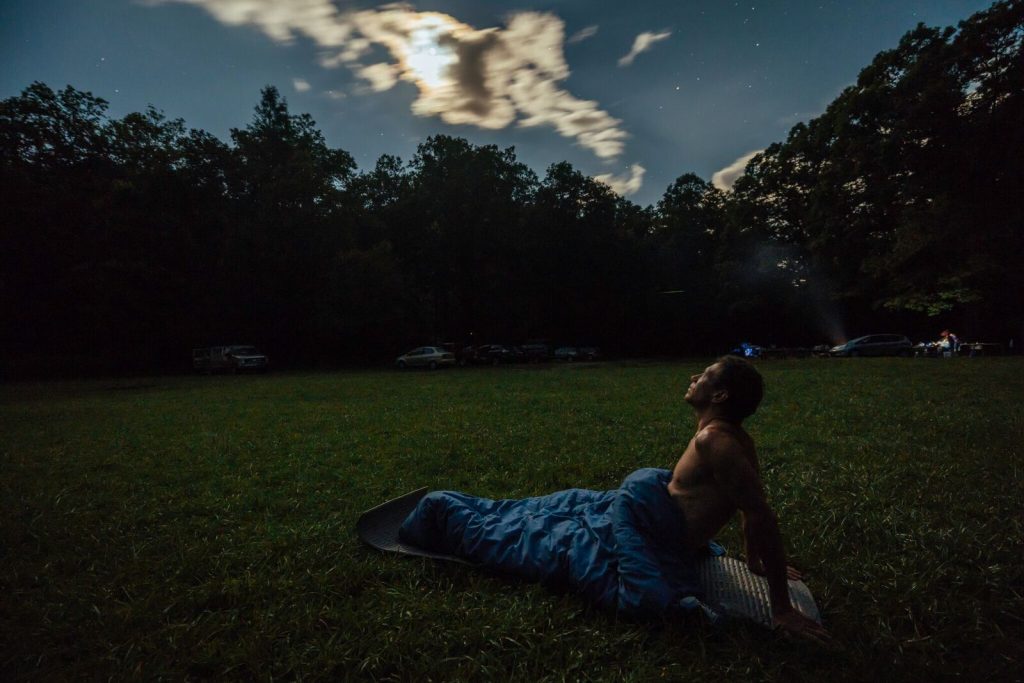
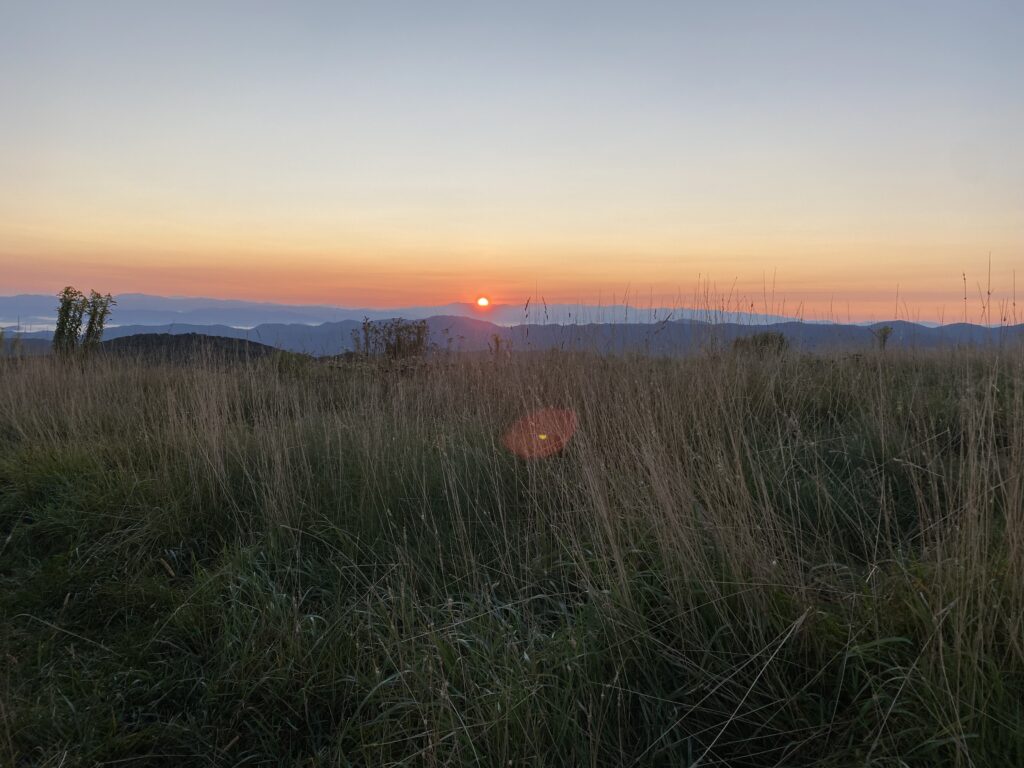
There are few experiences quite like lying beneath an open night sky and realizing there is absolutely nothing between you and the stars.
What About Bugs?
Insects are a more practical problem.
When mosquitoes are active, simple netting can make an enormous difference. Clothing can provide additional protection, and I prefer avoiding heavy applications of conventional insecticides whenever practical. Here again, the ability to pull a wool sleeping bag over the head can be useful.
The goal is not to prove how much discomfort you can tolerate. Natural Camping is not a contest. Use what you need. Just notice how little you may actually need.
Is It Safe to Sleep Outside? Fears, Dangers and Real Risks
This may be the biggest obstacle of all.
People who have never slept outside often imagine animals, noises, darkness and vulnerability. Some of those concerns are legitimate. You should understand the animals where you are camping, know how to store food, recognize dangerous weather and choose a safe campsite.
But there is another kind of fear that comes simply from unfamiliarity.
A twig snaps. Something moves in the leaves. An owl calls. The wind changes.
Indoors, we don’t hear most of this. Outdoors, the senses initially remain alert because the environment is unfamiliar.
Then something changes. You begin recognizing the sounds. The forest stops being an unknown darkness and becomes a place full of ordinary activity.
Fear becomes awareness. Awareness eventually becomes familiarity. And familiarity can become an extraordinary feeling of belonging.
So is it safe to sleep outside in your backyard, on a porch, or a day into the backcountry? Mostly, yes—and the real dangers of sleeping outside are not the ones people lie awake over. The deer, owls, coyotes and bears have all given me my space. The short list I actually respect:
- Cold and wet together. Change into a dry merino set before you get in; water next to the skin is the biggest cause of a cold night. Know the early signs of getting too cold—shivering, clumsy hands, poor decisions—and fix them early with a hat, a snack and a liner rather than waiting. The Wilderness Medical Society’s guidance on hypothermia is short and worth reading once.
- Weather and terrain. Check the forecast. Do not sleep on an exposed ridge or under lone trees when thunderstorms are forecast; drop below the tree line before dark. No widow-makers overhead.
- Ticks. The most common real risk on most trips in the eastern US. Long sleeves and trousers tucked into socks through grass and brush, and a full tick check at bedtime and again in the morning.
- Food and animals. Store food, toiletries and trash away from where you sleep—a canister or a proper hang in bear country, a sealed bag in the pack elsewhere—and cook away from the sleeping spot.
- Don’t fool yourself. Carry the Ten Essentials every time as survival insurance, carry a headlamp, know where you are, and tell someone your plan and when you will be back.
After that, the night is not dangerous. It is just dark.
Preparing the Body Is More Important Than Buying More Gear
There is another way to prepare for outdoor sleeping that doesn’t involve equipment at all.
Spend more time outdoors. Get morning sunlight. Walk barefoot when conditions allow. Allow yourself to experience seasonal temperatures instead of keeping your environment at the same temperature year-round.
Open your windows. Turn down artificial light in the evening. Move your body. Learn how you respond to cold. Sleep on a firmer surface.
These practices gradually change your relationship with the outdoor environment. You aren’t merely preparing your equipment for a camping trip. You are preparing yourself.
That is rewilding.
A Simple Backpacking Sleep System: Bag, Pad, Liner and Tarp
You don’t need very much.
For lightweight backpacking, my own basic system is built around a wool sleeping bag, a simple insulating pad, a ground sheet and an open tarp when rain protection is necessary. Wool base layers extend the temperature range of the sleeping system because the insulation you wear becomes part of your sleep system rather than dead weight carried only for daytime use.
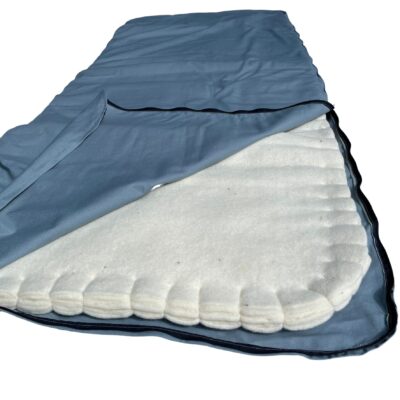
Under you—a firm pad and a ground sheet. Under your body a sleeping bag’s loft is crushed flat, so the ground pulls heat straight out through your hips. When backpacking I use a closed-cell foam pad; it is synthetic, but it is the only really practical thing I know of for carrying. At basecamp I switch to the wool sleeping pad on a slatted platform of limbs or a pile of leaves so air moves underneath. Under everything goes the silnylon ground sheet when the ground is wet, or the beeswaxed canvas ground cloth on dry ground.
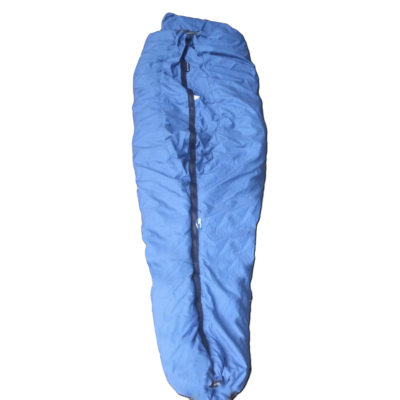
Around you—wool. The Rewilder wool sleeping bag is US wool batting in a beeswax-treated organic cotton shell, rated 20°F with two inches of loft or 10°F with three. The Standard weighs 4 lb and rolls to about 11 by 11 inches under its compression straps. To be honest about the weight, a 20°F down quilt is one to two pounds, so the wool bag is roughly three times heavier. What those pounds buy is a bag that keeps you warm when the night turns damp, dries from your own body heat, and lets you pull it over your head and breathe. Choose the length by your height—the sizing guide on the product page explains it—because the extra length over your head is the point.
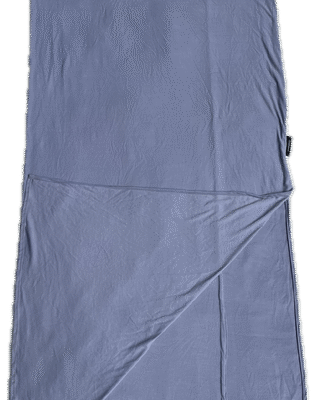
Next to the skin—dry merino. A merino set kept in a waterproof bag for sleeping only, with wool socks that never see a boot. A merino sleeping bag liner does the same job in one piece, adds about 10°F to any bag, and is the summer bag on its own.
Under your head. A stuff sack of clothes, or a small wool camp pillow if comfort is the point of the trip.
Above you. The open-ended tarp, about two pounds, pitched in five minutes on two found sticks, with a net tent underneath when the bugs are out. This is one place where I use synthetic, and gladly. When weight is less important, wool felt and natural canvas can replace some of the lightweight components.
The exact equipment matters less than the principle behind it: use enough gear to support the body without unnecessarily separating it from the environment. That is very different from trying to build a portable house. If you would rather answer five questions than read all this, the sleep-system finder will put a system together for you.
The Best Way to Stay Warm in a Sleeping Bag
- Change before you get in. Wet clothes off, dry merino set and sleeping socks on.
- Double the pad before you double the bag, and eat some fat before you turn in.
- Use your breath as heat. In a wool bag, pull it over your head and breathe. The wool takes the moisture into the fiber and gives back warmth—the one trick that only works with wool.
Sleeping Outside by Season: Temperatures and Suggested Systems
Rate the system for the coldest hour, which is usually just before dawn, and for the ground, which lags the air. These are field suggestions for a typical sleeper; cold sleepers should step up one row. There is no fixed number for how cold is too cold—start around 45°F and step down ten degrees at a time as you learn how your own body runs.
| Night low | Typical conditions | Bag | Pad | Liner / extras | Shelter |
|---|---|---|---|---|---|
| 55°F and up | Summer lowlands, warm nights | Merino liner alone, or dust cover sleep sack | Foam pad; ¼ in wool pad at camp | Bandana or buff for the eyes | None, or tarp for rain and dew |
| 40–55°F | Summer mountains, spring and autumn lowlands | Rewilder 2 in (20°F), used open or half-zipped | Foam pad; ¼ in wool pad at camp | Liner optional; merino bandana | None or tarp |
| 25–40°F | Shoulder-season mountains, frost likely | Rewilder 2 in, or 3 in (10°F) for cold sleepers | Foam pad; ¼ in wool pad on dry ground, ¾ in on damp or frozen ground at camp | Merino liner (+10°F), wool hat, dry socks | Tarp pitched low, or tipi at basecamp |
| 10–25°F | Late autumn, early winter | Rewilder 3 in + liner (backpacking); Aurora 2 or 3 in (camp) | Foam pad doubled; ¾ in wool pad at camp | Liner, felt bedroll as over-quilt at camp | Tipi or well-pitched tarp |
| Below 10°F | Winter basecamp, cabin, hunting camp | Aurora 5 in (−5°F) + liner; two Auroras zipped together for couples | 1.5 in wool pad on a platform | Bedroll over-quilt, hot water bottle, everything dry | Tipi or cabin; not a backpacking trip |
Everything below is made in the USA in Burnsville, North Carolina, and ships in 2–5 days. Start with the pad and the bag; add the rest as your trips demand it.
- The Rewilder wool sleeping bag: 20°F (2 in) or 10°F (3 in); 4 lb Standard; packs to about 11 × 11 in. From $557 to $888.
- Aurora Borealis cold-weather bag: 2, 3 or 5 in loft, about 20°F to −5°F; 7–15 lb; opens to a queen quilt. From $752 to $1,295.
- Merino sleeping bag liner: 30 oz, adds about 10°F, 28 in or 33 in girth, machine washable. $200–235.
- Dust cover sleep sack: merino-lined beeswax cotton summer bag and travel sack, sized to the Rewilder. $340–380.
- Organic wool sleeping pad: ¼ in (32 oz), ¾ in or 1.5 in; widths 24–60 in; washable cotton cover. For camp, not for carrying. $150–1,100.
- Silnylon ground sheet: 58 × 76 in, corner loops and four stakes, packs to a 4 × 4 in sack; the moisture barrier for wet ground.
- Beeswaxed canvas ground cloth: 60 × 80 in organic cotton canvas; the natural surface you sleep on, alone on dry ground or over the silnylon when it is wet.
- Camp pillow: small wool-filled pillow in organic cotton. $40.
- Merino bandana / buff: eye cover, nose cover, neck warmer. $29.
- Wool felt bedroll blanket: 4 lb, 50 × 76 in; over-quilt, blanket or extra pad at camp. $275–325.
- Organic canvas tarp: rain shelter, porch or ground cover at camp.
- Organic canvas tipi tent: 9 or 12 ft; basecamp and car camping. $1,250–2,100.
Frequently Asked Questions
Can you sleep outside without a tent?
Yes, and on a clear night it is the best way to do it. You need a ground cloth, a pad, a bag that handles dew (wool does), and a tarp within reach in case the forecast is wrong. Bugs are the usual objection; a head net or a merino buff over the face solves most of it, and a light breeze solves the rest. The pitches are in Tarp vs Tent: Sleeping Outside Without a Tent.
Is it safe to sleep outside in your backyard?
It is the safest place to learn. Your house is right there if you get cold, and nothing about the night changes because it is a lawn instead of a meadow. Dew and mosquitoes are the only likely surprises; a wool bag handles the first and a head net the second.
What are the benefits of sleeping outdoors?
For me: deeper sleep, waking clear and alert with the light, cold clean air all night, and a relationship with the dark and the weather that indoor life never gives you. I don’t promise anyone else’s results; I can only say it changed my sense of where I belong.
How cold is too cold to sleep outdoors?
There is no fixed number; there is only whether your system is rated for the night. People sleep comfortably well below 0°F in a properly rated bag on a thick pad in a canvas tent. Beginners should start at 45°F and above and step down 10°F at a time as they learn how their own body runs.
What is the best way for a beginner to start sleeping outside?
Sleep on the floor at home for two weeks first (the progression is in the firm-surface guide), then spend a night in the backyard or on a porch with the full system, then a mild-weather night at an established campsite. Each step removes one unknown.
Is a hammock better than the ground?
Hammocks are comfortable for some people and solve wet or sloping ground, but they are cold from below without an underquilt and restrict how you move. Ground sleeping on a good pad gives you full freedom of position and a warmer system for the weight.
Sleeping Outside Is Something We Already Know How to Do
I have met many people who have never slept outside.
When they hear about some of my experiences, particularly sleeping outside during winter, their reaction is often something like: “It makes me cold just thinking about it.”
I understand. Modern life has taught us that comfort comes from maintaining a narrow range of environmental conditions.
But my experiments taught me something else. The human body is remarkably adaptable. And when we give it an opportunity to rediscover that adaptability, our definition of comfort begins to change.
Cold air can feel invigorating. Firm ground can feel supportive. Darkness can feel peaceful. The sound of rain can become part of sleep rather than something outside a bedroom window.
And the night no longer feels empty.
This may be the greatest gift I have received from sleeping outdoors. It changed my sense of where I belong.
When I crawl into my wool sleeping bag beneath an open tarp—or sometimes beneath nothing at all—I don’t feel as though I am enduring the wilderness until morning.
I am home.
There may be dew forming around me. Frost may be collecting on the grass. Clouds may be passing across the moon. The wind may be moving through the trees. I am not separated from any of it. I am part of it.
And somewhere along the way, you realize that sleeping outdoors isn’t an extreme activity. It is one of the oldest things a human being can do.
Go Wild. Go Light. Go Natural.
Reviewed September 2026. Temperature suggestions are field guidance for a typical sleeper, not ISO 23537-1 ratings; adjust for your own experience and conditions.
The book behind these articles
A Rewilder’s Guide to Outdoor Adventure
The complete Lucky Sheep approach to time outdoors — skills, gear, food and natural sleep, from the founder. Everything the field guide covers, in one book you can take with you.
Get the book →Sleep warm out there — in wool
The Rewilder is a 20°F backpacking sleeping bag (4 lb, packs to 11 × 11 in) that keeps insulating when conditions turn damp. Add the merino liner for another ~10°F and a wool pad underneath for a complete natural-fiber sleep system.
-
Lightweight Wool Sleeping Bag–The Rewilder
The lightest all-natural backpacking bag
4 lb / 1.8 kg20°F / −6°C (10°F option)Packs to 11 × 11 in
Price range: $557.00 through $888.00 Select options This product has multiple variants. The options may be chosen on the product page -
Merino Wool Sleeping Bag Liner & Sleep Sack
Warm, washable wool liner for any bag
1.9 lb / 0.9 kgAdds ~10°F30 oz merino jersey
Price range: $200.00 through $235.00 Select options This product has multiple variants. The options may be chosen on the product page -
Organic Wool Sleeping Pad
Firm, breathable, machine-washable cover
¼ – 1.5 in wool felt24 – 60 in wide
Price range: $150.00 through $1,100.00 Select options This product has multiple variants. The options may be chosen on the product page