Wool bedding does one thing no other fibre does as well: it takes the moisture you give off every night into the fibre itself and hands back a little warmth, so the air next to your skin stays steady instead of swinging between clammy and cold. Merino sheets are the easiest place to start—merino wool sheets are the same fabric as a base layer, cut as wool bed sheets—and a merino sheet is what I tell people to try before anything larger. Whether you go on to wool sheets, a wool pillow or a felt topper, the reason is the same, and it starts with what happens in the bed at night.
A cup of moisture a night: the sleep environment wool bedding has to manage
Every night we create a warm, humid little climate just by climbing into bed and falling asleep. Your body is 70 to 80 percent water and your metabolism is a heat pump; by my reckoning we all perspire and respire about a cup of water each night. Whatever is touching you has to deal with that heat and moisture, and I have come to think it has to deal with it well for sleep to be truly restorative.
Here is what I believe happens when it does not. Synthetic bedding traps and holds that moisture because air cannot circulate through it. As heat and humidity build under the covers, the heart seems to work harder to adjust body temperature, and in my experience that is what produces shallower sleep and the feeling of waking unrefreshed. I noticed it first in sleeping bags, where most people blame the discomfort on camping rather than on the bag. Then I noticed the same thing in my bed at home.
Wool did the opposite. It lets air and moisture move, so the body can cool itself and settle at a comfortable temperature. I am wary of overstating it—this is my observation and my reading, not a clinical result—but it changed what I sleep under, and it is a big part of why Lucky Sheep® exists.
Is it good to sleep on wool?
Yes, and the reason is in the fibre. Wool has a water-loving core inside a water-shedding outer scale. Water vapour from your skin goes into the core, where you cannot feel it, and as it goes in the fibre releases a little heat. This is what textile people call the heat of adsorption, and it is why wool feels warm even when it is damp. Wool can hold something like 30 percent of its own weight in water vapour before it feels wet.
Published textile data puts wool’s moisture regain at 13 to 16 percent of its weight at ordinary humidity, against 7 to 8 percent for cotton and 0.4 percent for polyester. A polyester sheet, in other words, can hold almost none of the night’s cup of moisture; it has to sit on the surface as sweat. The crimp in the fibre adds tiny pockets of still air that insulate when you are cool and let heat out when you are warm. The longer version, with the trail evidence, is in Why Wool Beats Synthetic and Down for Sleep.
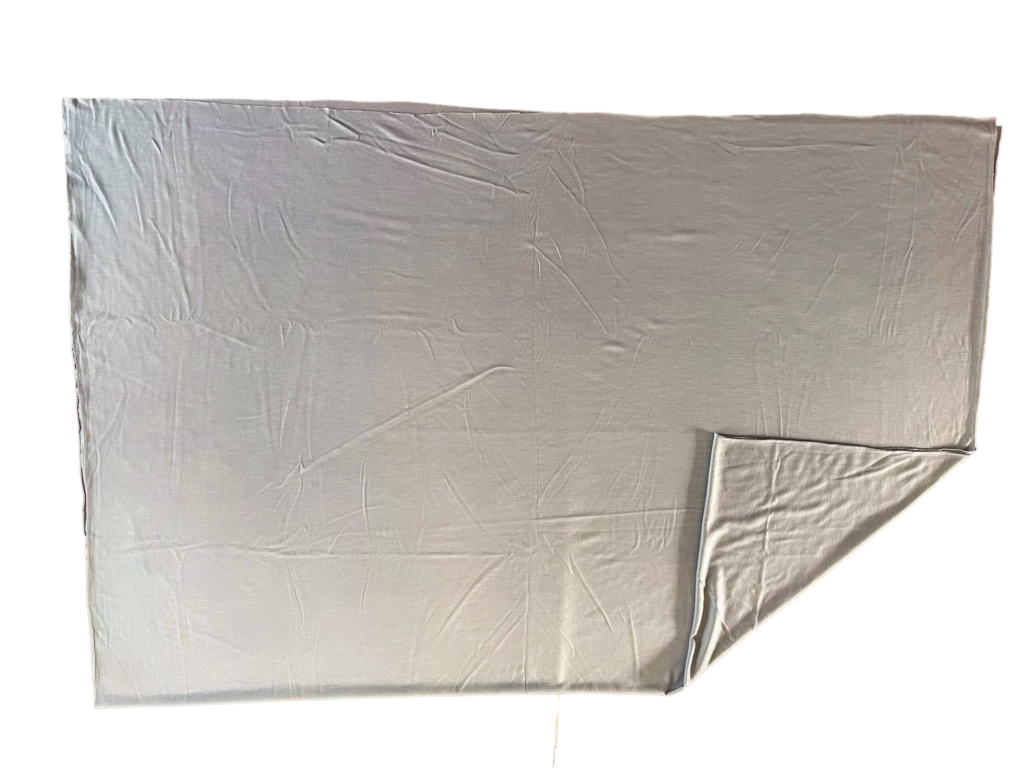
Do wool sheets make you hot?
Not in my experience, and this surprises people. Wool buffers in both directions: as the room cools and you sweat less, the fibre gives a little heat back; as you warm up and sweat more, the fibre takes vapour in and lets heat out. Merino jersey and wool felt are open structures, so air moves through them rather than being trapped against you.
What people notice first is the absence of the clammy, over-warm feeling they were used to—they say it feels like there is no cover at all, even in a cold room. I keep the windows open as much as I can and the bedroom as cool as I can stand. For me the best sleeping of all is a freezing winter night under enough layers of wool.
What is the best fabric for reducing static in bed?
Wool, and it is not close. Anyone who has pulled a fleece blanket off a polyester sheet in a dry February bedroom has seen the sparks. Static builds on synthetic fibres because they are dry, and dry materials do not carry charge away. Wool holds enough moisture inside the fibre that the charge dissipates, so wool sheets and blankets do not crackle, cling or shock you.
I go a step further than most textile people here, and you can take it as one man’s reading. I think of the skin as an electrical surface, and my understanding is that synthetics increase the static charge on it in a way that leaves the body a little less settled at night. Wool behaves more like natural fur. I cannot prove that in a lab; I can only say that I sleep more deeply in wool, and that the people I have talked to who try it tend to say the same.
Merino sheets vs cotton: what to expect from wool bed sheets
Merino jersey is a knit, so a merino sheet feels like a very soft T-shirt rather than a crisp cotton percale. It has some stretch, drapes close to the body, and is noticeably warmer than cotton in a cold room and cooler in a warm one for the buffering reasons above. Use it as a top sheet under your existing blanket, or as a fitted layer over the mattress, and give it two weeks.
It also stays fresh far longer between washes. Body odour in bedding is bacteria working on sweat, and bacteria need a wet surface; wool pulls moisture into the fibre and off the surface. Merino base layers are famous for going a week on the trail without smelling, and the sheet is the same fabric. Hang it in the sun and it resets.
Wool pillow, wool topper and blanket: what to change first
You do not need to replace the whole bed to find out whether wool bedding suits you. I would change things in this order; each step is cheap relative to the next, and each tells you something.
- The sheet. The layer in contact with the most skin for the most hours, so the biggest difference per dollar.
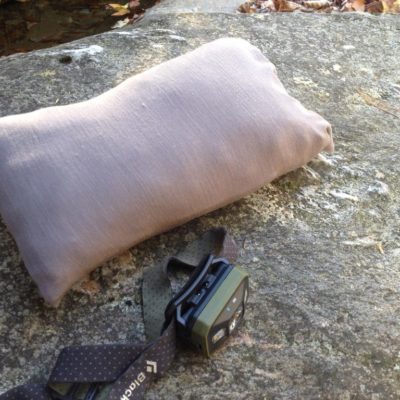
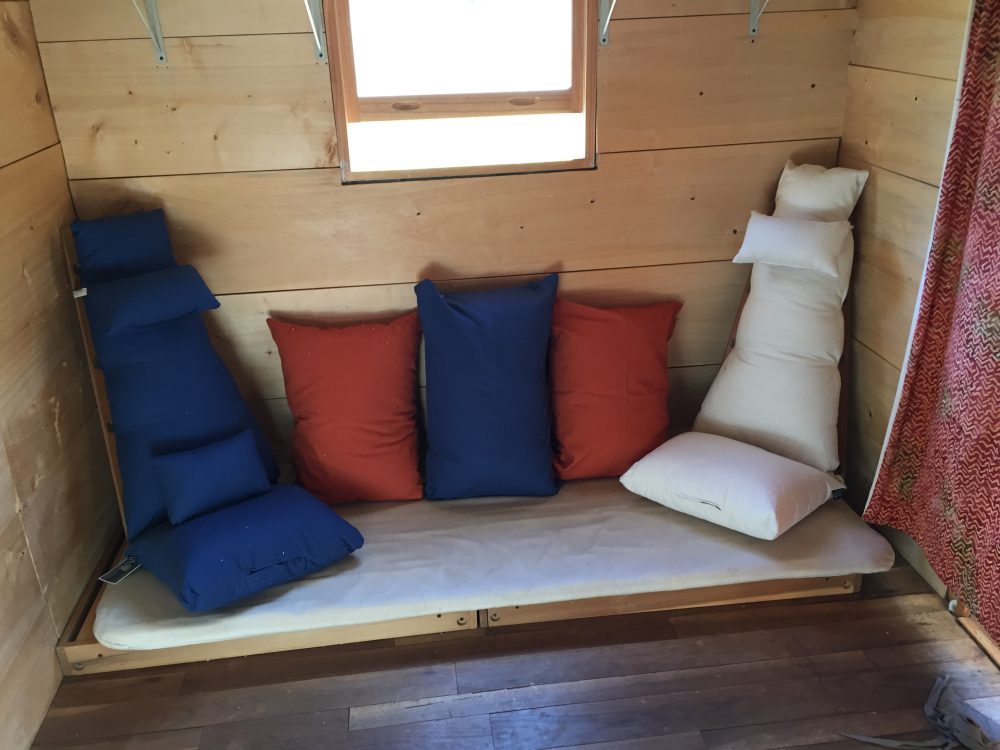
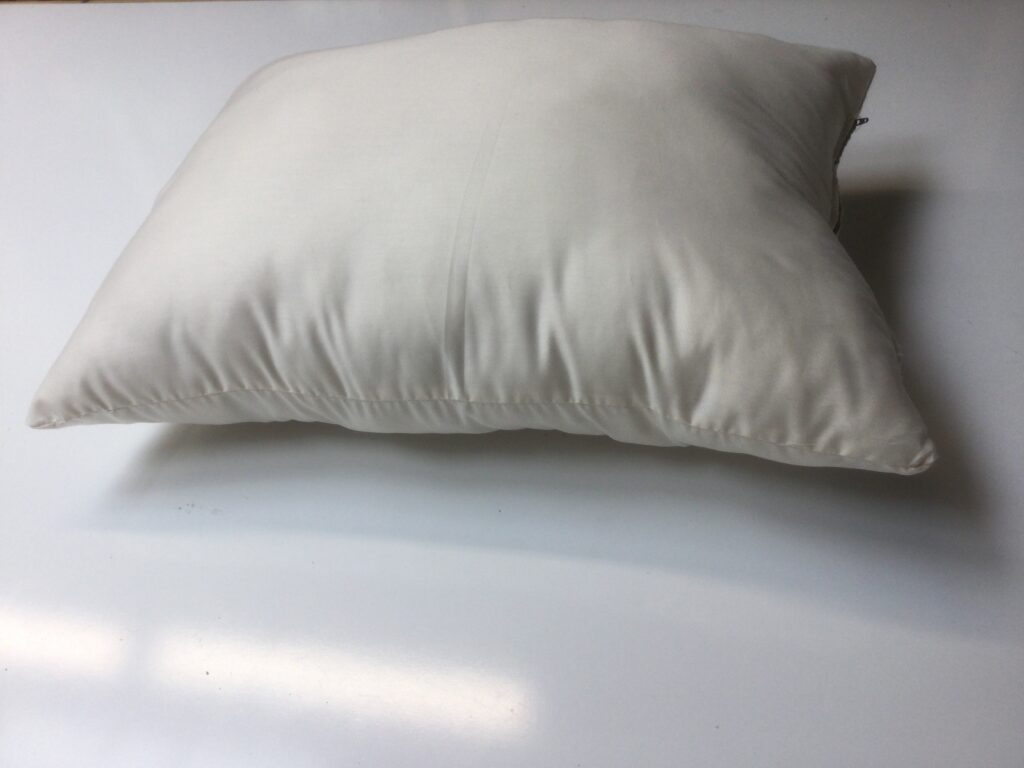
- The pillow. Your face breathes into it all night, so it is the wettest thing in the bed. Waking up with your head on a sweaty pillow is never enjoyable, and down and polyester fill hold that moisture between the fibres and pack into lumps. A wool-filled bed pillow takes it into the fibre and springs back each morning. Wool bed pillows are the second thing I would change.
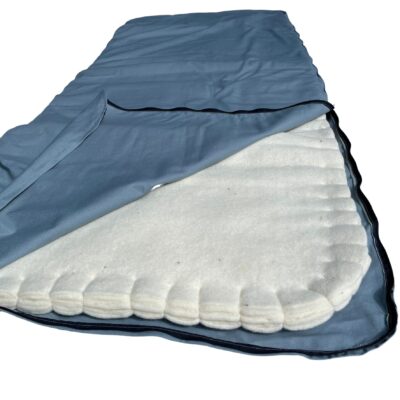
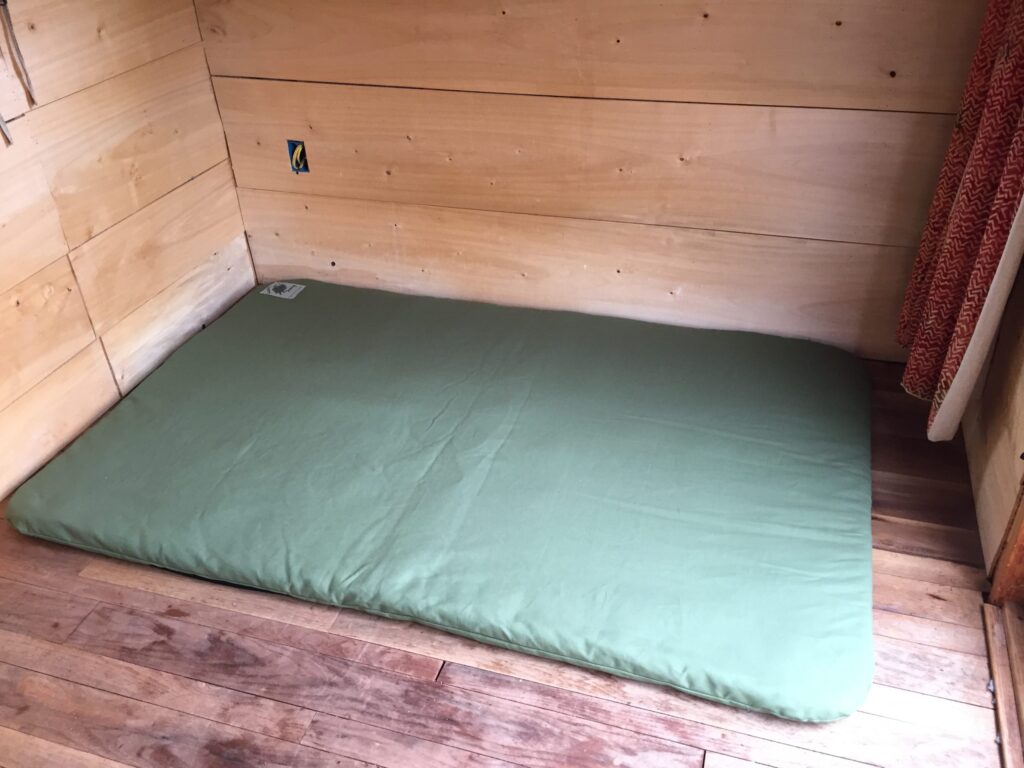
- The topper. People searching for an organic wool mattress or a sheep wool mattress usually want what I sleep on: a dense wool felt pad, ¾ or 1.5 inches thick, on a slatted platform. I have tested beds, futons and natural surfaces for decades, and what works for most people is about an inch or two of compressed padding—a thick quilt on a board, the traditional Japanese futon. It will not let the hips sink and misalign the spine. The slats do what a tatami mat does: ventilate underneath so the pad never goes damp.
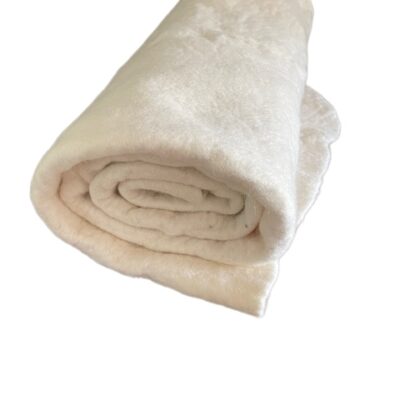
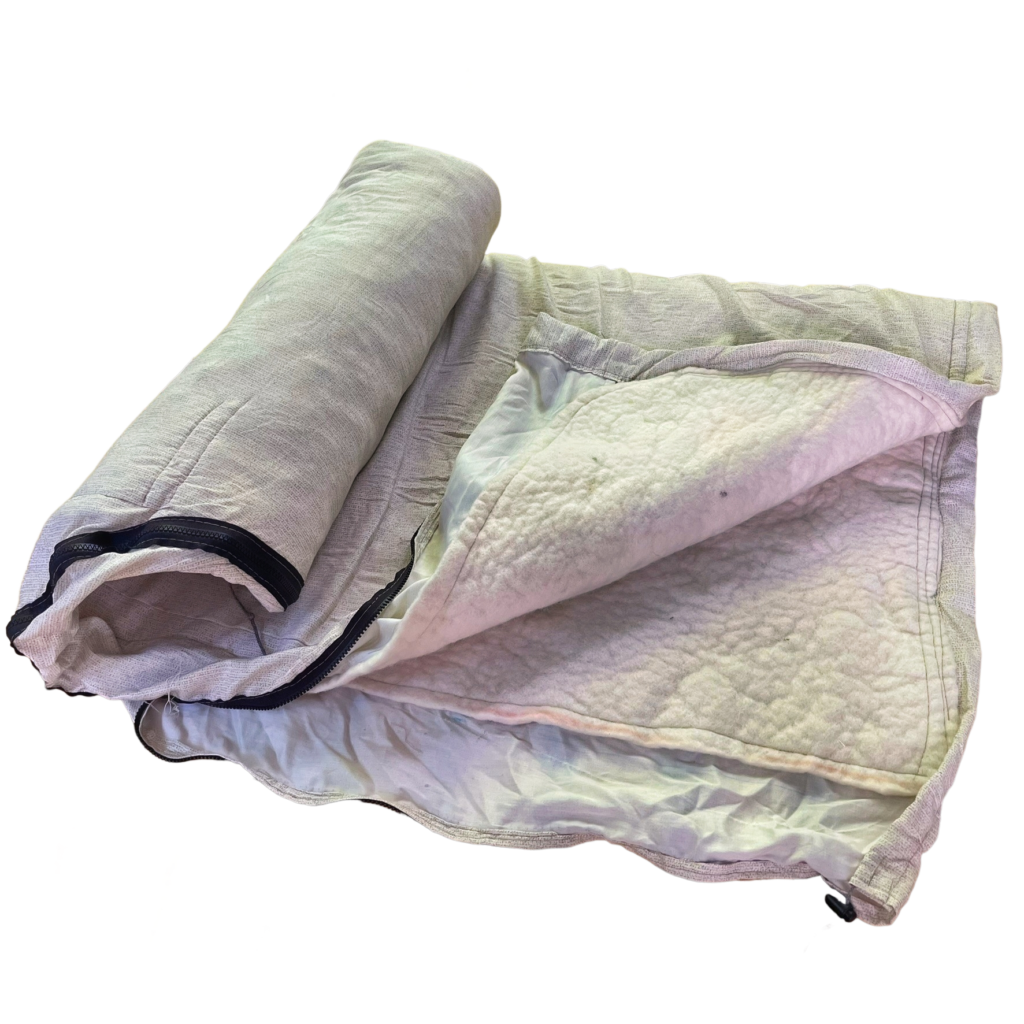
- The blanket. The wool felt bedroll is a 4 lb felt blanket, 50 by 76 inches, that a lot of customers use on the bed in winter. Blankets and sleeping bags cross over here: many people open a wool sleeping bag flat as their house blanket, and the Aurora opens into a queen-size quilt for exactly that reason.
How do you wash merino wool sheets and wool bedding?
- Air more, wash less. Most wool needs sun and wind, not detergent. Hang sheets and blankets outside for an hour every week or two.
- Merino sheets: machine wash cool on a wool or gentle cycle with a wool-safe detergent, no bleach, no softener. Dry flat or on low. Heat and agitation are what shrink wool.
- Pillow and pad covers: unzip the organic cotton cover and wash it. The wool inside is aired, not washed.
- Felt bedroll: spot-clean and sun. A full wash is rarely needed.
- Moths like wool folded in a dark closet for a year. Wool that is slept on and aired is not a moth problem.
What I sleep under
A felt pad on a slatted platform, a merino sheet, a small firm wool pillow, and as many layers of wool blanket as the night calls for, with the window open. It is the same system I use under a tarp, which is the point: there is nothing about a bedroom that should make sleep worse than a night in the woods, and I find there is a great deal that makes it worse when the bedding is plastic.
A question to contemplate: why do we idealize our own bed as the most comfortable place to sleep, and what is really different about it? Start with the sheet and see what you find.
Reviewed September 2026 by the Lucky Sheep® team.
A firm, breathable, foam-free place to sleep
Our wool sleeping pad is dense US wool felt in a washable organic cotton cover — a non-toxic sleeping pad for the tent or the floor at home. Pair it with the wool felt bedroll and a camp pillow.
-
Organic Wool Sleeping Pad
Firm, breathable, machine-washable cover
¼ – 1.5 in wool felt24 – 60 in wide
Price range: $150.00 through $1,100.00 Select options This product has multiple variants. The options may be chosen on the product page -
Wool Felt Bedroll Blanket
Blanket, quilt, pad or liner
4 lb / 1.8 kg50 × 76 inUS wool felt
Price range: $275.00 through $375.00 Select options This product has multiple variants. The options may be chosen on the product page