A waxed canvas rain jacket and a so-called breathable membrane shell are two different answers to the same wet day. The membrane tries to seal the rain out and, sooner or later, seals your own sweat in. Waxed canvas is water-resistant rather than waterproof, breathes the whole time you wear it, and comes back to new with a bar of wax. I have hiked in both for years in the Southern Appalachians, and this is an honest comparison from the trail rather than the spec sheet.
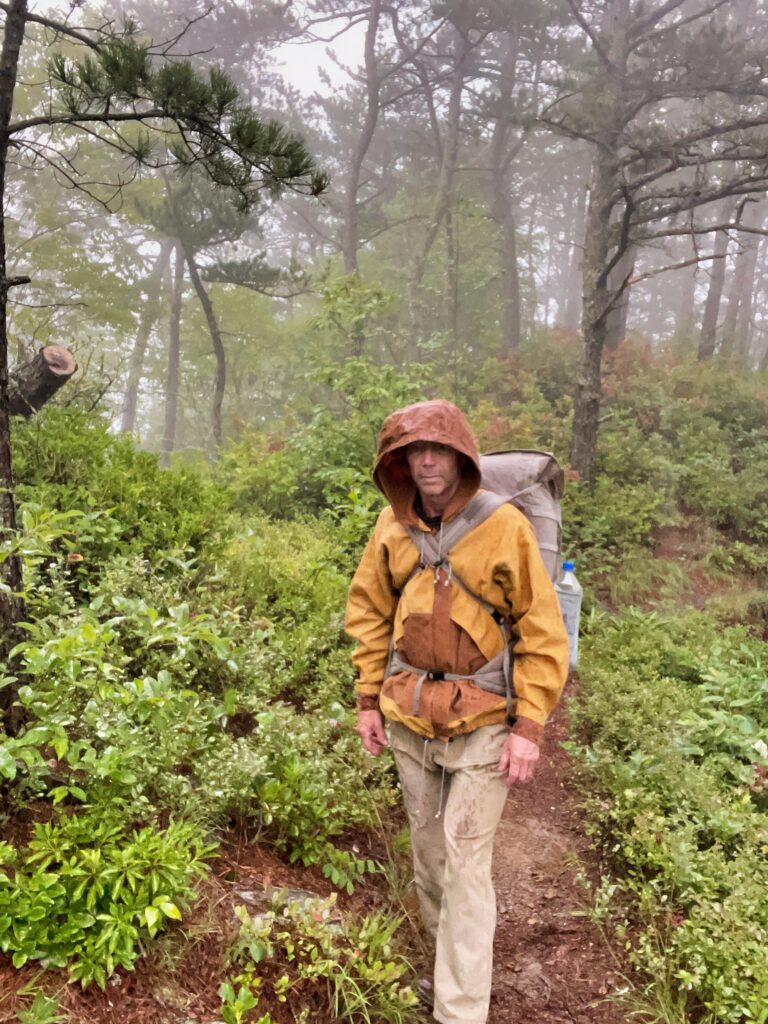
Day 2 in Linville Gorge: we were all just as wet as the other
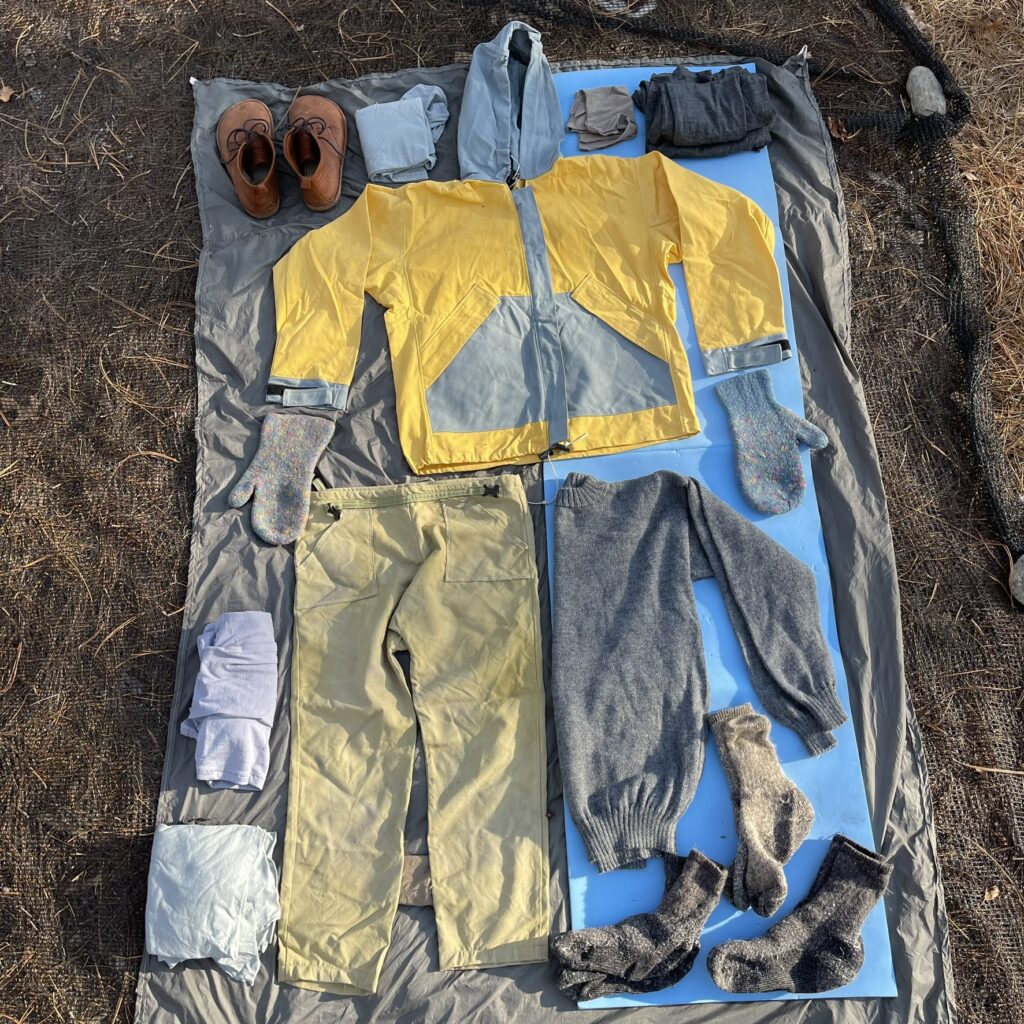
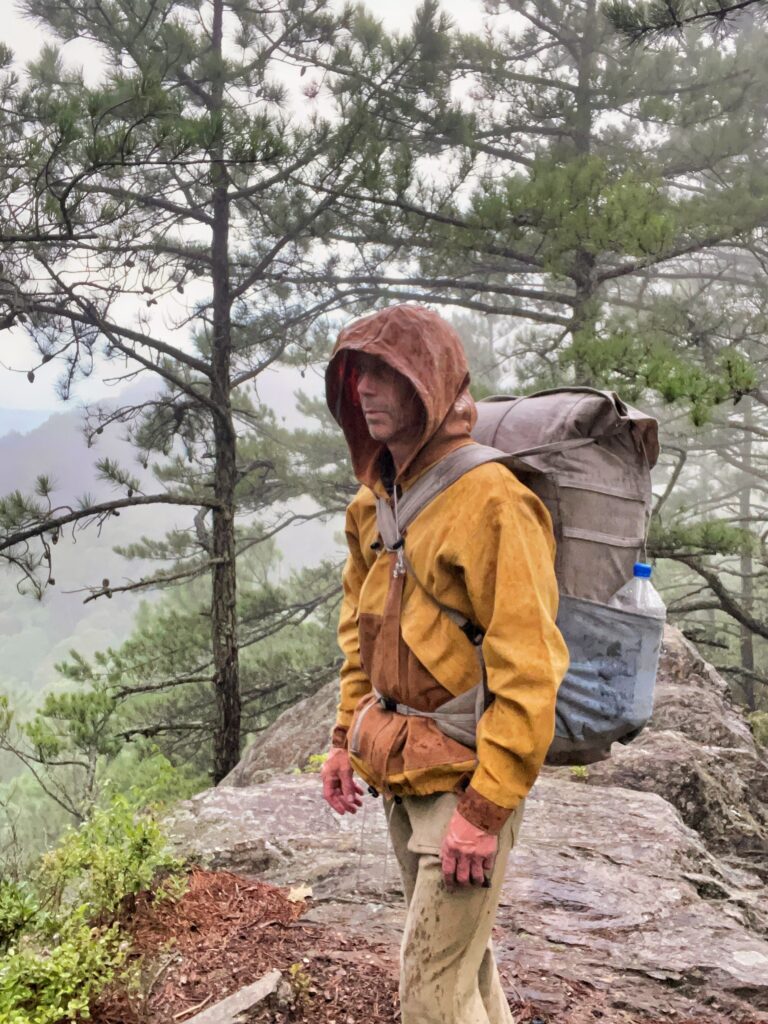
We woke on the second morning of a four-day Meetup trip in Linville Gorge to about 50°F and rain pounding on the tents. I was somewhat elated, because I really wanted to test my gear to the max. I put on a merino base layer, wool socks, waxed cotton pants, my waxed cotton parka and a wide-brimmed wool felt hat, and we started up the muddy trail with water sloshing into our boots.
By the rock overhang at The Chimneys my fingers were numb. At camp I pitched my tarp, pulled on the dry set from my stuff sack, crawled into my wool sleeping bag and shivered my way back to life.
That evening, around a fire our leader coaxed out of drenched wood, we compared notes. Not one of us had saved the clothes we wore that day. We were all just as wet as the other. The difference showed up afterward: my waxed cotton shell dried quickly by the fire and shrugged off flying embers, and inside my wool I kept drying through the night from my own body heat. Day 3 came up blue sky, with dry clothes.
That trip is the whole argument for a canvas raincoat. Not that you will stay dry — you will get wet. The question is what your clothing does with you while you dry back out.
Why a membrane rain shell reaches a point of diminishing returns
A shell has one job on paper: shield you from rain and wind. The problem with synthetic shells, in my experience, is a lack of breathability, and that includes the so-called “breathable” fabrics such as Gore-Tex. A membrane works well in certain conditions and not well in others.
While you hike, you generate heat and sweat. When you rest, you need more insulation. In cool weather with little exertion a membrane can do fine; add a climb or a warm afternoon and there is a point where you start sweating and overheating inside it. The gear that was keeping the rain out is now keeping your perspiration in. Then you stop, and the sweat chills you.
In A Rewilder’s Guide to Outdoor Adventure I call this the point of diminishing returns: the “technical” features you bought the jacket for worked for a while and are now making things worse. What you need at that moment is something both breathable and wind-resistant.
There is a second failure that sneaks up on people. The durable water repellent finish on the face fabric wears off, and when it does, the shell no longer sheds rain. It is hard to tell when this will happen, and many unwary hikers venture off to find the gear is not working. Most of those finishes have also been PFAS chemistry, the forever chemicals the industry is now trying to move away from.
The summer thunderstorm that finished it for me: a membrane parka over a merino base, overheating, until I took the parka off and got wet. Cold and wet from rain felt better than hot and wet from sweat. It is not black and white.
Is a waxed canvas rain jacket waterproof?
No, and I would rather say so plainly. Oilcloth is a tight-weave cotton treated with beeswax or a similar natural oil and wax. The wax coats the fibers so rain beads and runs off; the weave stays open enough for your body’s vapor to keep moving out. Before synthetics, that was the shell layer, and the idea goes back to the Vikings and beyond.
A freshly waxed jacket beads rain for hours. In a long, hard rain the canvas darkens at the hood, shoulders and cuffs and slowly takes on water. It wets out slowly and visibly, so you can see it coming, rather than failing all at once; and because the cloth is still passing vapor, you rarely get the clammy chill of a wetted-out membrane. Most of the water that reaches you comes down the neck and up the sleeves, so cinch the hood and cuffs.
“Cotton kills” is true of untreated cotton, which acts like a sponge and can lead to hypothermia. Waxed cotton is a different material. Call it a canvas raincoat, a waxed raincoat, a waxed rain jacket, a beeswax jacket, a wax canvas rain jacket or a canvas parka — it is the old-timer shell, and it still works.
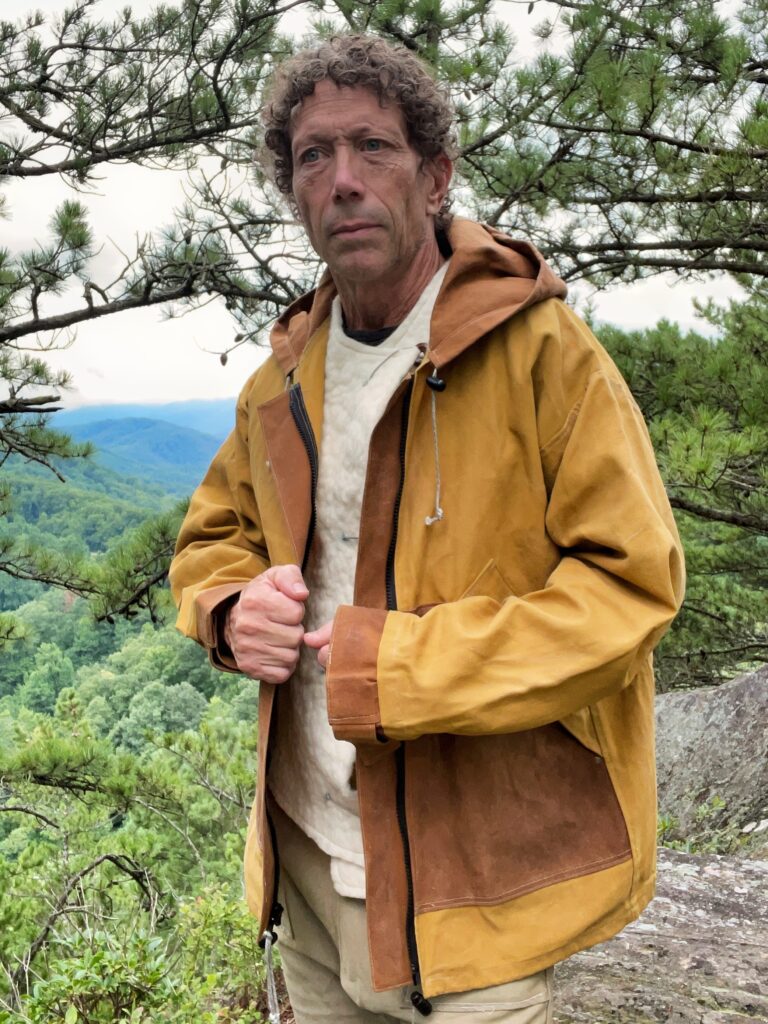
The Lucky Sheep® lightweight waxed canvas rain jacket is a natural fiber jacket through and through: 10 oz organic cotton canvas with a natural wax finish, no PFAS and no coating, with a hood, full zipper, hand pockets and a loose, gusseted cut for layers underneath. It weighs about 32 oz (2 lb), comes in S, M, L and XL, is made in the USA, and is quiet, with no swish when your arms swing. When the wax thins, you rub more in.
Waxed canvas rain jacket vs membrane shell: the comparison
Here is how the two fabrics compare on the things that decide a wet day.
| Membrane shell | Waxed canvas rain jacket | |
|---|---|---|
| Rain | Waterproof while the water-repellent finish lasts | Water-resistant; beads rain for hours, wets out slowly in prolonged heavy rain |
| Breathing | Limited, and near zero once the face fabric wets out | Continuous; the weave keeps passing vapor even when damp |
| How it fails | Suddenly, and from the inside: you are wet with your own sweat | Slowly and visibly, from the outside in |
| Finish | Fluorinated or other repellent that needs re-treating from a spray can | Natural wax; renew it yourself with a bar |
| Noise | Swishes with every arm swing | Silent |
| Brush and fire | Rips easily; a flying ember burns a hole instantly | Does not tear in brambles; a spark does not burn through |
| Weight | Lighter, sometimes much lighter | About 2 lb |
| Lifespan and repair | The finish fades in a season or two; patches are tape | Re-waxable indefinitely; sew a tear and wax over it |
Weight is the honest loss, and I want to be straight about it. A canvas shell weighs more than a membrane shell, and every ounce you carry costs calories; by my reckoning three pounds costs you roughly three-quarters of a mile on a twenty-mile day. What those ounces buy is a jacket that breathes all day, dries by a fire without fear, does not need replacing every few seasons, and does not shed fluorinated chemistry into the creek you are drinking from. Weight matters. It is not the only thing that matters.
What are the disadvantages of waxed jackets?
Honesty cuts both ways, so here is the list I give people who ask.
- It is heavier. About 2 lb against a membrane shell that may weigh a fraction of that. On a fast trip where every ounce is the point, that is a real cost.
- It wets out in day-long rain. Beeswaxed canvas sheds showers and hours of steady rain; it will not keep a full day of hard rain out. Plan the way I do, with a dry set of wool in a waterproof bag for camp.
- It needs re-waxing. Every season or two of regular use, half an hour with a bar and a hair dryer. A membrane needs re-treating too; people forget that because it comes in a spray can.
- It does not like heat in storage. Folded in a hot car the wax migrates into the creases. Hang it in a cool closet.
- It is a shell, not an insulator. Warmth comes from the wool under it.
- It costs more up front than a mid-range synthetic shell. Over the decades it lasts, I think the math turns around.
How to wear a waxed cotton rain jacket: the three-step system
The shell is step three of a system, and it only works as well as the two steps under it. This is how I dress for anything from a 20°F morning to a warm rain.
- Base layer. Thin, stretchy merino, skin-tight, top and bottom. It needs to be moisture-wicking because moisture trapped next to the skin makes you colder, and skin-tight because trapped air right against the skin feels cold. It weighs a few ounces, so I carry two sets and keep one dry for sleeping.
- Insulation layer. Wool sweaters, nested. Two of different sizes that fit over one another let you add and subtract as the weather and your exertion change. If the outer one pulls on the inner one, buy the next size up.
- Shell layer. Breathable with ways to ventilate, wind-resistant, rain-resistant, and loose enough that layers can be added or subtracted underneath. A tight shell hampers the whole system’s ability to warm you.
Wool under the shell matters more than people think. What I have found, and what the old textile science supports, is that wool takes water vapor into the fiber and gives off a little heat as it does, so it feels warm even when it is damp. Whatever the shell cannot pass right away is buffered by the wool instead of sitting on your skin.
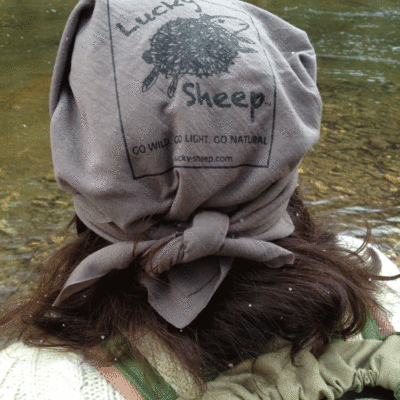
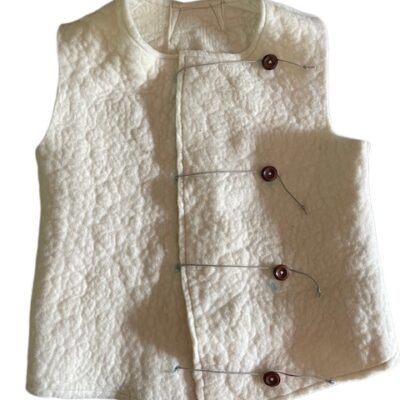
My own combination in cold rain is the wool felt adventure vest under the jacket, with a merino headwrap at the neck. Dense wool over the core, arms free to swing a walking stick, no pile jacket pilling under the shell.
Waist down, let yourself get wet. Wool pants or thin beeswaxed cotton pants over a merino base can get wet and still keep you warm without overheating. Plastic rain pants have never made sense to me, because the legs sweat more than the torso, and sealing them in only trades rain for sweat.
What to do in different weather conditions
There are conditions that call for tightening every wind hole and conditions that call for ventilation. A few examples from my own hiking:
- Below freezing and windy. Wear the parka completely cinched at waist, wrists and hood. If you overheat on a climb, start uncinching; if that is not enough, take it off and drape it over your head or the pack. I have hiked in wind chills approaching −20°F where the shell was too hot on the climb and went straight back on at every rest.
- 33–45°F and light rain. Same approach, but you will be taking the parka off more often and wearing it draped and open.
- 33–45°F and heavy rain. Hood up, and a wide-brimmed wool felt hat over it keeps rain out of your face better than the hood alone. An umbrella is worth considering if it is not windy.
- 45°F and above. Drape the parka open over your shoulders; sometimes even that is too hot, and getting wet in a warm rain is the better option. Exposing yourself to light rain often gets you no wetter than sweating on a dry day.
In all of these, be in touch with your body and check in with yourself often; frostbite and hypothermia set in fast in wind. It depends a lot on the individual.

How do you re-wax a waxed canvas rain jacket?
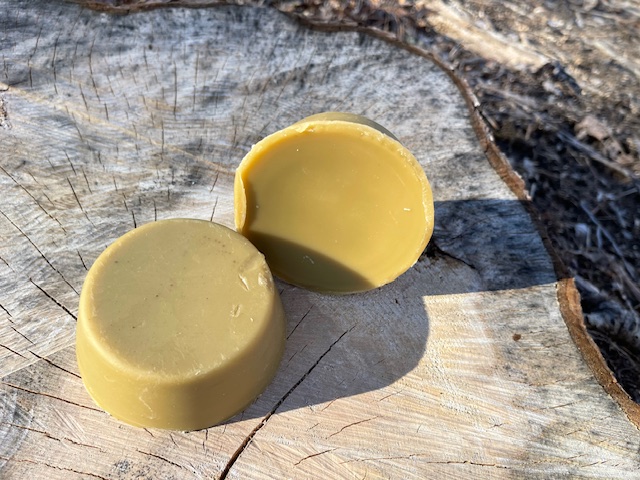
You will know it is time when rain stops beading on the shoulders and the creases go pale. Brush the jacket clean, let it dry completely, and rub a bar of Trail Wax firmly over the seams, hood, shoulders and cuffs first, then the panels. Warm it in with a hair dryer or an hour in the sun until the streaks melt into the weave, wipe any excess, and hang it overnight.
On the trail I just rub the bar over the shoulders in the morning and let body heat and sun do the rest. The full method for jackets, packs, tarps and the tent is in my waxed canvas care guide.
What I would tell you
Test the jacket near home first, on walks in the park and day hikes in bad weather, until you know without thinking when to cinch it, drape it and take it off. We each need to develop that kind of relationship with our entire gear set, and a shell you can renew yourself is a good place to start.
You will get wet. Dress so that it does not matter.
Go Wild. Go Light. Go Natural.
Reviewed September 2026 by the Lucky Sheep® team.
Layers that work wet
Wool next to skin, waxed canvas as the shell: a layering system that manages sweat and weather without membranes or coatings. The rain jacket is a breathable alternative to Gore-Tex-style shells; the merino bandana is the piece you’ll wear every day.
-
Lightweight Waxed Canvas Rain Jacket
A rain shell that breathes
2 lb / 0.9 kg10 oz organic canvasPFAS-free wax finish
$525.00 Select options This product has multiple variants. The options may be chosen on the product page -
Wool Felt Adventure Vest
$175.00 Select options This product has multiple variants. The options may be chosen on the product page