Welcome Back to Natural Sleep
Congratulations, and welcome to Lucky Sheep®.
You didn’t just purchase another sleeping bag—you chose a different way to experience the outdoors.
At Lucky Sheep®, we believe outdoor gear should work with your body, not against it. That’s why we build our sleeping bags from breathable natural materials that regulate temperature, manage moisture, and remain comfortable across a wide range of conditions.
Whether you’re deep in the backcountry or sleeping beneath the stars in your own backyard, we hope this sleeping bag helps you reconnect with your wild, capable self.
Sleeping Naturally
Unlike most modern sleeping bags, wool continues working as conditions change.
When it’s cold
- Zip the bag completely.
- On the Rewilder®, position the zipper underneath you for maximum efficiency.
- Adjust the bag’s upper opening to retain warmth while keeping your face uncovered. Wool helps manage moisture from your breath.
When it’s warm
- Unzip the bag partially or completely and use it like a quilt.
- On the Rewilder®, loosen the footbox drawcord so your feet can extend outside the bag.
- Don’t be afraid to let an arm or leg escape as temperatures change. Wool adapts remarkably well to changing conditions.
Getting the Most from Your Bag
For the best night’s sleep, wear lightweight merino wool base layers whenever possible. They help keep your sleeping bag clean while improving moisture management and comfort.
For colder weather, simply add clothing layers rather than carrying a second sleeping bag.
For additional warmth, pair your sleeping bag with a Lucky Sheep® Merino Sleep Sack, Dust Cover, or Wool Camp Blanket.
Built for Real Weather
Nature isn’t climate controlled—and your sleeping bag shouldn’t expect it to be.
Wool continues insulating even when exposed to dew, fog, condensation, or light moisture.
Instead of trapping perspiration like many synthetic materials, wool continually moves moisture away from your body, creating a comfortable sleeping environment through changing weather conditions.
That’s one of the reasons wool has been trusted outdoors for generations.
Packing & Storage
For the longest life, roll your sleeping bag before placing it into the stuff sack. Rolling compresses the insulation evenly and is gentler on the materials.
For long-term storage, keep your bag loosely stored in a breathable cloth sack. Avoid airtight plastic containers, which trap moisture and reduce airflow.
Caring for Your Wool Sleeping Bag
Natural wool is remarkably easy to care for. Most of the time, your sleeping bag simply needs fresh air rather than washing.
Your Lucky Sheep sleeping bag contains natural wool batting enclosed in fabric. Because the wool has not been chemically treated to make it machine washable, gentle handling is especially important.
Routine Care: Fresh Air and Sunshine
After each trip, open your sleeping bag fully and air it in a well-ventilated location until any accumulated moisture has evaporated.
Occasional gentle sunshine can help freshen and dry the bag. Avoid prolonged exposure to intense sunlight.
Wearing clean merino base layers or using a removable merino sleep sack helps protect the lining and reduces the need for washing.
Spot Cleaning
For small stains, spot cleaning is preferable to washing the entire sleeping bag.
- Lightly dampen the affected fabric with cool water.
- Apply a small amount of mild, fragrance-free, enzyme-free wool detergent. Gently blot with a clean cloth. Do not scrub.
- Remove detergent residue by blotting with a second clean, damp cloth.
- Optional vinegar treatment: For minor surface stains or lingering odors, mix one part plain white vinegar with four parts cool water. Test first on an inconspicuous area. Lightly dab the fabric, avoiding saturation of the wool batting underneath. Blot afterward with a clean, damp cloth.
- Allow the cleaned area and underlying insulation to dry completely before use or storage.
A note about mold and mildew
If you notice visible mold or mildew, do not assume that vinegar or ordinary spot cleaning will eliminate it. Mold can penetrate the cotton fabric and wool batting, where it may be difficult to remove completely.
Contact Lucky Sheep for guidance if you discover mold, particularly if there is a persistent musty odor, recurring growth, or evidence of moisture inside the insulation. Professional assessment or replacement of affected materials may be necessary.
Choosing a Wool-Safe Detergent
Wool is a natural protein fiber and requires special care when washing.
Choose a detergent specifically formulated for wool, preferably fragrance-free, pH-neutral or mildly acidic, and free of enzymes, bleach, and optical brighteners.
In particular, avoid detergents containing protease enzymes, which break down proteins and can damage wool fibers.
Examples of wool-care detergents include:
- Wollmeisenbad Scentless: A specialized wool detergent formulated without enzymes, fragrances, dyes, or bleaching agents.
- Eucalan Natural Unscented: A gentle, low-sudsing wool wash containing a small amount of lanolin.
- Soak Wash Scentless: A mild, fragrance-free delicate-fabric wash. Confirm that the current formulation is enzyme-free before using it on untreated wool.
Always check the manufacturer’s current ingredients and instructions, as formulations can change.
Avoid ordinary laundry detergents, including many products marketed as natural or environmentally friendly, unless they are specifically suitable for untreated wool.
For additional information, see Woolmark’s guide to choosing wool detergents.
Hand Washing Your Sleeping Bag
A complete washing should only be necessary occasionally.
Untreated wool batting can felt or shrink when exposed to agitation, rubbing, or abrupt changes in water temperature.
We recommend gentle hand washing in a bathtub. Do not machine wash.
- Prepare the water. Fill a clean bathtub with cool or lukewarm water, preferably below 85°F (29°C). Add a small amount of enzyme-free wool detergent according to the manufacturer’s directions. Mix thoroughly before immersing the sleeping bag.
- Submerge the sleeping bag. Unzip the bag and gently lower it into the water. Press it beneath the surface with open hands until the wool batting is saturated. Do not rub, scrub, or agitate.
- Allow to soak. Leave the sleeping bag undisturbed for approximately 10–15 minutes.
- Drain the bathtub. Allow the water to drain completely, leaving the heavy, wet sleeping bag supported in the tub.
- Remove excess water. Gently fold and roll the sleeping bag, pressing downward to squeeze out water. Never twist or wring the fabric.
- Rinse. Refill the bathtub with clean water at approximately the same temperature. Gently press the bag beneath the surface, then drain. Repeat as necessary to remove detergent residue. Even when using a no-rinse wool wash, removing residues may be preferable for thick wool batting.
- Press out remaining water. Gently roll and press the bag again to remove as much water as possible. When moving the wet sleeping bag, support its entire weight to avoid stretching seams or shifting the insulation.
Drying Your Sleeping Bag
Proper drying is especially important because wool batting can retain a considerable amount of moisture.
Lay the wet sleeping bag flat on several clean, dry towels to absorb excess moisture. Replace the towels as they become saturated.
If available, move the sleeping bag to a clean mesh drying rack, allowing air to circulate above and below.
Turn the sleeping bag periodically to promote even drying. Gentle sunshine and moving air can help speed the process.
Depending on the thickness of the insulation, temperature, and humidity, drying may take several days.
Make certain the wool batting is completely dry before using or storing the sleeping bag. Moisture trapped inside the insulation can lead to mildew and unpleasant odors.
Do not tumble dry, wring, expose the sleeping bag to high heat, or store it while damp.
Long-Term Storage
Store your sleeping bag completely dry in a clean, breathable location.
For long-term storage, keep it loosely arranged in a large cotton storage bag or on a clean shelf. Avoid extended tight compression and airtight plastic containers.
With proper care, your Lucky Sheep® sleeping bag is designed to provide many years of dependable service.
Our Promise
Every Lucky Sheep® sleeping bag is handcrafted in small batches using natural materials.
Because of this, slight variations in color, texture, or wax finish are completely normal. These are part of the character of handcrafted gear and do not affect performance.
If you ever have questions, we’re happy to help.
Lucky Sheep®
4188 NC-80, Unit 18
Burnsville, NC 28714
828-450-6321
We proudly stand behind our products with a lifetime warranty against defects in materials and workmanship under normal use.
Unused products may be returned within two weeks of delivery. Please contact us before returning your gear.
Rewilder Sleeping Bag Specifications
Rewilder — 20°F Rating (-6.6°C)
| Size | Length | Girth | Weight | Packed volume |
|---|---|---|---|---|
| Medium | 76″ | 56″ | 4.0 lb | 22 L |
| Long | 82″ | 56″ | 4.25 lb | 28 L |
| Medium Wide | 76″ | 66″ | 4.25 lb | 28 L |
| Long Wide | 82″ | 66″ | 5.0 lb | 36 L |
Fit: Medium lengths fit up to approximately 5’10”; Long lengths fit approximately 5’10″–6’4″.
Compressed dimensions: Medium 11″ × 11″ × 11″; Long and Medium Wide 12″ × 12″ × 12″; Long Wide 13″ × 13″ × 13″.
Rewilder — 10°F Rating (-12°C)
| Size | Length | Girth | Weight | Packed volume |
|---|---|---|---|---|
| Medium | 76″ | 56″ | 5.0 lb | 28 L |
| Long | 82″ | 56″ | 5.25 lb | 30 L |
| Medium Wide | 76″ | 66″ | 5.25 lb | 30 L |
| Long Wide | 82″ | 66″ | 5.5 lb | 45 L |
Fit: Medium lengths fit up to approximately 5’10”; Long lengths fit approximately 5’10″–6’4″.
Compressed dimensions: Medium 12″ × 12″ × 12″; Long and Medium Wide 12″ × 12″ × 13″; Long Wide 14″ × 14″ × 14″.
Real Gear for Real Adventures
The best outdoor gear doesn’t exist simply to sit in your closet.
It’s meant to disappear into the background while you discover something more important.
Take it into the rain.
Sleep beneath the stars.
Wake with the sunrise.
Share it with someone you care about.
Thank you for choosing Lucky Sheep®.
We hope this sleeping bag accompanies you on adventures for many years to come.
Reconnect with your wild, capable self.
Specifications
Sleep warm out there — in wool
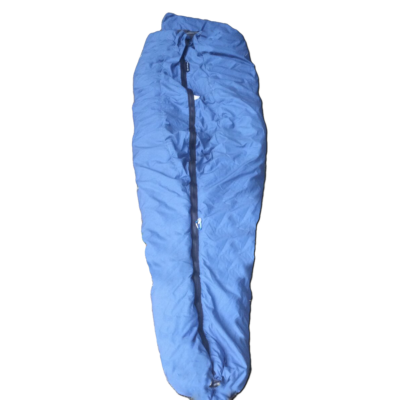
The Rewilder is a 20°F backpacking sleeping bag (4 lb, packs to 11 × 11 in) that keeps insulating when conditions turn damp. Add the merino liner for another ~10°F and a wool pad underneath for a complete natural-fiber sleep system.
-
Lightweight Wool Sleeping Bag–The Rewilder
The lightest all-natural backpacking bag
4 lb / 1.8 kg20°F / −6°C (10°F option)Packs to 11 × 11 in
Price range: $557.00 through $888.00 Select options This product has multiple variants. The options may be chosen on the product page -
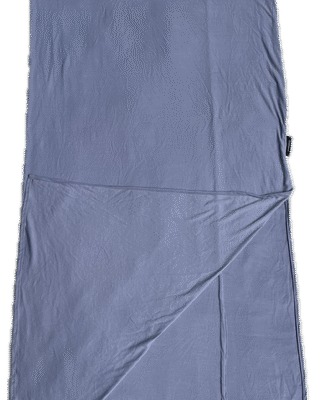
Merino Wool Sleeping Bag Liner & Sleep Sack
Warm, washable wool liner for any bag
1.9 lb / 0.9 kgAdds ~10°F30 oz merino jersey
Price range: $200.00 through $235.00 Select options This product has multiple variants. The options may be chosen on the product page -
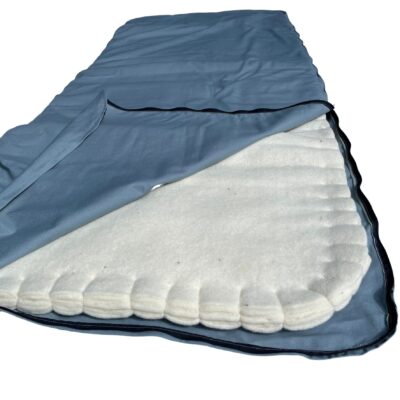
Organic Wool Sleeping Pad
Firm, breathable, machine-washable cover
¼ – 1.5 in wool felt24 – 60 in wide
Price range: $150.00 through $1,100.00 Select options This product has multiple variants. The options may be chosen on the product page