Ask me why wool is better than synthetic or down for sleeping and I could give you the textbook answer—warm when wet—but that is the least of it. In my experience wool is the only common insulating fiber that works with the moisture your body makes every night instead of trapping it against you, and that one property explains nearly everything people notice when they switch: no clammy shell at 3 a.m., no sweat-then-chill, no static, no smell after a week. Here is why I chose wool over a synthetic sleeping bag or a down one for the Lucky Sheep® Rewilder, and where I think it belongs in a sleep system, outdoors and at home.
My journey of discovery: a thrift-store sweater
It was almost by accident. In the late 1990s the outdoor community was adopting synthetics as the new best thing, and I had turned my own wardrobe mostly synthetic. Then I found a nice-looking wool sweater at a thrift store, put it on, and felt a different kind of comfort. It had been a few years since I had worn wool, so I noticed. Something about wool went deeper.
That turned me around before I ever heard anyone talk about wool—and wool was nearly impossible to find; the world had thrown the baby out with the bathwater chasing the newest and latest. I went looking for the science. Then I taught myself to sew a bag, a tent and a pack from natural fibers and went out as a “closet camper”—not presentable, not telling anyone—to see how my body felt against real weather and to find, for myself, the Holy Grail of outdoor clothing.
Wool vs synthetic: why wool is better with a night’s moisture
We create a warm, humid environment every night just by climbing into bed. Your body is 70 to 80 percent water and your metabolism is a heat pump; we all perspire and respire about a cup each night. Whatever you sleep in has to manage that, or you do not get restorative sleep.
Synthetic fill and shells trap that moisture because air cannot circulate through them. In my experience, as heat and moisture build up the heart pumps faster and sleep gets shallower—you wake not fully refreshed. Most people attribute that to camping. I attribute it to the bag.
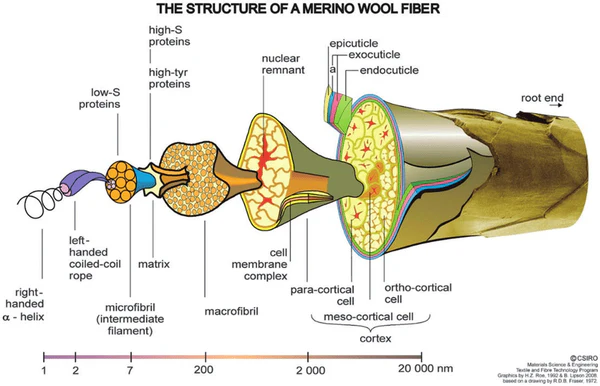
Wool moves water vapor off your body before it even turns into sweat, through the fibers themselves. Published moisture-regain figures—how much water a fiber holds from the air at 65 percent relative humidity—show why.
| Fiber | Moisture regain at 65 % RH | Where the water sits |
|---|---|---|
| Wool | 13–16 % | Inside the fiber, bound to the protein |
| Silk | 9–11 % | Inside the fiber |
| Cotton | 7–8 % | Inside the fiber |
| Nylon | 4–4.5 % | Mostly on the surface |
| Acrylic | 1–2 % | On the surface |
| Polyester | 0.4 % | On the surface |
Does wool trap heat?
Yes, and then some. Like any insulation, the natural crimp in wool traps tiny pockets of still air next to the body. But wool also makes heat. As water vapor enters the fiber it bonds to the wool protein and gives off a small amount of warmth—the heat of adsorption—which is why wool feels warm even when it is damp. Published textile data put it at about 960 kJ for every kilogram of water taken up. As the wool dries the process runs the other way and it feels cool, so in milder weather it helps prevent overheating. The whole mechanism is in how wool stays warm when wet.
Is it good to sleep on wool?
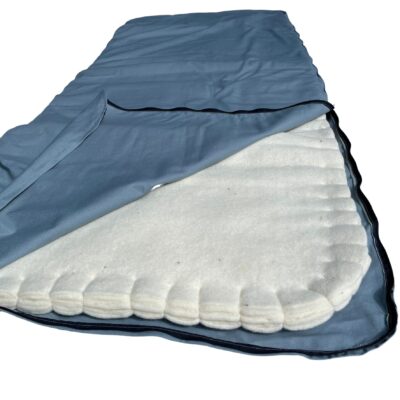
Yes—and I found this out during three winters living in a tipi, sleeping in and on nothing but wool. The mattress surface is where you sweat most, and a wool felt pad under you buffers it the same way the bag does over you. Wool is antimicrobial, dust-mite resistant and hypoallergenic, it offers pressure relief on the body’s pressure points, so there is less tossing and turning, and in my experience it steadies the heart rate and lets us sleep deeper.
The best sleeping I know of is a freezing winter night under enough layers of wool, on a firm surface, with cold air on my face. I still do it at home.

Does wool cause static electricity?
No. Static builds on dry, non-conductive surfaces, and because wool always holds some moisture inside the fiber it does not accumulate charge the way a polyester fleece does. You will not get sparks pulling a wool liner over your head in a dry winter tent.
I go further in my book: in my view synthetic fibers short-circuit the electrical flow along our skin and build a charge on the body—essentially, we breathe through our skin, and synthetics block that. Take the fabric-frequency study I quote there as a report, not gospel. What I can say flatly from experience is that I sleep better in wool, and I have never felt truly warm in down or synthetic.
Odor is a moisture story too: the bacteria that make a synthetic base layer smell live in the water film on the fiber surface, and wool keeps its surface dry. A merino liner goes a week between washes.
What is the difference between down and synthetic sleeping bags?
Down is light and packs really small, but the benefits stop there. Down does not work if wet, so there is no backup plan. It does not ventilate, so it cannot regulate body temperature, and it cannot take humid, damp conditions, so you have to zip up inside a tent—which then holds your breath and perspiration in and makes you colder. I lay all of this out in wool vs down sleeping bags.
Synthetic fill sleeping bags keep their loft when damp, which is their one real advantage over down, but the fibers themselves take in almost nothing, so the water sits between the fibers against your skin and the bag feels cold and clammy. Neither synthetic nor down will dry from your body heat overnight. And both come shelled in nylon—when you zip into either one inside a synthetic tent wearing synthetic clothes, you have wrapped yourself in three layers of plastic, as I put it in the book.
Is a non-synthetic sleeping bag warm enough?
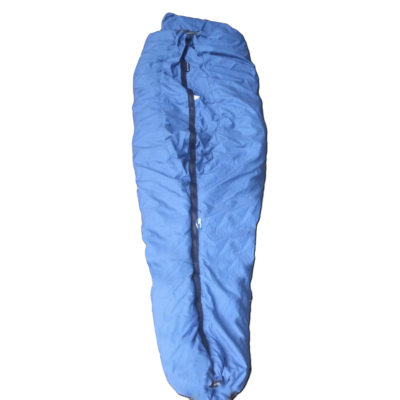
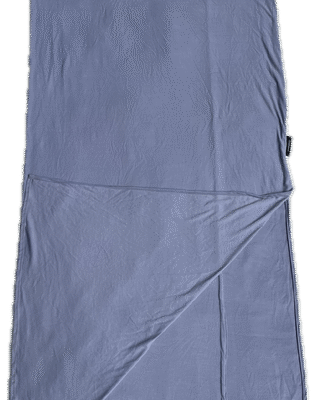
People searching for a non synthetic sleeping bag or a non polyester sleeping bag usually want to know whether they are giving up warmth. The Rewilder wool sleeping bag carries a 20°F field rating in 2-inch loft and 10°F in 3-inch—field ratings from years of nights in the Blue Ridge, not ISO lab numbers. It is a wool lined sleeping bag through and through: US wool batting, a beeswaxed organic cotton shell, and a merino jersey or WeatherWool® liner. Nothing synthetic touches you all night. And on a damp night it holds that rating when down and synthetic bags do not.
What you give up is honest and worth stating plainly.
- Weight. Four pounds in Standard 2-inch loft—about three times a 20°F down quilt. I won’t call this bag light.
- Packed size. About 11 by 11 inches with the compression straps. It rides in a 65-liter pack; it does not ride in a 35.
- Price. From $557. The case rests on decades of use and a lifetime workmanship guarantee.
- Care. The bag is aired and spot-cleaned, not thrown in a hot machine. The merino liner is machine washable.
- Saturation. Wool insulates damp, not soaked. Keep it in a silnylon stuff sack inside the pack when rain is likely.
Where wool belongs in a sleep system
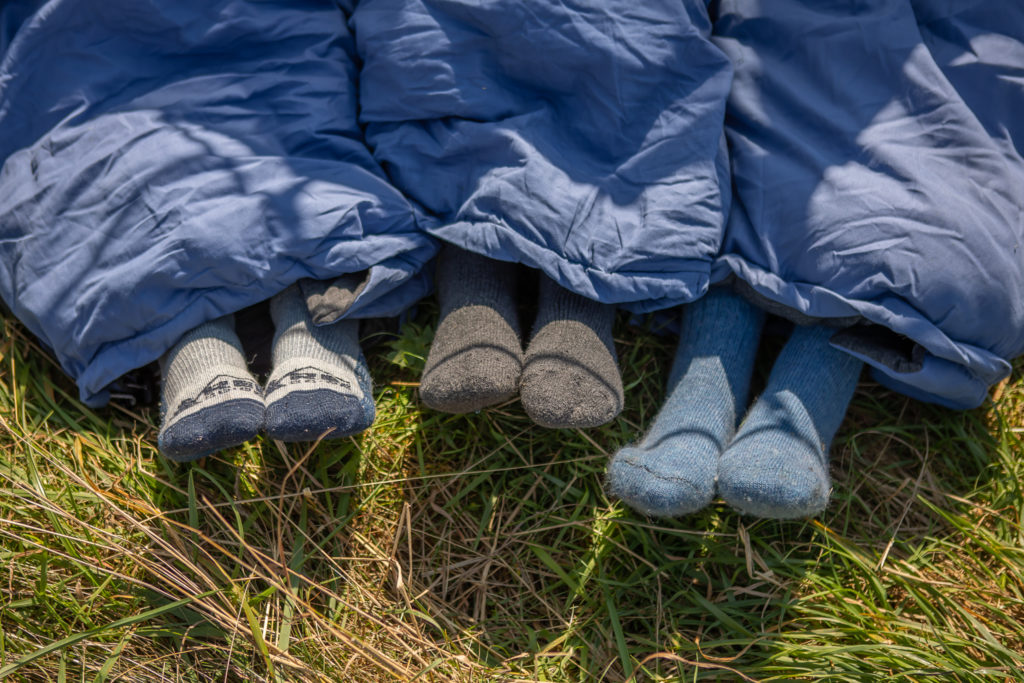
Outdoors. Merino against the skin first—a dry sleep set kept for camp only—then the merino liner if you want another ten degrees. Around you, the Rewilder for backpacking or the Aurora Borealis for basecamp and winter, both in the sleeping bags category. Under you, a closed-cell foam pad on the trail and a wool felt pad where weight does not matter. Above, a tarp open at both ends. Tarp above. Waterproof barrier below. Wool around you. Air moving through.
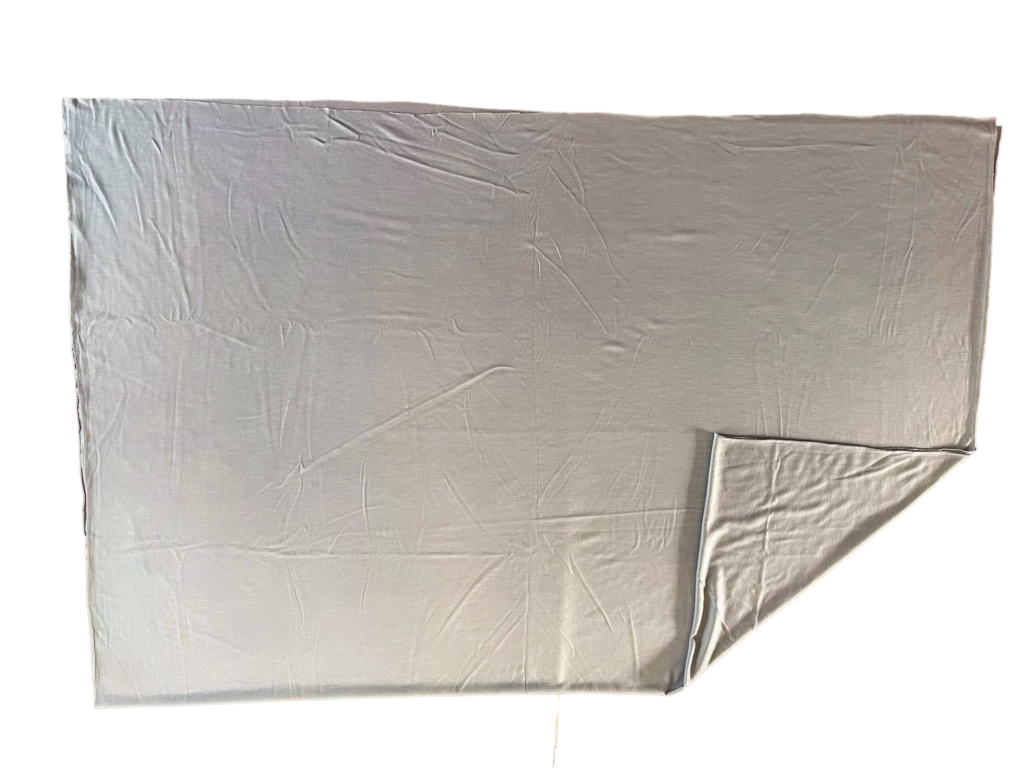
At home. A wool felt pad on top of the mattress, a merino jersey sheet, a wool-filled pillow, and the Aurora opened out as a queen quilt make a complete wool bed. Keep the room cool and a window open—the same principle as the trail.
What I’d tell you
Don’t take my word for it. Find a wool sweater, wear it on a damp evening, and notice. Then try a night under wool with the window open. Use whatever tools work for you—but give the old fiber a fair trial.
Question to contemplate: what would it be like to sleep as well outdoors as you do at home—or better?
Reviewed September 2026 by the Lucky Sheep® team.
Sleep warm out there — in wool
The Rewilder is a 20°F backpacking sleeping bag (4 lb, packs to 11 × 11 in) that keeps insulating when conditions turn damp. Add the merino liner for another ~10°F and a wool pad underneath for a complete natural-fiber sleep system.
-
Lightweight Wool Sleeping Bag–The Rewilder
The lightest all-natural backpacking bag
4 lb / 1.8 kg20°F / −6°C (10°F option)Packs to 11 × 11 in
Price range: $557.00 through $888.00 Select options This product has multiple variants. The options may be chosen on the product page -
Merino Wool Sleeping Bag Liner & Sleep Sack
Warm, washable wool liner for any bag
1.9 lb / 0.9 kgAdds ~10°F30 oz merino jersey
Price range: $200.00 through $235.00 Select options This product has multiple variants. The options may be chosen on the product page -
Organic Wool Sleeping Pad
Firm, breathable, machine-washable cover
¼ – 1.5 in wool felt24 – 60 in wide
Price range: $150.00 through $1,100.00 Select options This product has multiple variants. The options may be chosen on the product page