For three winters, on and off, I lived in a canvas tipi in the mountains of Western North Carolina with the first wool sleeping bag I ever sewed and nothing synthetic in the bedding. I had spent a few years testing the ideas on short trips. I wanted to know what happened when the experiment ran all winter, every night, with a job to get to in the morning.
Location
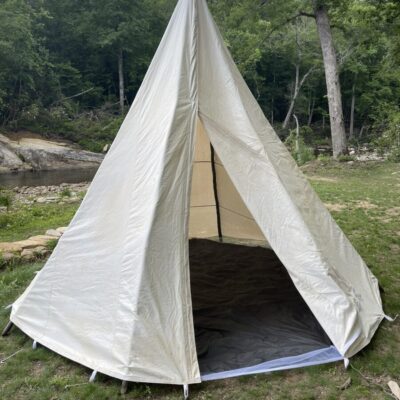
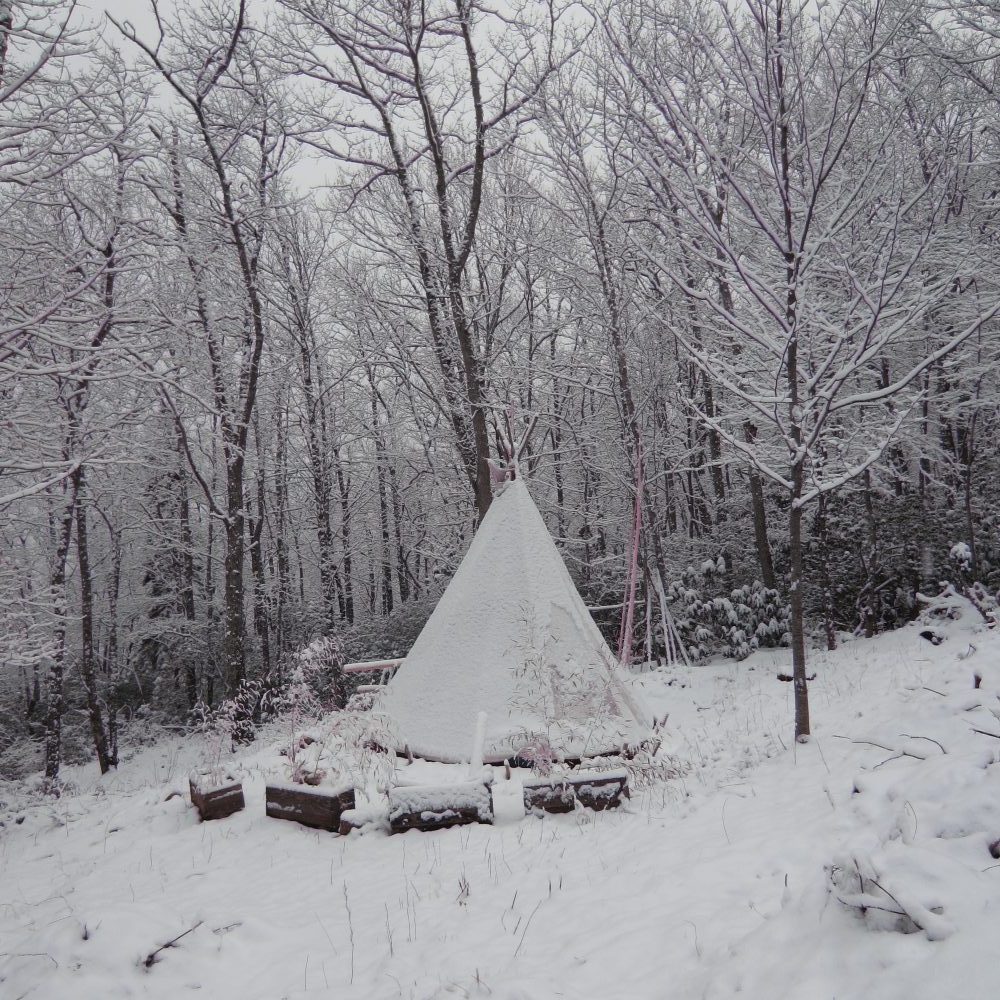
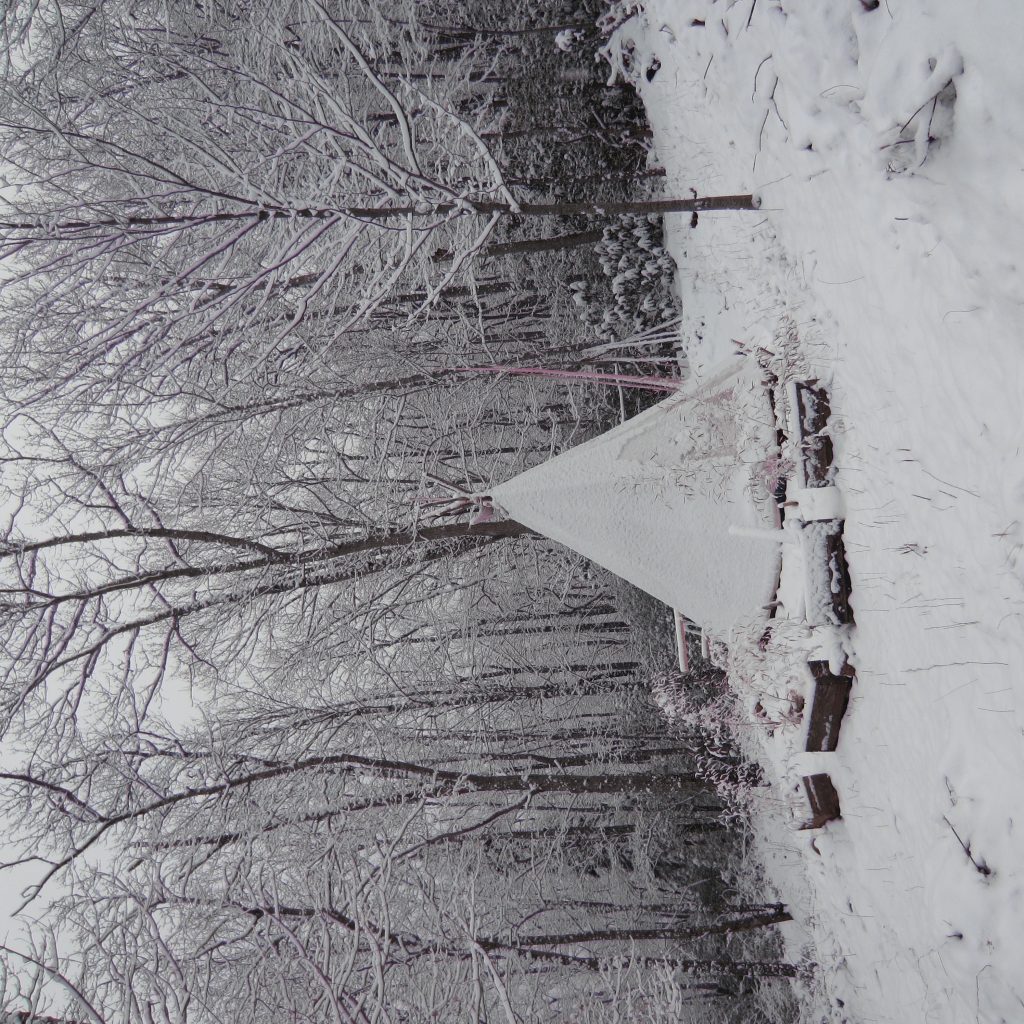
A canvas tipi pitched in the woods in Western North Carolina, close enough to town that I walked or biked several miles to work and to see friends. Not a wilderness camp: a home, with a river nearby for the morning dip.
Conditions
Three mountain winters, the wet kind we get here: fog, damp ground, long cold nights. No heat in the tipi. On the coldest nights the air an inch from my skin was below freezing. Snow now and then, and a river cold enough that I only went in when the air was above 50°F.
Equipment
Everything in it was natural fiber. That was the point of the experiment.
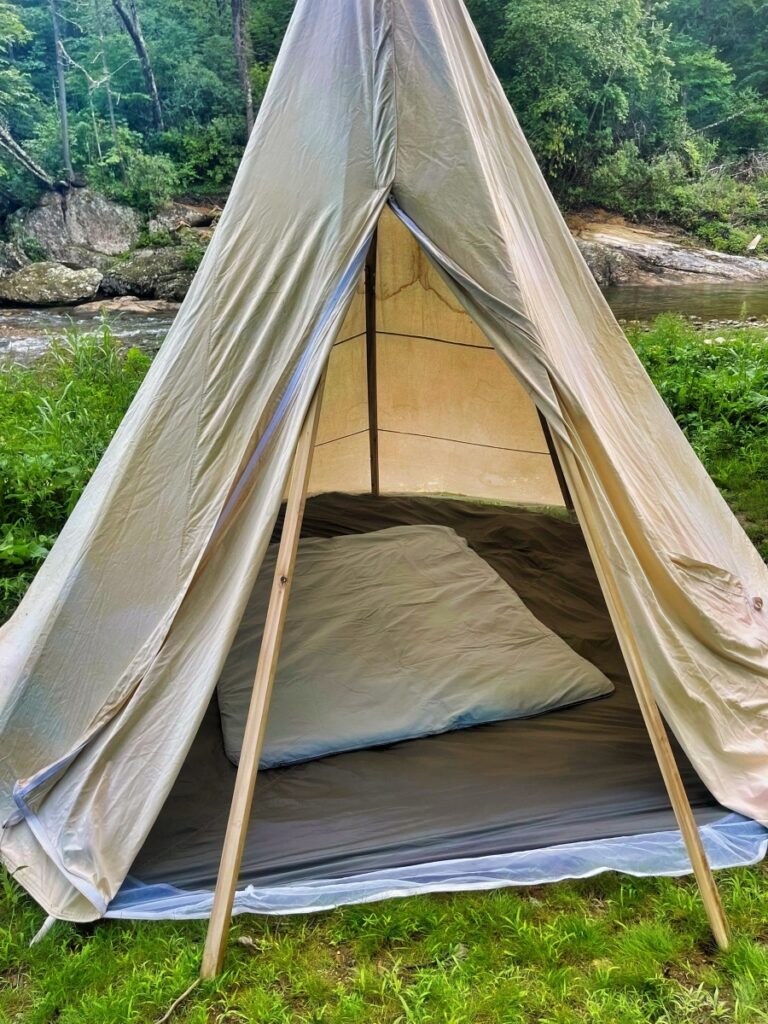
- Shelter. A beeswaxed cotton canvas tipi on wooden poles. No coating, no liner, nothing that stops the fabric from breathing.
- Sleep. My first prototype wool sleeping bag, sewn by hand from wool batting and thrift-store wool, years before it became the Rewilder.
- Under me. A wool felt pad. At first on the ground; later on a slatted platform of poles, for reasons that come up below.
- Worn. Merino next to the skin and wool sweaters over it, day and night.
What happened
The first thing I noticed was how fast I fell asleep. The moment I lay down in the wool bag with the cold air on my face, I relaxed. It felt as though I was “drinking” the air. The outside cold never bothered me, even on the nights the temperature inches from my skin dropped below freezing. I woke up clear, got up, greeted the sunrise, and several mornings a week walked down and dove into the river.
Then I walked or biked to work like anyone else. My friends, mostly my age or younger, lived indoors and drove, and when I described where I slept the answer was disbelief. One of them said, “It makes me cold just to think about it.” I understood. A year earlier I would have said the same.
What nobody warned me about was the ground. Bedding laid straight on the earth inside a tipi collects moisture from below. The wool handled it night to night, but over weeks a pad that never fully dries on the underside is on its way to mold. I lifted the bed onto a slatted platform lashed together from poles cut on site, so air could move under it, and the problem went away.
The hard part was never the cold. It was keeping up appearances: staying clean and presentable for a life that ran half in the woods and half in town. That is why the experiment ran intermittently over three years instead of straight through.
What worked
Canvas that breathes. A tipi is a chimney with a bed in it. Warm, moist air from my breath rose and went out through the fabric and the top instead of condensing on the walls and raining back down. In three winters I never once woke up under the drip that anyone who has slept in a coated tent knows.
The prototype bag. I could pull it over my head and breathe into it on the coldest nights, and the wool took the vapor in and gave a little warmth back. I had never once felt truly warm in down or synthetic. In wool I did, and it was the same wool bag whether the night was damp or dry.
Wool underneath. A felt pad on slats gave me a firm, warm surface with air under it. I sleep better on something firm than on anything that squishes, and I say why in how the surface matters.
What didn’t
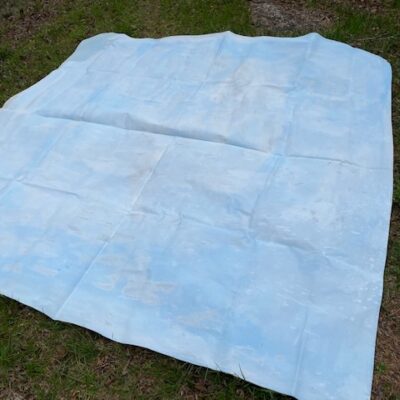
Bedding on bare ground. Condensation from below, and the slow road to mold. The fix was simple, but I had to learn it the damp way. A slatted platform of poles, or a thick pile of leaves under a ground cloth, keeps the bedding off the moisture.
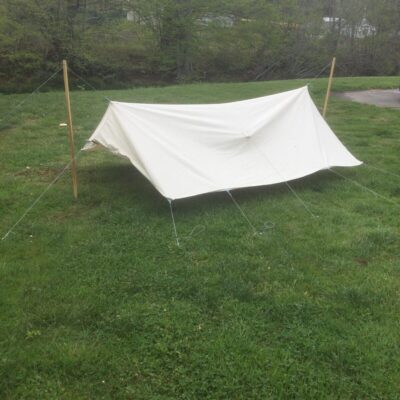
Canvas as a backpacking shelter. I never carried the tipi anywhere. Wet canvas is heavy, and it belongs where you drive or walk a short way in and stay. For the trail I use a two-pound silnylon tarp and accept the modern material on purpose.
The first bag’s pattern. The prototype taught me that the bag had to be cut long enough to pull over the head, with the liner against the skin and the wool lofted around it. The Rewilder and the Aurora Borealis are the versions after that lesson.
What we learned
Cold air was never the problem. Trapped moisture was, and canvas plus wool solved it night after night without a heater. Using my own body as the test subject for three winters left me confident about that, even if a sample of one is all I can offer.
Air moving through matters as much as insulation. A shelter that breathes and a bag you can breathe into let a night’s worth of moisture leave, and that is why the canvas tipi we make now is beeswax-sealed organic cotton with no coating: basecamp and car camping, not backpacking.
Get the bed off the ground. The wool sleeping pad is what I used, and it wants a platform or a dry ground cloth under it for anything longer than a weekend.
Look after the canvas. Three winters of fog and snow taught me to dry it before storing, re-wax the wear points and keep the base clear of leaves, all of which is in the canvas tent care guide.
Tarp or canvas above. Wool under you and around you. Air moving through everything. Go Wild. Go Light. Go Natural.
Reviewed September 2026 by the Lucky Sheep® team.
Shelter that breathes
Organic cotton canvas sealed with beeswax instead of polyurethane: air moves through the fabric, so you wake up dry instead of under condensation. The tipi tent for basecamp, the tarp for fast and light, the ground cloth under either.
-
Organic Canvas Tent
Breathable basecamp shelter, no coatings
8 / 10 / 12 ft diameterBeeswax-sealed organic canvas
Price range: $1,250.00 through $2,100.00 Select options This product has multiple variants. The options may be chosen on the product page