Sleeping outside without a tent is how I have spent most of my nights in the woods, and it is how I would tell almost anyone to start. A tarp open at both ends keeps the rain off and lets the night air move through, so you wake up in fresh air instead of your own breath. This tarp vs tent guide covers the order of shelters I have settled on, how to sleep outside without a tent safely, and where the Lucky Sheep® canvas tarp and tipi fit.
Canvas tarp vs tent: how I arrived at the open tarp
The first tent alternative I ever designed was a beeswax-coated canvas tent. It lets air pass through both ways, so it releases the moisture your body makes and lets fresh air in. It is very strange, almost magic-like, to watch rain penetrate the surface and run down the inside of the canvas while you stay dry under it. That tent was fine for a little forest bathing, but not practical for backpacking, because canvas becomes extremely heavy when wet.
Further research led me to Ray Jardine, an early pioneer of lightweight backpacking, and I sewed a “Ray’s Way” tarp out of silnylon. His design comes from an old-time canvas tarp, open on each end and optionally on the sides. He believes closed tents are not good for the same reason I do, lack of ventilation, and that comfort comes from some wind and air pushing through rather than sealing everything up. He also likes feeling connected to the surroundings rather than sealed off. So do I. My order of preference has not changed in years: the open sky first, an open-ended tarp second, a canvas tent that breathes through the fabric third, and a sealed synthetic tent last, where I have no choice.
Don’t build a bubble: what a closed tent does to the air you sleep in
The conventional approach is to fight the weather. Seal it out, vent the tent, keep every drop away from the sleeping bag, and build a dry bubble between yourself and the night. At Lucky Sheep® we take a different approach: invite the weather in, and use natural materials that know what to do with it.
A sealed tent does two things I do not want. It holds your own breath and perspiration inside with you, something like two liters a night, with nowhere to go but the walls and your bag. And it keeps out the air you came for: the essential oils trees give off, which Dr. Qing Li catalogs in his work on forest medicine, and the negative ions near creeks, mist, dew and rain. Under an open tarp there is barely an “inside” to ventilate, which is the whole point of sleeping outside without a tent.
Is sleeping outside without a tent safe?
The first night I slept in a wild place without a tent, I spent most of it awake, feeling exposed and unsafe. That one night proved to me nothing was going to happen, and that is about what it takes for most of us. In my experience the animals give you space. The real risks of sleeping outside without a tent are the ordinary ones, and a tent does not remove them either.
- The site. A slight slope, never a low flat place that could become a pond. Tall trees and little undergrowth, so air circulates; stagnant air breeds mold. Avoid wind tunnels and exposed ridges when winter weather is possible.
- The weather. Keep the tarp in an outside pocket so you can pitch in the dark or the rain: pitch first, pack underneath, wet clothes off, dry camp set on, into the wool bag to warm up.
- Insects. A net tent goes under the tarp in bug season. Camp near moving water or on a ridge top in spruce-fir forest.
- Don’t fool yourself. The Ten Essentials go in the pack either way.
How to sleep outside without a tent: three pitches that cover most nights
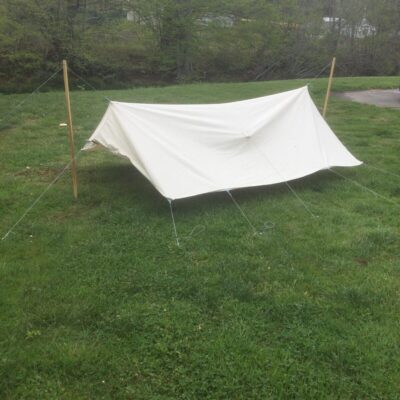
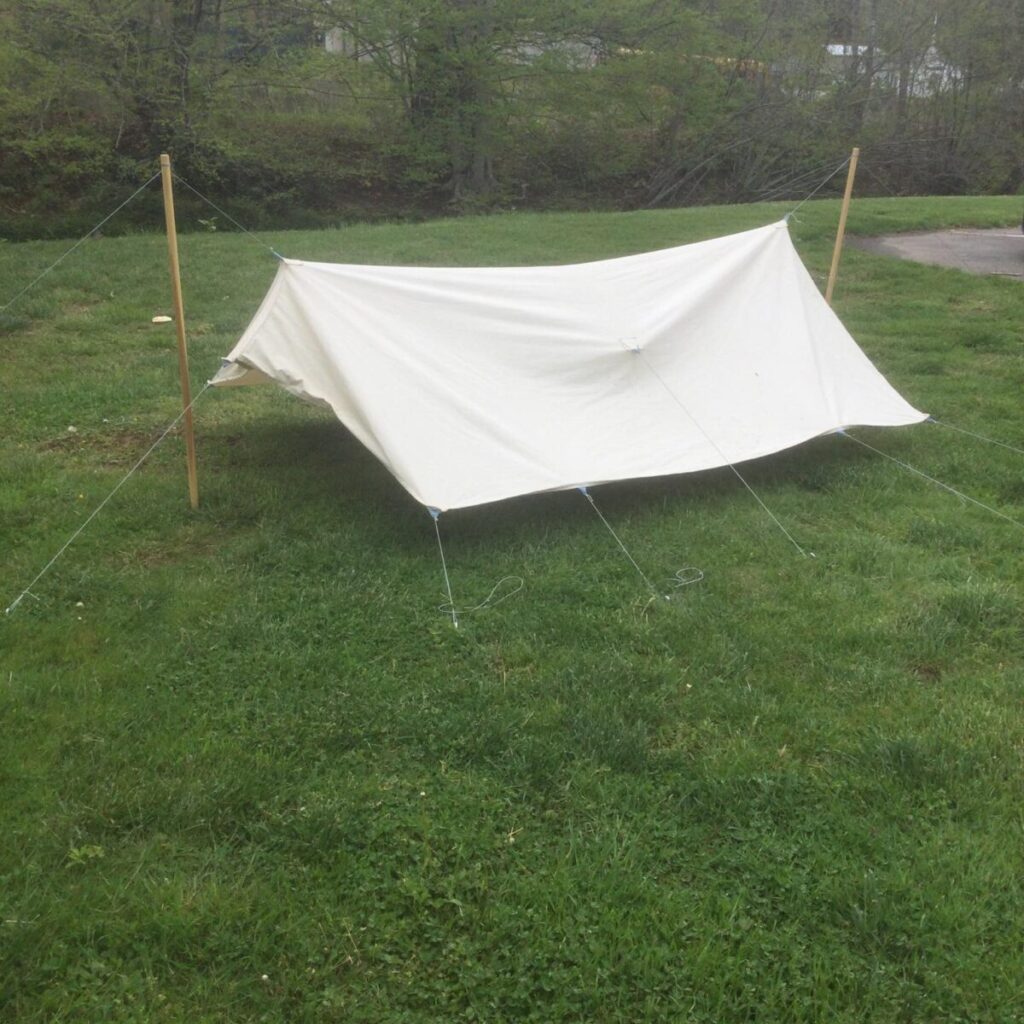
A-frame, my everyday pitch. Find two trees about ten feet apart, run a cord from each to hold the ridgeline, drape the tarp over it and stake the sides down. Trekking poles or two three-foot sticks do the job where there are no trees. Run the ridge parallel to the wind so gusts pass through instead of pushing a wall, and drop it low when the weather comes in.

Lean-to, for a fire and a view. Lift one long edge on two poles, stake the opposite edge to the ground, open face to the fire, closed face to the wind. It is the airiest pitch and the least protective. A waxed canvas tarp earns its weight here: it reflects the fire’s warmth back on you, and a spark does not burn a hole in it the way it does in nylon.
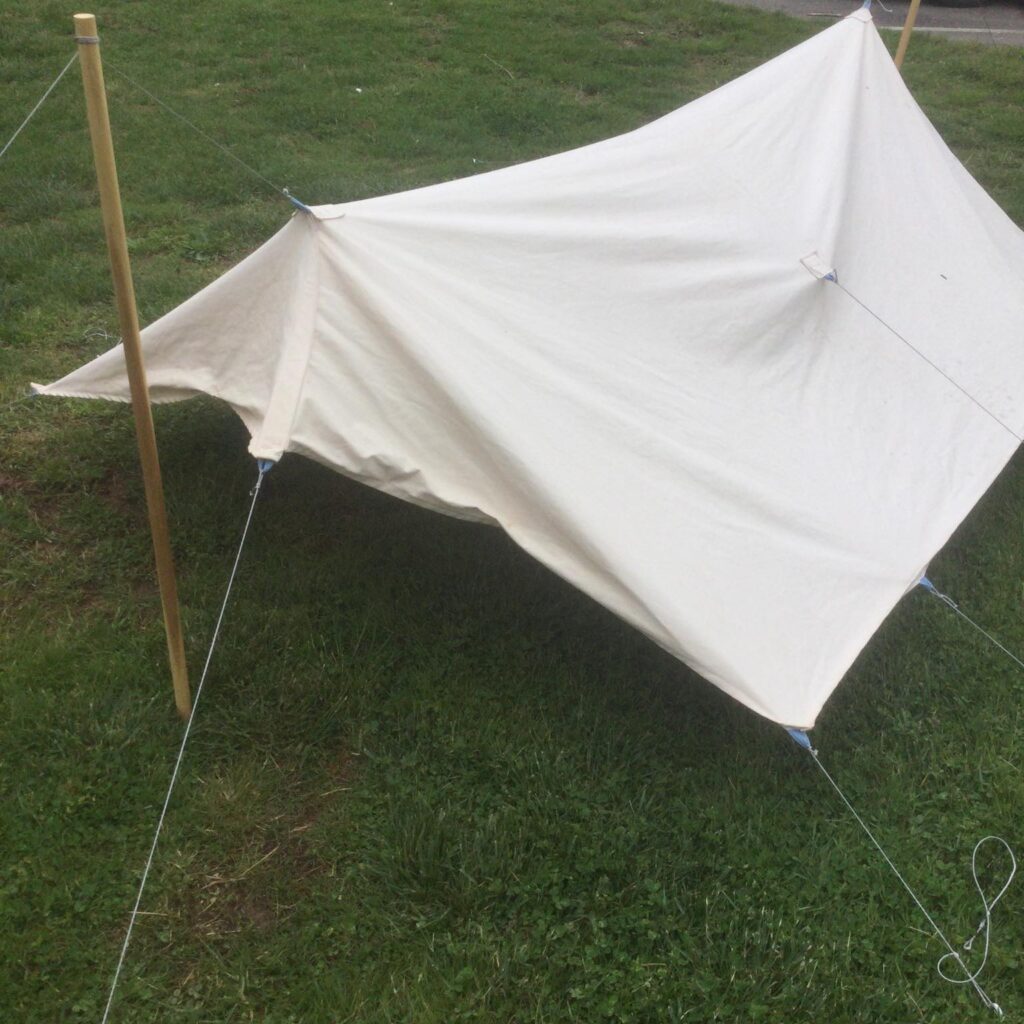
Plow point, for one pole and foul weather. Stake one corner into the wind, lift the diagonally opposite corner on a single stick, and stake the other two corners down. You get a low wedge that sheds wind from three sides. Whatever the pitch, walk the lines once at bedtime.
Tarp or tent: which is lighter?
The tarp system I carry weighs about two pounds, goes up in five minutes, and covers two people including gear. It is silnylon, and I want to be straight about that. Lucky Sheep® is built around natural fibers, but we are not opposed to modern materials when they solve a specific problem exceptionally well. A few ounces of silnylon over your head and under your bed let everything closest to your body stay wool and beeswaxed cotton. It is a deliberate hybrid approach, and it is why we sell a silnylon tarp and ground sheet alongside the canvas.
The organic canvas tarp is heavier, and heavier still when wet, so I do not carry it far. It comes into its own at basecamp, as a fire-side lean-to, and in any camp I will sit in for a few days. The tipi canvas is about 10 lb in the 9-foot size and 20 lb in the 12-foot; nobody should pack that up a mountain. Weight is not the only thing that matters, but three pounds costs about three-quarters of a mile on a twenty-mile day. A night sealed in with your own breath costs more.
Does a canvas tarp get condensation?
Not the way a coated sheet does. Rain makes the cotton fibers swell, and the surface tension of a raindrop keeps water from passing through a tight weave, while water vapor keeps passing through the cloth in both directions. Pitch a coated nylon tarp low and tight and you have made a small tent that beads and drips. Pitch a waxed canvas tarp the same way and your breath keeps going out through the fabric.
In a long soaking rain the canvas darkens and wets out slowly rather than leaking all at once. Dry it before it goes in a bag; that is the whole care rule. It is quiet in wind, it shrugs off an ember, and with no coating to peel it gets re-waxed when it wears rather than thrown away. That is what I mean by a sustainable tarp: one you keep.
When a canvas tipi or tent is the right call
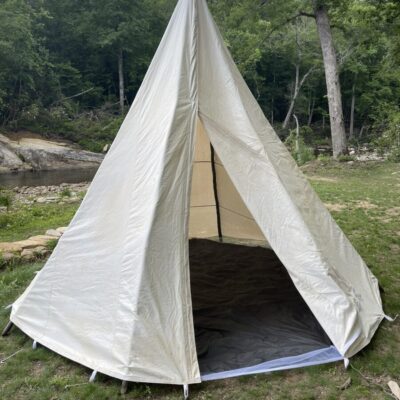
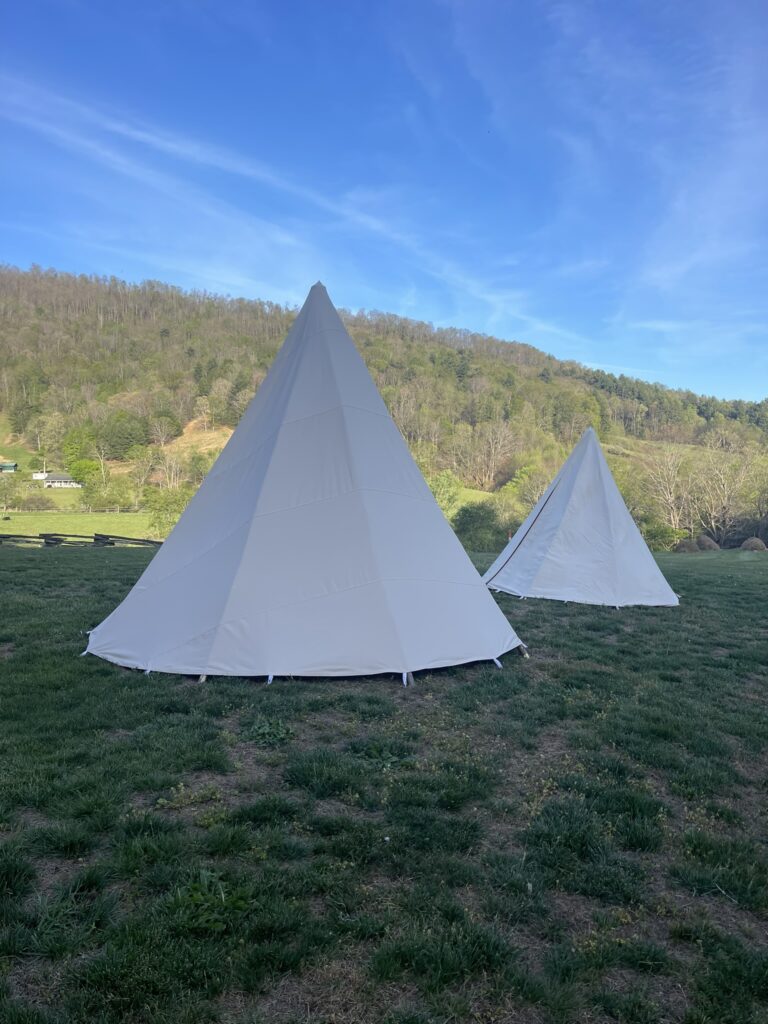
There are times when we want more shelter. When I camp in ways other than backpacking, I use a canvas tent that breathes through the fabric, so I get the ventilation without giving up walls. The organic canvas tipi is for basecamp, extended camps and any trip where weight is not the primary consideration. In winter, canvas holds some of the ground’s warmth without building up humidity the way a plastic wall does, and the conical shape stands up to wind and snow.
What goes under a tarp: ground cloth, pad and a bag that can take the dew
We approach shelter as layers, and each layer has one job. Tarp above. Waterproof barrier below. Wool around you. Air moving through. That is the whole Lucky Sheep® sleep system.
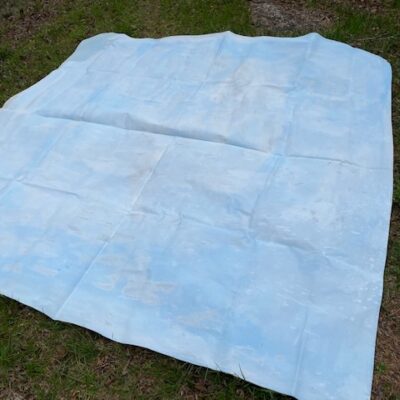
Below you. On reasonably dry ground the beeswaxed canvas ground cloth goes straight on the earth; it doubles as my tipi ground cloth. When the ground is wet, the silnylon ground sheet goes under it as the moisture barrier. For backpacking I sleep on a closed-cell foam pad; it is synthetic, but it is the only pad I know of that is really practical on the trail.
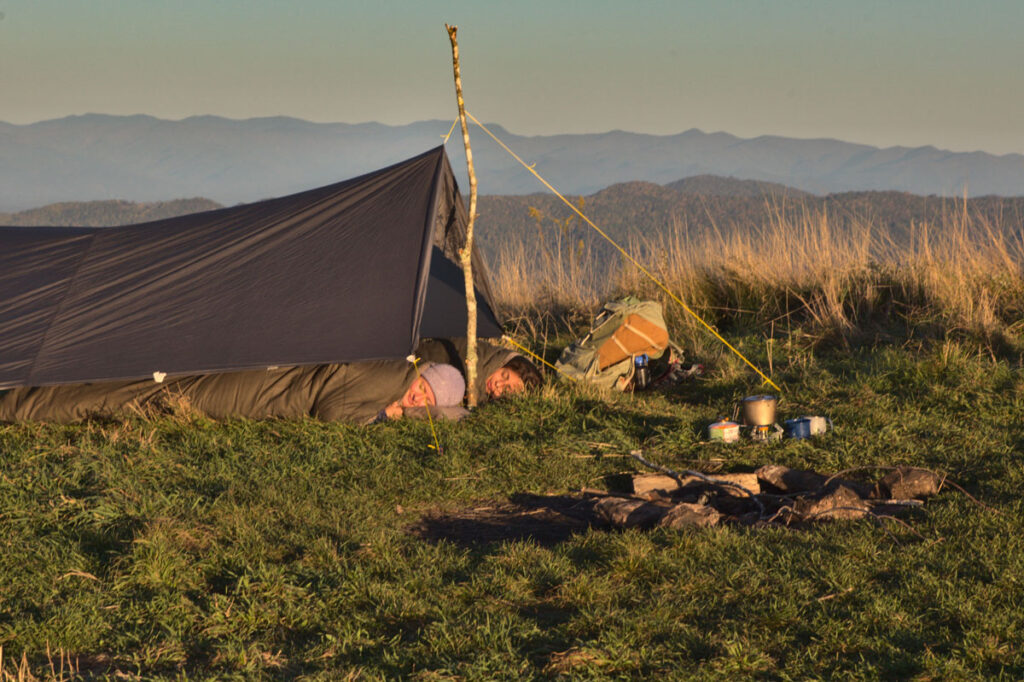
Around you. The best night-sky viewing is in open meadows and prairie, and those are exactly the places you will meet dew. Wool takes the moisture in and gives back heat as it dries, so even when the outside of the bag is drenched, the inside stays dry; you can wake up with no idea the meadow is covered in fog until you climb out. Down and synthetic cannot do that, which is why people who carry them end up zipped inside a tent.
What I would tell you to do this weekend
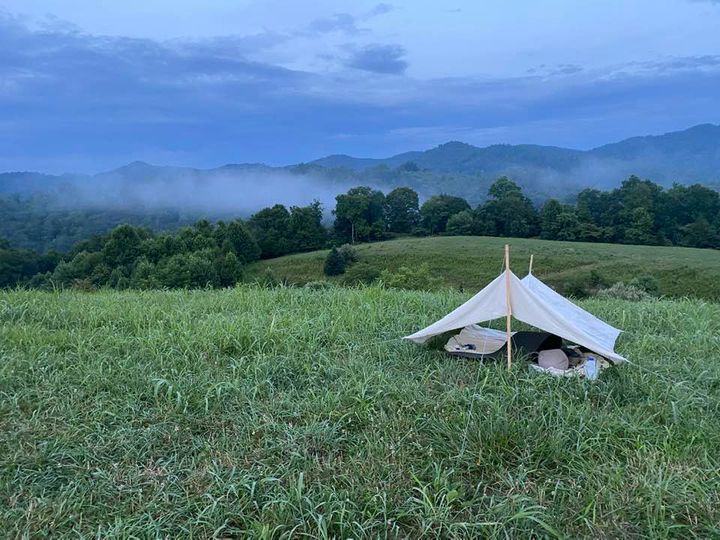
Start sleeping outside without a tent in the yard. Pitch a tarp between the porch post and a tree, put a ground cloth and a pad under it, and sleep one night with both ends open. For the pad, the bag and the clothes you sleep in, read how to sleep outdoors naturally. And when you wake to droplets hanging from your tarp, don’t assume something went wrong. Open the shelter, let the night air move through, surround yourself with wool, and invite the weather in. Go Wild. Go Light. Go Natural.
Reviewed September 2026 by the Lucky Sheep® team.

The book behind these articles
A Rewilder’s Guide to Outdoor Adventure
The complete Lucky Sheep approach to time outdoors — skills, gear, food and natural sleep, from the founder. Everything the field guide covers, in one book you can take with you.
Get the book →Shelter that breathes
Organic cotton canvas sealed with beeswax instead of polyurethane: air moves through the fabric, so you wake up dry instead of under condensation. The tipi tent for basecamp, the tarp for fast and light, the ground cloth under either.
-
Organic Canvas Tent
Breathable basecamp shelter, no coatings
8 / 10 / 12 ft diameterBeeswax-sealed organic canvas
Price range: $1,250.00 through $2,100.00 Select options This product has multiple variants. The options may be chosen on the product page