Non-Toxic Tents, Tarps & Ground Sheets
Looking for a non toxic tent? Ours are organic cotton canvas sealed with natural beeswax instead of PU coatings — a flame retardant free tent with no PFAS and nothing synthetic between you and the air you breathe. The canvas tipi tent comes in 9 and 12 ft diameters and breathes — air moves through the fabric, so you wake without condensation dripping on your bag. Canvas is heavier than nylon by nature, which makes this natural tent the right choice for basecamps, car camping, festivals and long stays where durability and clean air matter more than ounces; pair it with the organic canvas tarp and ground cloth for a complete natural-fiber shelter. Re-wax with our Trail Wax and it will last for decades.
Choosing a Non-Toxic Tent, Tarp or Ground Layer
A non-toxic tent starts with what the fabric is sealed with. Ours is organic cotton canvas finished with beeswax — no PU coating, no flame retardants, no PFAS — so air moves through the wall and far less of your own breath ends up dripping back on the bag. At Lucky Sheep® we also use silnylon where a thin waterproof barrier does the job better than canvas can. Pick the material by the job, not by habit.
Canvas Where Canvas Makes Sense
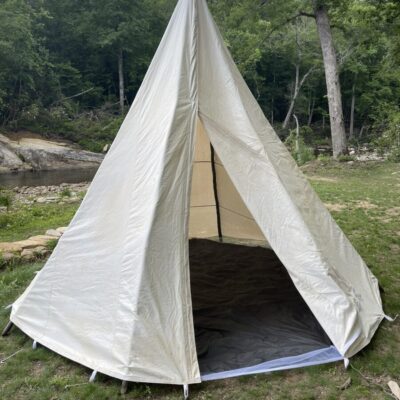
Above you at basecamp — the Organic Canvas Tipi. Nine or twelve feet across, up to ten feet of standing height, wooden poles that break into six-foot sections or a pole you cut on site. The conical shape sheds wind and carries snow. The canvas alone weighs roughly 10 lb (9 ft) to 20 lb (12 ft), which is why it rides in the car, not on your back. From $1,250, cover only.
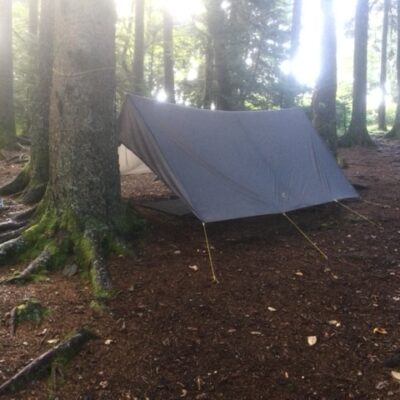
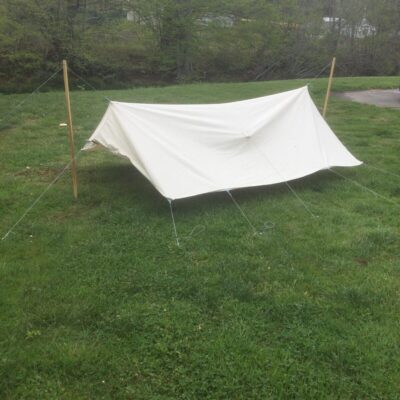
Above you for a night or two — the Organic Canvas Tarp. Beeswaxed organic canvas, room for two, a three-foot peak. Pitch it in five minutes on a found stick or between two trees. Open on all sides for air, staked low when the weather turns.
Silnylon Where Silnylon Makes Sense
We are not opposed to modern materials when they solve a specific problem exceptionally well. Wet ground is that problem.
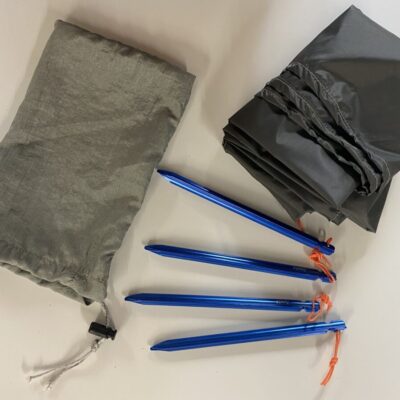
Below you — the Silnylon Ground Sheet. 58 × 76 in, corner loops and four stakes, packs to about 4 × 4 in. It is the waterproof barrier under an open-tarp camp or a clear-night cowboy camp.
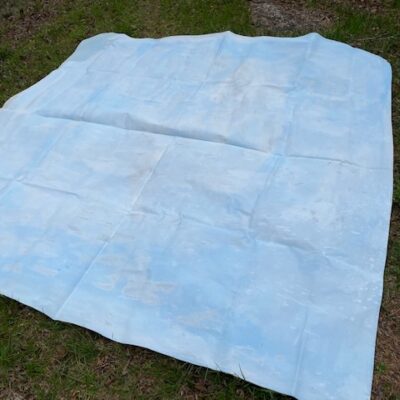
Under your body — the Beeswaxed Canvas Ground Cloth. 60 × 80 in. Use it alone on dry ground, or lay it over the silnylon sheet when the ground is damp, so the surface you actually sleep on is natural fiber.
Inside the tipi — the Tipi Tent Ground Sheet. Light silnylon with a band of bug netting; it fastens around the circumference to keep insects out while the canvas keeps breathing. (The Silnylon Tarp, the lightest roof we make, is out of stock at the moment.)
Which Shelter?
| Trip | Roof | Ground | Why |
|---|---|---|---|
| Basecamp, car camping, long stays | Organic Canvas Tipi | Tipi Ground Sheet | Standing room, a fire nearby, weeks of clean air — weight does not matter |
| Backpacking, open-air sleeping | Canvas Tarp (short carries) or silnylon tarp | Silnylon Ground Sheet | Barely an inside to ventilate; wool around you handles the moisture |
| The layer you lie on | — | Canvas Ground Cloth over the sheet | Natural fiber against the sleep system, waterproof barrier beneath it |
An Honest Word on Weight
Canvas is heavy. When everything rides on your back, the tipi and the canvas tarp stay home and the roof becomes a light tarp over a silnylon sheet. Tarp above. Waterproof barrier below. Wool around you. Air moving through.
Read more: why you wake up wet in a sealed tent · canvas tarp vs tent · how to set up, dry and re-wax a canvas tent.
Every shelter piece here is made in the USA, in our Burnsville, North Carolina workshop, and ships in 2–5 days.
-
Organic Canvas Tent
Breathable basecamp shelter, no coatings
8 / 10 / 12 ft diameterBeeswax-sealed organic canvas
Price range: $1,250.00 through $2,100.00 Select options This product has multiple variants. The options may be chosen on the product page
-
Tipi Tent Ground Sheet
Price range: $250.00 through $425.00 Select options This product has multiple variants. The options may be chosen on the product page -
Organic Canvas Tent
Breathable basecamp shelter, no coatings
8 / 10 / 12 ft diameterBeeswax-sealed organic canvas
Price range: $1,250.00 through $2,100.00 Select options This product has multiple variants. The options may be chosen on the product page