A “20°F” bag is not a promise that you will be comfortable at 20°F. Depending on who printed it, that number may be a lab figure for a standard woman lying relaxed, a lab figure for a standard man curled up and coping, or a number the maker picked. This is sleeping bag temperature ratings explained the way I wish someone had explained them to me forty years ago: what comfort, limit and extreme mean under ISO 23537-1, why the lab assumes a dry bag and you are never dry, what our own field ratings are and are not, and how I actually decide what to carry.
Understanding sleeping bag temperature ratings: comfort, limit and extreme
ISO 23537-1 is the international standard for sleeping bag ratings. It replaced the European standard EN 13537 in 2016, and the two are close enough that you will still see “sleeping bag EN rating” used for both. The test involves no people. A heated copper manikin dressed in long underwear, socks and a hat is laid in the bag, on a standard mat, in a climate chamber. The lab measures how much power it takes to hold the manikin at skin temperature, and converts that into three sleeping bag degree ratings.
- Comfort. The lowest temperature at which a “standard woman” can sleep relaxed, on her back, without feeling cold. If you shop by one number, shop by this one.
- Limit (or lower limit). The lowest temperature at which a “standard man” can sleep curled up for eight hours without waking from cold. He is not comfortable; he is coping.
- Extreme. The temperature at which the standard woman is at risk of hypothermia. It is a survival figure. Never buy a bag by it.
Comfort and limit are usually about 10°F apart on the same bag, and extreme is far below both. So a bag advertised as “20°F” on the limit may have a sleeping bag comfort rating nearer 30°F. Brands selling women’s bags tend to print comfort; unisex and men’s bags often print limit. When you compare two bags, make sure you are comparing the same figure — and if you have ever been cold in a bag rated 20°F limit, you are a comfort-figure shopper. Treat your own history as data.
Why I grade my gear in the field, not in a chamber
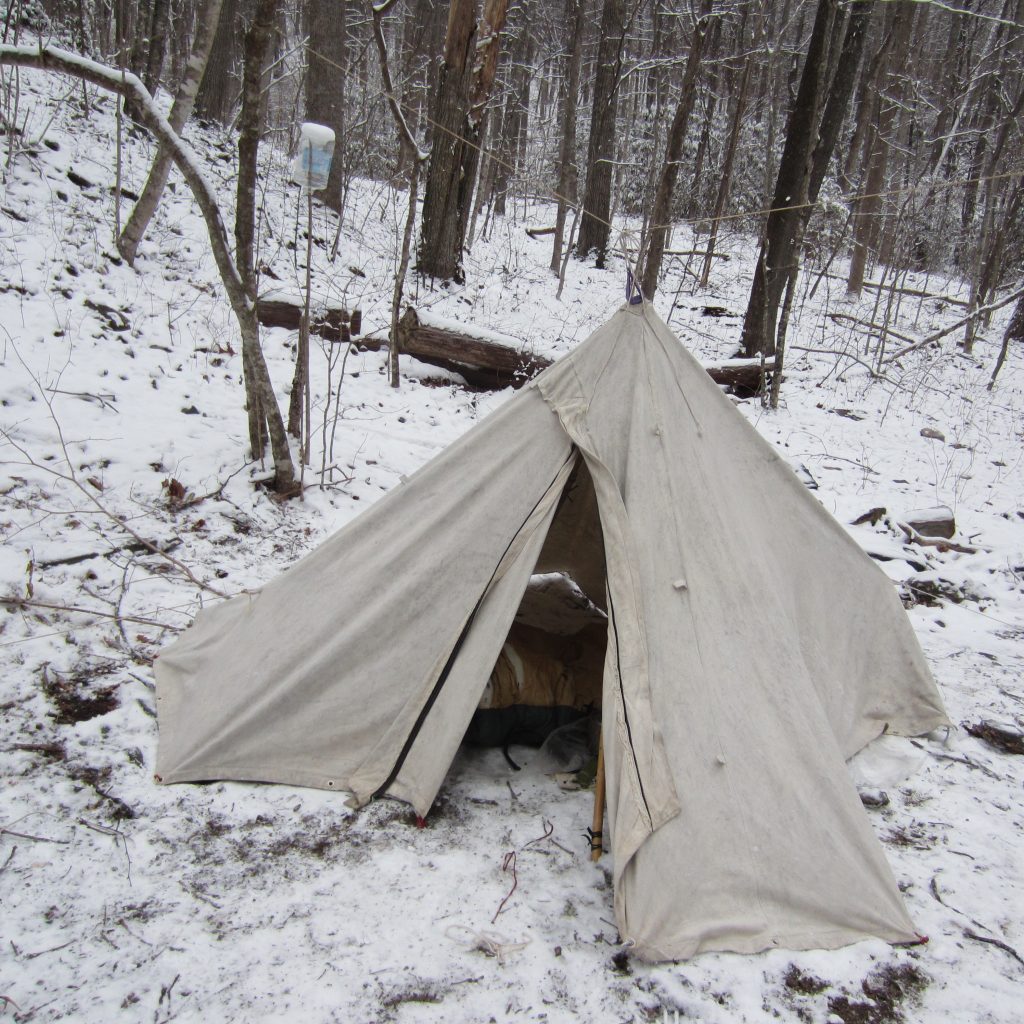
I try to take the neutral observer stance of a scientist about my own gear, which is harder than it sounds when you are the only one saying something. After a four-day winter trip in Linville Gorge with a group of modern-gear backpackers, I sat down and graded my system on the five tests I had set before we left. Pack weight: four out of five — a bit heavier, but not unreasonably. Function in weather extremes: four out of five — we all got drenched to the bone, my gear dried out anyway, and others complained about never feeling warm. Carrying not too much and not too little: five out of five; I used everything I brought. Comfort and enjoyment: four out of five. Having everything I needed: three out of five — I had left the saw, the hatchet and the fire starters to others, and I noted it.
That is the honest state of the art with sleeping bag ratings, ours included. On the worst night of that trip I wrote, crawling into my bag, that it seemed to be working pretty darn well — and then: “I won’t really know for sure until hours later.” A temperature rating is a hypothesis. Your first cold night is the test.
The lab assumes a dry bag, and you are never dry
The manikin does not breathe and does not sweat. The chamber runs at a moderate, controlled humidity, the bag is fully lofted and bone dry, and the test lasts hours rather than a week. None of that resembles the third night in a damp hollow.
We all perspire — and respire — about a cup each night. Your body is mostly water and your metabolism is a heat pump, and your bedding has to deal with that. Down loses its loft as it takes on that moisture. Polyester keeps its shape but holds the water between the fibers, where it pulls heat away. In my experience a bag that tested at 20°F comfort in a dry chamber can behave like a 30°F bag on the second wet night out. Humid air pulls heat from the body much faster than dry air, which is the whole subject of why damp weather makes us feel colder.
Wool behaves differently here, and it is the reason I put up with the extra weight. Water vapor goes into the fiber and heat comes out — the heat of adsorption — so the wool dries the air near your body and feels warm even when damp. A wool bag’s dry rating and its damp rating are much closer together than a down bag’s. That gap is not on any label, and it is the gap that matters most in the mountains I live in.
Lucky Sheep® ratings are field ratings, not ISO-tested
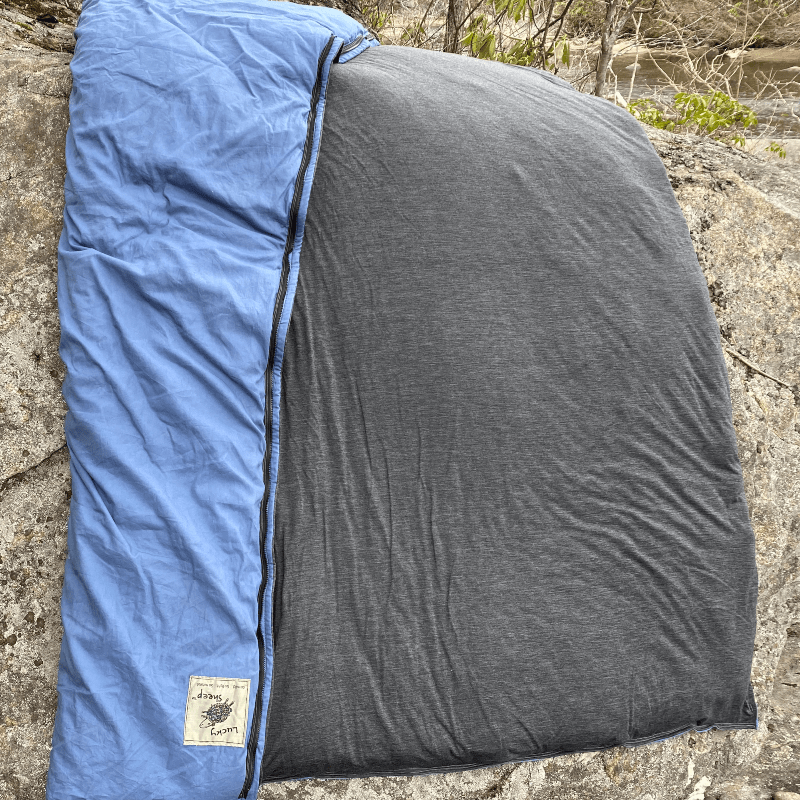
Let me say this plainly, because I would want to know it. Our bags have not been through an ISO 23537-1 laboratory. The temperatures we quote are field ratings: the lowest overnight temperatures at which I and our customers have slept comfortably in the bag, in a merino base layer and a hat, over many seasons in the Blue Ridge and elsewhere. They are closest in spirit to a comfort figure for an average sleeper. They are not lab numbers, and we do not present them as such.
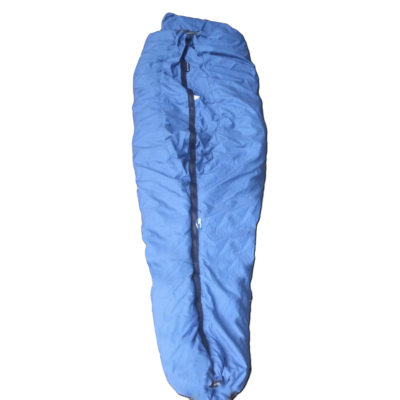
- The Rewilder, the tapered backpacking bag: 20°F / −6°C with 2″ of loft; 10°F / −12°C with 3″. 4 lb / 1.8 kg in Standard 2″.
- The Aurora Borealis, rectangular, opens into a queen quilt: 20°F with 2″, 10°F with 3″, −5°F with 5″. About 7, 10 and 15 lb; for basecamp, cabin and car camping, not for carrying.
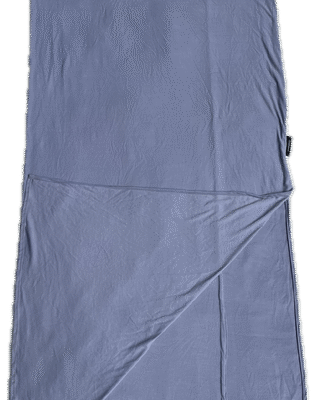
- The merino liner: adds about 10°F to either bag, and works alone as a summer bag.
Because a field rating already includes damp nights, condensation and a real breathing person, I think it transfers to your trip more directly than a chamber figure. But it also includes my body and my habits, and yours differ. Treat any rating — ours included — as a starting point, and adjust from your own first cold night.
What should my sleeping bag be rated for?
Buy for the lowest night you realistically expect on the trips you actually take, not the coldest night you can imagine. Then shop by the comfort figure — or a field rating you trust — with about 10°F in hand. A bag that is a little too warm can be opened; a bag that is too cold cannot be fixed at 3 a.m.
For most people in most of the country, that arithmetic lands on a 20 degree sleeping bag for three seasons and a 0 degree sleeping bag, or colder, for real winter. My own backpacking checklist covers 20–80°F with one bag, a liner and a wool sweater, and I have not needed more than that in the Southern Appalachians in decades.
Sleeping bag season ratings: 2, 3 and 4 season
Season labels are looser than sleeping bag temperature ratings, but they are how most people think. Here is my sleeping bag temperature guide, with the lowest night each band assumes and what I would carry from our own line. Cold weather sleeping bags — anything below 15°F — are where the pad under you starts to matter as much as the bag.

| Season and use | Lowest night you expect | Comfort figure to look for | What I would carry |
|---|---|---|---|
| Summer (1–2 season): low elevation, hostels, travel | Above 50°F | 45–55°F, or a liner alone | Merino liner on its own, or the merino-lined dust cover sleep sack |
| Three-season backpacking | 30–50°F | Around 30°F | Rewilder 2″ (20°F field rating) |
| Shoulder season: high Appalachian ridges, early winter | 15–30°F | 15–20°F | Rewilder 3″ (10°F), or Rewilder 2″ plus liner |
| Four-season: winter camp, hunting camp, cabin | 0–15°F | 0–10°F | Aurora 3″ (10°F) plus liner, or Rewilder 3″ plus liner and a sweater |
| Deep winter basecamp, not carried | Below 0°F | Below 0°F | Aurora 5″ (−5°F) plus liner — my wool sleeping bag for cold weather |
The sleeping bags category page has the full Rewilder-versus-Aurora table, and the sleep-system finder asks five questions and recommends a combination.
What is the best all-around sleeping bag temperature?
Twenty degrees, in my experience, if you have to own one bag. It is warm enough for a frosty October ridge and — because it is wool and breathes — it opens flat into a quilt on a July night instead of cooking you. A 20°F bag plus a liner covers down to about 10°F; a 20°F bag unzipped covers summer. I built the Rewilder around exactly that range because it is the range I actually camp in.
Does a sleeping bag liner change the rating?
Yes — ratings add, approximately. The merino liner adds about 10°F, and it is the one piece of our system I would carry inside any bag, even a down one, because it puts wool at the skin where the clamminess starts. A dry merino set kept only for sleeping adds a few degrees more, and a wool hat or a merino headwrap around the head and face matters out of all proportion to its weight. The totals below are simple addition, not measurements; read them as a guide.
| Target low | Bag | Merino liner (about +10°F) | Under you | Approximate result |
|---|---|---|---|---|
| 20°F | Rewilder 2″ (20°F) | Optional | Closed-cell foam pad on the trail; ¼ in wool pad at a fixed camp | 20°F; comfortable margin with the liner |
| 10°F | Rewilder 2″ (20°F) | Yes | Foam pad, or ¾ in wool pad at camp | About 10°F |
| 10°F | Rewilder 3″ (10°F) | Optional | Foam pad, or ¾ in wool pad | 10°F; about 0°F with the liner |
| 0°F | Aurora 3″ (10°F) | Yes | ¾ or 1.5 in wool pad, basecamp | About 0°F |
| −15°F | Aurora 5″ (−5°F) | Yes | 1.5 in wool pad, basecamp | About −15°F |
| Colder still | Add the wool felt bedroll over or under | — | — | Warmer; I do not quote a figure for it |
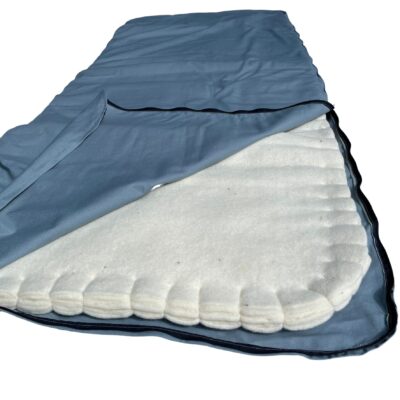
A word on the pad column. Insulation under you is squashed flat, so the ground takes heat at whatever rate the pad allows, and on snow or frozen ground the pad is usually the limiting item, not the bag. When I am backpacking I use a closed-cell foam pad — it is synthetic, and it is the only thing I know of that is really practical for carrying. At a tipi or a fixed camp I sleep on the wool felt pad, which is the modern version of the fur-on hide our ancestors used.
Seven things that change the number more than the label
- The ground. See above. If you are cold from underneath, no sleeping bag rating will save you. A bed of leaves under the pad is the old-timer’s fix and it still works.
- Food. A bag only slows the loss of heat you have already made. I eat pemmican — grass-fed beef and rendered fat — and a fatty supper late is fuel for the whole night. A few bites when you wake cold at 2 a.m. work faster than another layer.
- Head and face. A merino headwrap or scarf around the head and face, and pulling the bag up over your head and breathing inside it. In wool that breath becomes a heat source; in down or synthetic it becomes condensation.
- A dry sleep set. Never sleep in the base layer you hiked in. I keep one merino top and bottom and one pair of wool socks in a waterproof bag for camp only.
- Loft. Loft is the rating. Shake the bag out as soon as camp is up so it has an hour to recover, and store it loose at home, never in its straps.
- Site. Cold air drains into hollows and creek bottoms. A shelf fifty feet above the water can be markedly warmer at dawn — and get out of the wind.
- Cold adapting. Most people feel colder on the first night of a trip than on the fourth at the same temperature. Give a new bag a few nights, and give your body a few cold nights at home on the porch, before you judge either.
What I would tell you. Shop by the comfort figure, not the limit. Assume any lab number is optimistic for damp conditions unless the insulation is wool. Buy about 10°F warmer than the low you expect, then tune with the liner, the pad, a hat and supper. The Rewilder is the bag I carry; the Aurora is the one I drive to camp with. And then do what I do: sleep in it, on a cold night, and grade it yourself. Sleeping bag temperature ratings are the hypothesis. The night is the experiment.
Reviewed September 2026 by the Lucky Sheep® team.
Sleep warm out there — in wool
The Rewilder is a 20°F backpacking sleeping bag (4 lb, packs to 11 × 11 in) that keeps insulating when conditions turn damp. Add the merino liner for another ~10°F and a wool pad underneath for a complete natural-fiber sleep system.
-
Lightweight Wool Sleeping Bag–The Rewilder
The lightest all-natural backpacking bag
4 lb / 1.8 kg20°F / −6°C (10°F option)Packs to 11 × 11 in
Price range: $557.00 through $888.00 Select options This product has multiple variants. The options may be chosen on the product page -
Merino Wool Sleeping Bag Liner & Sleep Sack
Warm, washable wool liner for any bag
1.9 lb / 0.9 kgAdds ~10°F30 oz merino jersey
Price range: $200.00 through $235.00 Select options This product has multiple variants. The options may be chosen on the product page -
Organic Wool Sleeping Pad
Firm, breathable, machine-washable cover
¼ – 1.5 in wool felt24 – 60 in wide
Price range: $150.00 through $1,100.00 Select options This product has multiple variants. The options may be chosen on the product page