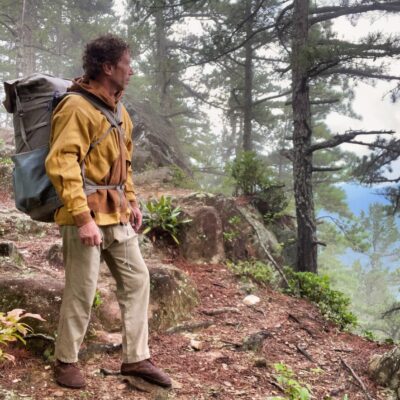
Years before there was a Lucky Sheep®, I hiked up Mount LeConte in the Smokies in winter with the best synthetic gear I could afford and came down hitchhiking. Nothing tore. Nothing leaked. My gear simply did what sealed synthetic gear does once you are wet, and that one cold night is where everything I make now began.
Location
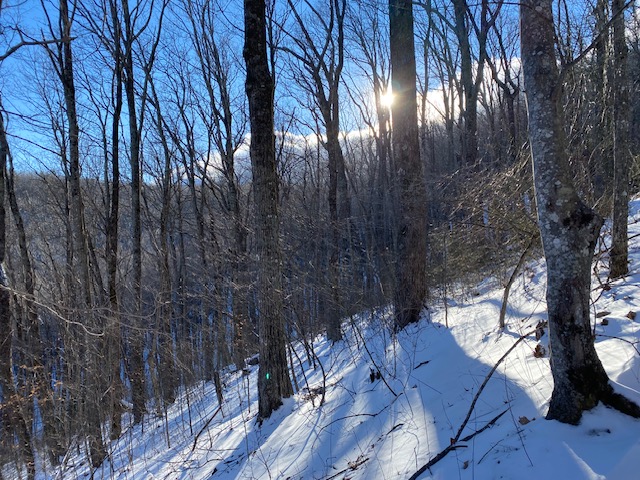
Great Smoky Mountains National Park, the leafless trail up Mount LeConte to where it meets the Appalachian Trail. A friend came for the first day and night, then turned back as planned. I was to carry on alone for a couple more nights along the AT. I ended up on the road to Bryson City with my thumb out.
Conditions
Deep winter. Bare branches, a silent gray sky, and ice-cold creek crossings on day one, boots off and pant legs rolled. Snow fell overnight while I slept and covered everything by morning. Day two was snow underfoot, cold wind and sun on the ridge.

Equipment
Everything I owned then was the gear the magazines recommended.
- Shelter. A small sealed synthetic tent, zipped tight against the weather.
- Sleep. A synthetic-fill sleeping bag with a synthetic shell.
- Worn. Synthetic layers head to toe, sold to me as moisture-wicking.
- Navigation. Topographic map and compass. I was proficient with them, which is what made losing the trail so unnerving.
What happened
Near the top, where the trail should have joined the AT, I lost it. I walked for a while under the bare branches without knowing exactly where I was, dead reckoning toward the summit in a remote piece of wilderness, and made the Appalachian Trail just before dark. I put up an emergency camp, ate a simple meal and fell asleep.
I woke up sweating in my sleeping bag. Snow had piled on the tent through the night and sagged the fabric down to my body, and the snow was insulating me the way an igloo does. The heat had nowhere to go. The synthetic bag and clothing would not let my body vent it, so I lay in my own sweat until it soaked the layers next to my skin.
I packed up wet and walked to the first trail shelter, where I hung everything in the cold wind and sun to dry. Then I kept going. Wet from overheating, then cold from being wet in the wind, with the icy creek crossings from the day before still in my legs, I hiked a full day through the snow. By the end of it I felt depleted and chilled through. I had gone to my edge and spent my reserves. I walked out to the road, hitchhiked to Bryson City and called my friend to come get me.
What worked
Stopping before dark. Making camp the moment I hit the AT kept a navigation problem from becoming a night problem.
Wind and sun. The trail shelter and a cold, dry wind got the worst of the water out of my gear by late morning. Air moving over wet fabric is the oldest drying technology there is.
Quitting. Leave the ego in the city. Recognizing that I had maxed out and getting off the mountain was a better decision than any I made about gear.
What didn’t
The seal. A sealed tent under a load of snow is a closed box with a warm body breathing inside it. My own moisture could not leave. Every zip and coating that was supposed to keep the weather out kept my heat and sweat in.
The fibers. Synthetic fill and synthetic layers hold almost no moisture inside the fiber, so my sweat stayed liquid against my skin. Wicking moves water sideways; it does not make it disappear. Once I stepped into the wind, that water pulled the heat out of me.
The body. I was not as strong or as well fed as I needed to be for winter, and I did not yet know how to eat for heat or condition myself for cold. The gear got the blame, but the body is the first piece of gear, and I had not built it.
What we learned
“There had to be a better way.” It took me years of experiments to answer that. The short version:
Ventilate, do not seal. I did not get cold on LeConte because the mountain was cold. I got cold because I got wet from the inside, and I got wet because nothing could breathe. Today I sleep under an open tarp when I am carrying my shelter and in a canvas tipi when I am not, and the moisture goes out with the air. The mechanism is in tent condensation: why you wake up wet.
Fibers that take the water in. Wool can hold a good share of its own weight as vapor inside the fiber without feeling wet, and it releases a little heat as it takes that vapor up. Merino next to the skin, a wool sweater over it, a wool sleeping bag around all of it: the same sweat that soaked me on LeConte now dries out of my base layer overnight from body heat.
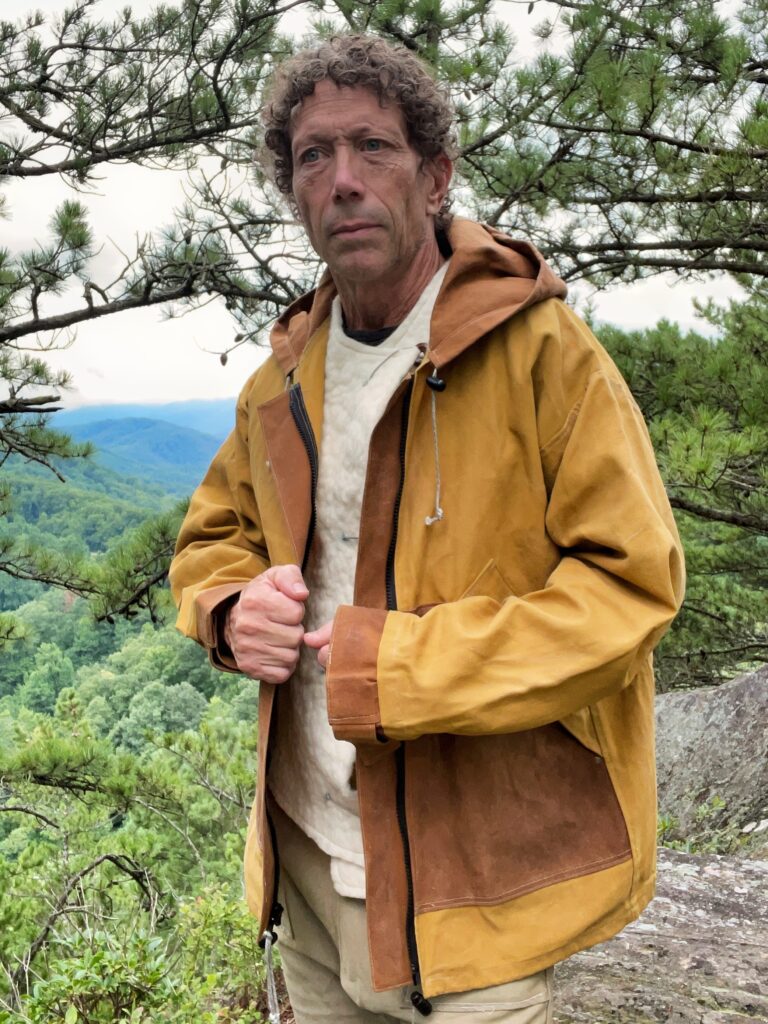
A shell that vents. My outer layer is a waxed canvas jacket, cut loose enough to layer under and open at the front when I am climbing. It sheds rain and wind, and under a long hard rain it will wet out slowly rather than leak all at once, which is a trade I accept because it lets my body heat out the whole time. Why I made it that way is in the beeswaxed canvas rain parka.
Build the body first. Food that generates heat, movement, cold exposure in small doses. None of it is a substitute for the ten essentials and a map, but it is why the same winter that beat me on LeConte is now my favorite season to sleep out in.
You will still get wet. Everyone does. The difference is whether your gear lets you dry, and that is the whole reason a wool sleeping bag weighs four pounds when a down bag weighs one or two. The rest of how a failed trip turned into a workshop in Burnsville is in the Lucky Sheep® story.
Reviewed September 2026 by the Lucky Sheep® team.
Layers that work wet
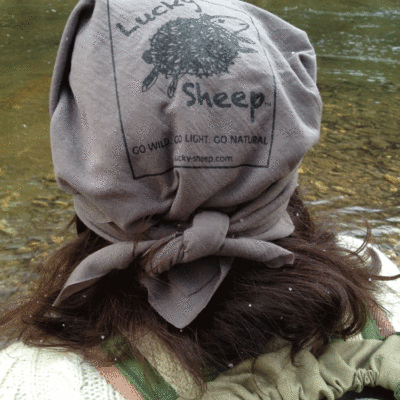
Wool next to skin, waxed canvas as the shell: a layering system that manages sweat and weather without membranes or coatings. The rain jacket is a breathable alternative to Gore-Tex-style shells; the merino bandana is the piece you’ll wear every day.
-
Lightweight Waxed Canvas Rain Jacket
A rain shell that breathes
2 lb / 0.9 kg10 oz organic canvasPFAS-free wax finish
$525.00 Select options This product has multiple variants. The options may be chosen on the product page -
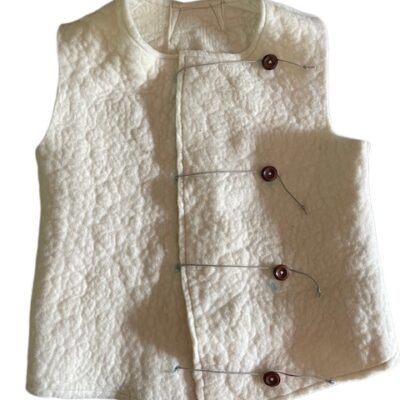
Wool Felt Adventure Vest
$175.00 Select options This product has multiple variants. The options may be chosen on the product page