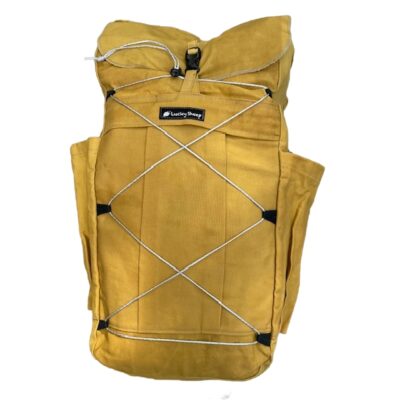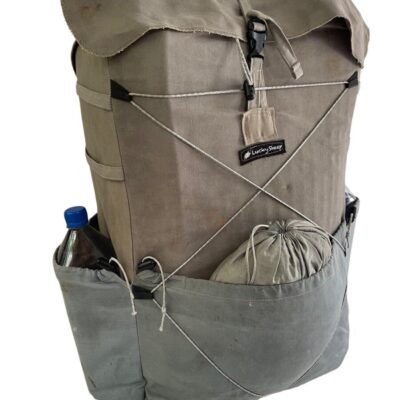
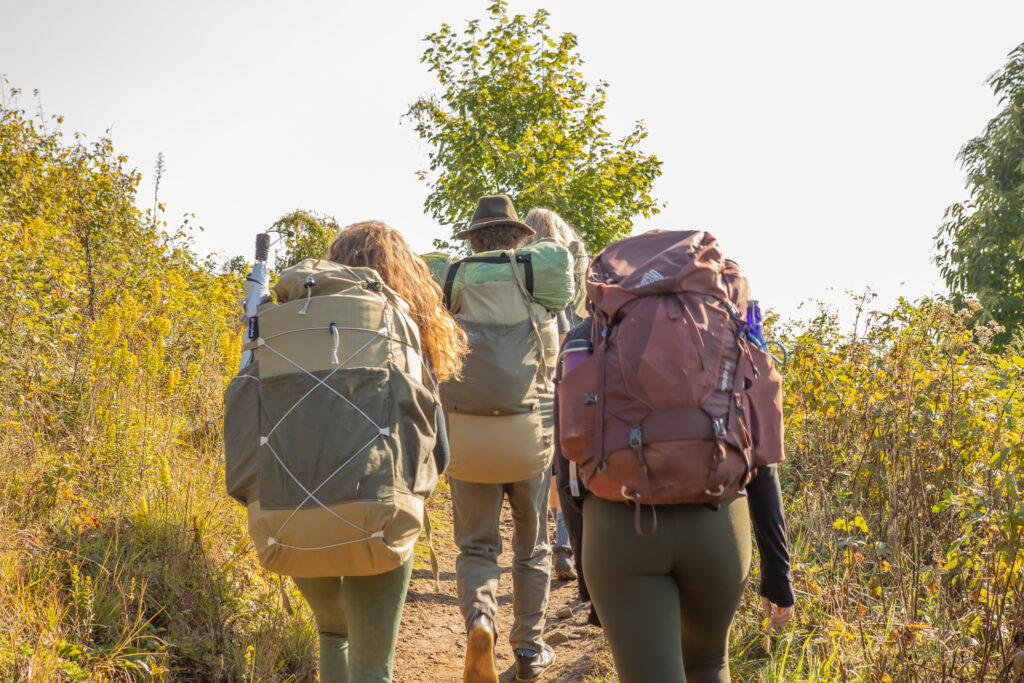
A canvas backpack for hiking has to answer the weight question before anything else, so here it is: the Lucky Sheep® 65 L organic canvas backpack weighs 32 oz, or 2 lb, and it is frameless, so the sleeping pad you are already carrying becomes the frame. That puts it lighter than most framed packs of its size and heavier than the lightest synthetic ones. This guide covers what I actually carry in it, how I pack it for rain, how heavy I would load it, and how to keep it in service for decades.
What I actually carry in a canvas backpacking pack
My checklist for a multi-day trip anywhere from 20°F to 80°F has not changed much in years. Base layer: two or three sets of merino top and bottom, a merino bandana and a couple of headwraps. Insulation: one to three wool sweaters that nest over each other, three pairs of wool socks (one for sleeping only), wool mitts. Shell: the waxed cotton parka, wool pants or thin waxed cotton pants, a wide-brimmed felt hat. Shelter: a tarp, a net tent, a closed-cell foam pad and a silnylon ground sheet. Then the cooking kit, two-liter soda bottles for water, a stove, a bear bag, food, fire tools, a light, Ziplocks, first aid, map and compass.
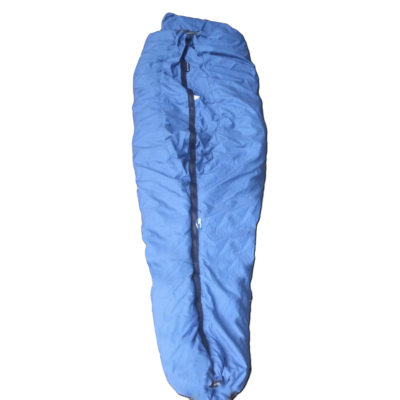
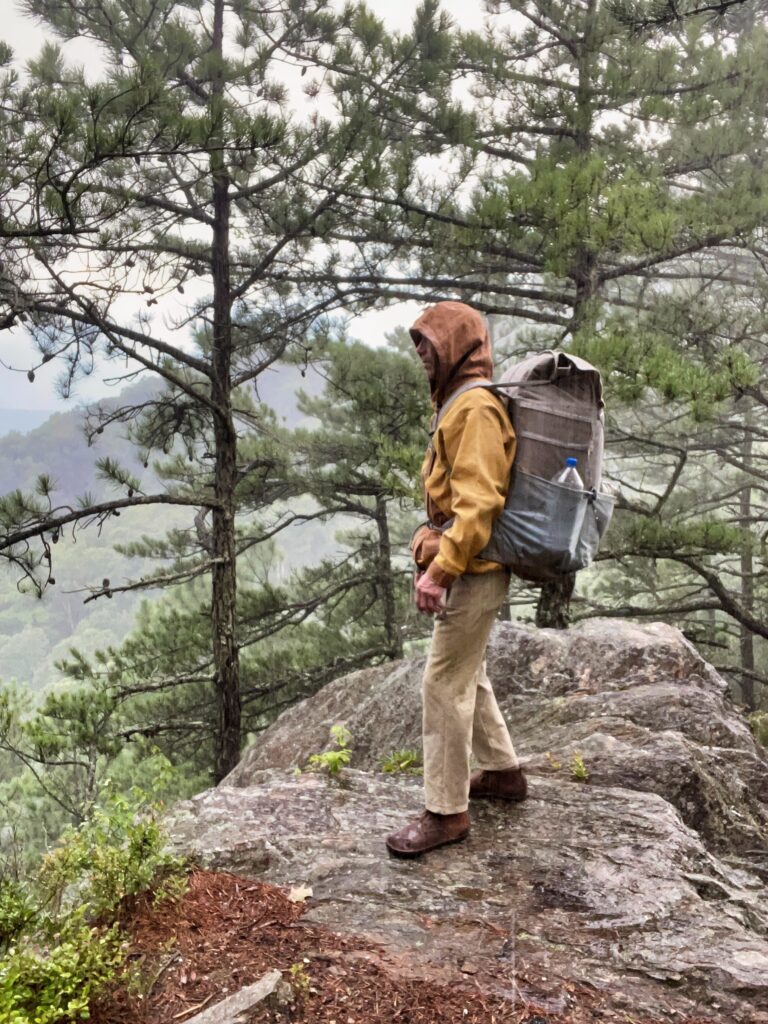
The morning it rained in Linville Gorge I packed it the way I always do. The Rewilder wool sleeping bag, a wool sweater, one dry set of merino and two pairs of socks went into a waterproof silnylon stuff sack. Food, cooking kit and first aid went into Ziplocks. The wet tarp and ground cloth went into the outside pockets with lunch, water and stove fuel. That was about all the gear I had with me, and by the fourth day I had used every piece of it. The pack weighed within a hair of thirty pounds with food and water, the same as everyone else’s; the full weigh-in is in my article on how much a wool sleeping bag weighs.
How much does a canvas backpack weigh?
Empty, this 65 liter backpack weighs 32 oz. There is no aluminum stay and no plastic framesheet to add to that, and the top extension that carries several days of food and fuel rolls down out of the way when you do not need it, leaving about 50 L in the lower body. A note on the name: this article once described an 80 L pack. The current production pack is 65 L, and everything here is written for it.
Where does that put it? Lighter than most framed packs of this volume and heavier than the lightest frameless synthetic packs, and I do not pretend otherwise. There is good reason to scrutinize weight: each ounce you carry burns calories, and by my reckoning three pounds costs you about three-quarters of a mile on a twenty-mile day. My rule of thumb from the book is a base weight around twenty pounds or less, and a total of no more than 25 to 30 percent of your ideal body weight.
Weight isn’t the only thing that matters, though. What the ounces buy you here is a cotton canvas backpack you can sew, patch and re-wax in the field, with no polyurethane coating to peel and no PFAS in the cloth, that is quiet against the brush instead of crackling.
Is a canvas backpack good for hiking?
Yes, with one honest caveat. The breathability, ruggedness and grounded feeling of canvas is, to me, unmatched by the high-tech synthetic options, and canvas is tough, rip-resistant and repairable. It does not tear when you push through brambles, and a spark from the fire does not burn a hole through it. A properly maintained natural canvas backpack lasts for years, because it is pre-treated and re-treatable rather than coated once at the factory.
The caveat is water. Cotton gets heavier when it is wet. Beeswaxed canvas takes on far less than untreated cloth and sheds showers and hours of steady rain, but in a full day of hard rain it darkens and gains weight. That is why I pack the way I describe below, and why I would rather call it a water-resistant pack than a waterproof one.
For day trips and travel the same organic canvas and beeswax finish comes as a 25 L daypack with five pockets and padded straps; both packs are in the canvas hiking backpack category.
Frameless, with your sleeping pad as the frame
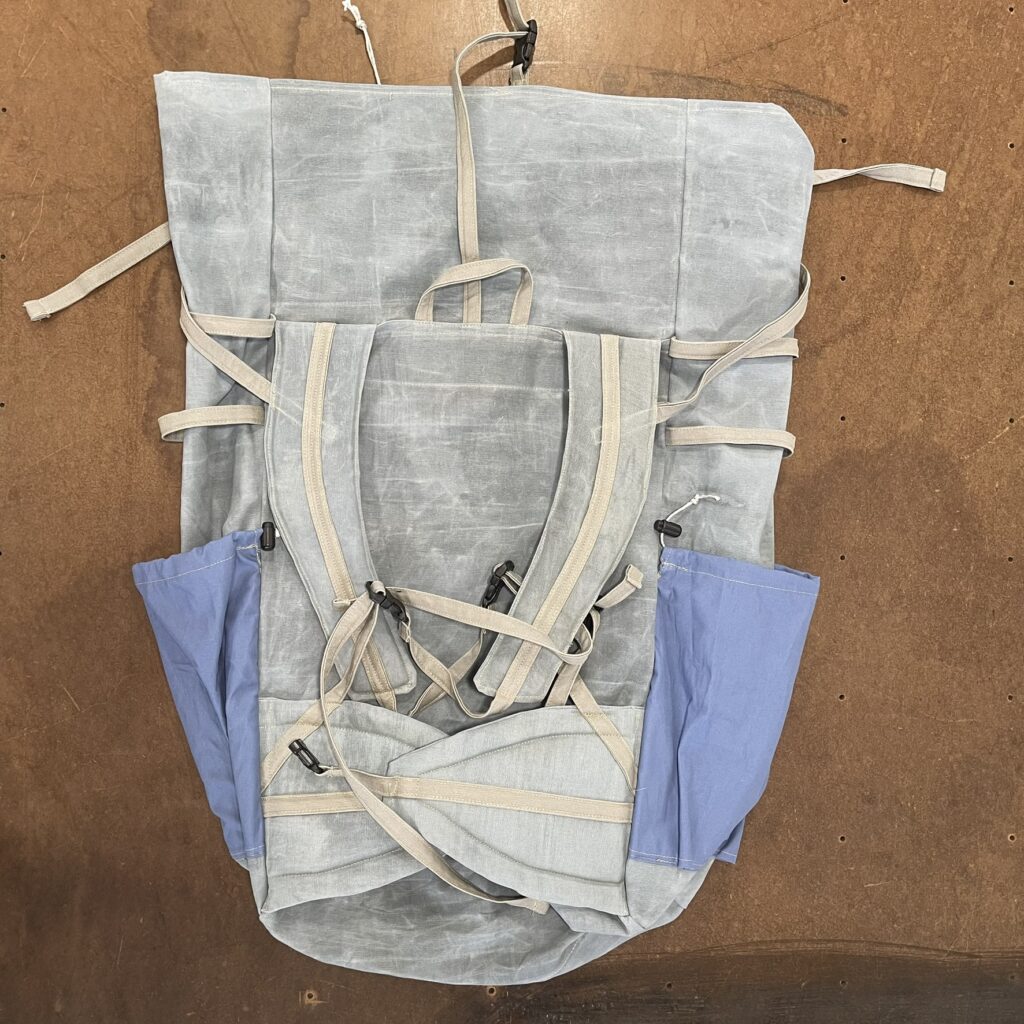
This is a very simple design. The primary gear goes inside the body of the pack, and the first thing in is your sleeping pad: either wrapped around the inside circumference to make an internal frame, or folded flat against the inside back section. Then the sleeping bag, clothes and other gear go inside that. The pad does double duty, and there is nothing rigid in the pack to break.
When I am backpacking, the pad is a closed-cell foam pad, for weight and moisture reasons; it is one of the places I deliberately use synthetic. The ¼ in organic wool sleeping pad (24 × 76 in, 32 oz) folds the same two ways and is stiffer, being dense felt rather than foam, and it is what I use when weight is not the first consideration. Pack plus wool pad comes to 4 lb.
Fitting a canvas backpack for hiking: torso length and compression straps
Fit matters more on a frameless canvas hiking pack than on a framed one. Measure your torso from the top of the shoulder to the top of the hip bone; a piece of string works. Typical lengths run about 17 in for small, 18 for medium and 19 for large, and the pack is made in those three torso sizes. Buy and test it well before the trek.
Then adjust in order: cinch the main body strap to tighten the whole pack, pull down on the shoulder straps and hip belt, and finally tighten the top lift straps to pull the load in against your back. Most of the weight should sit on the hips, with the shoulder straps steadying the upper pack rather than carrying it. Tighten all the compression straps so nothing shifts, and readjust as you hike; a fit customized to what happens to be in the pack that day is what makes for comfortable, efficient walking.
Inside, heavy items like food and the cooking kit go close to your back, the sleeping bag low, and the things you reach for every hour in the outside pockets. I have carried this pack at thirty pounds with food and water and it rode well. If you routinely carry a great deal more than that, a framed pack is the right tool.
Can a canvas backpack be waterproof?
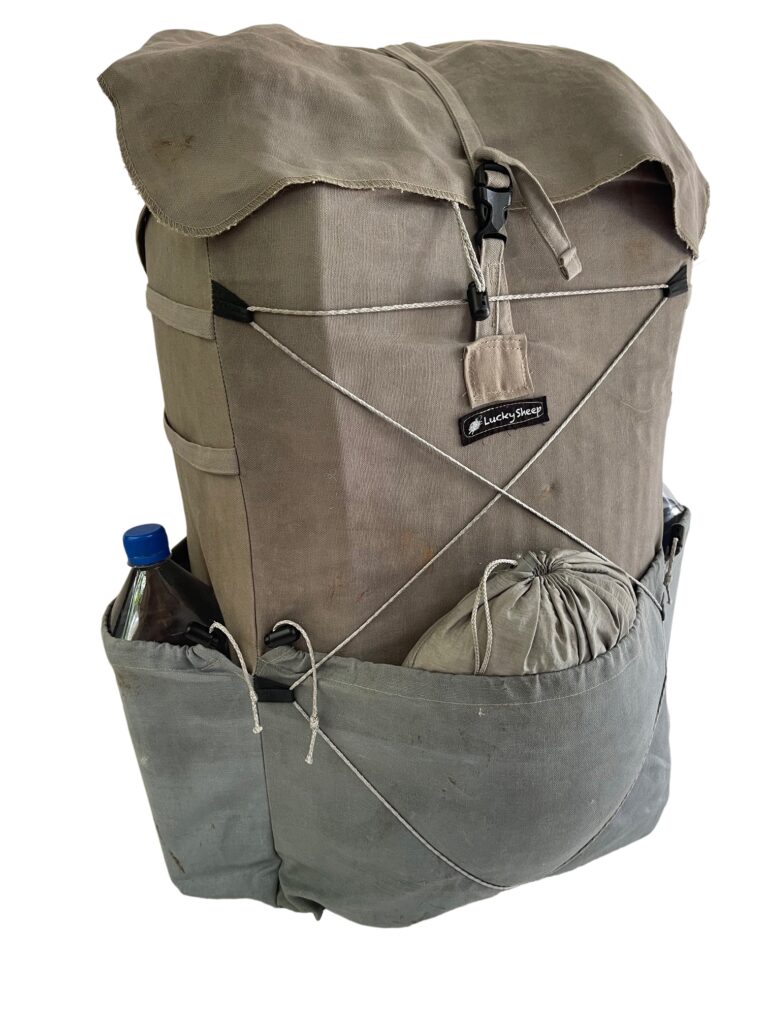
No pack I have ever carried is, and I do not try to make this one so. Waxed canvas is water-resistant, not waterproof, and every pack on the market leaks at the seams in a long enough rain. The answer is a waterproof bag inside the pack, and this is one place where I use synthetic: a silnylon stuff sack for the sleeping bag and the set of clothes reserved for camp only. The Rewilder ships with compression straps rather than a stuff sack, and the silnylon stuff sack is what I recommend for it.
Everything that can get wet goes in the three outside pockets: the tarp, water bottles, cooking gear. Food and the first aid kit go in Ziplocks. A wet layer can ride under the cord lacing on the front to dry while you walk. A wool sleeping bag is forgiving if it does get damp, because wool keeps insulating with moisture in it, but a dry bag at bedtime is still the goal.
At camp, empty the pack, shake it out and hang it open under the tarp. Waxed canvas dries far faster than untreated cotton; on the Linville trip my waxed cotton was dry by the fire before the socks were. Beeswaxed cotton is a natural material and should not be left continuously against damp ground, so keep the pack off the wet earth overnight and let it dry thoroughly before it goes into storage.
Re-waxing a cotton canvas backpack
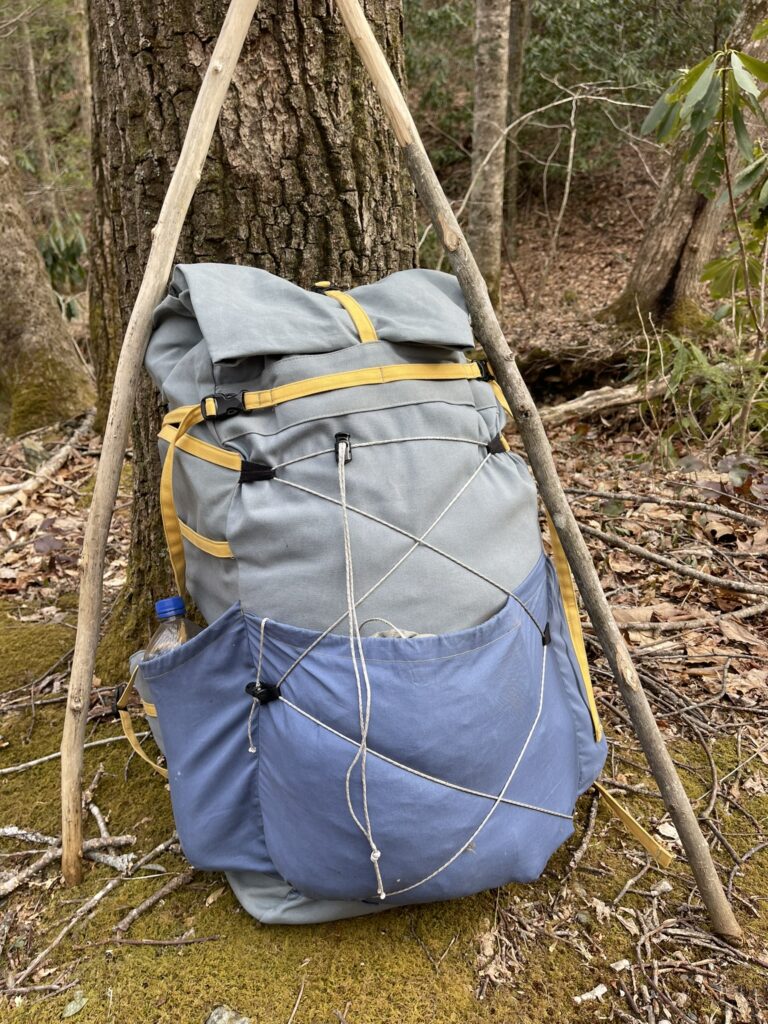
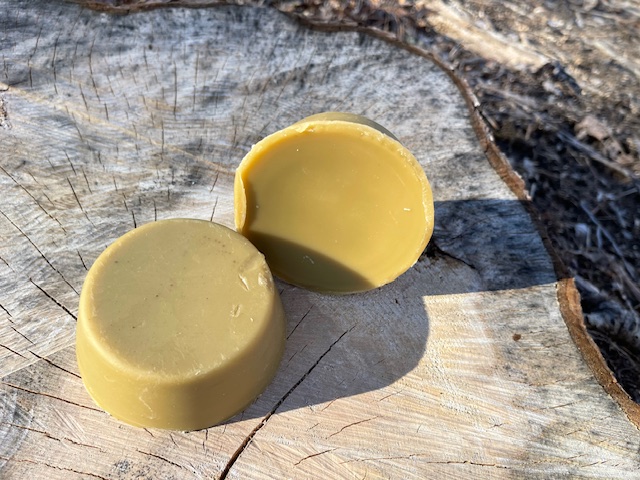
A pack needs re-waxing when the bottom panel and the strap contact points go pale and stop beading water. Empty it, brush out the inside and let it dry completely. Rub a bar of Trail Wax firmly over the bottom, the seams and the backs of the side pockets first, then across the body; stuffing the pack with a towel lets you work each panel flat. Warm the wax in with a hair dryer or an hour in the sun until the streaks melt into the weave, wipe any excess, and let it cure overnight.
Clean with cold water and a brush only; detergent, the washing machine and the dryer all strip the wax. A tear gets sewn closed with a heavy needle and waxed thread, then waxed over the stitch line. Workmanship is guaranteed for life, and wear is something you fix yourself. The full routine for jackets, packs, tarps and the tent is in my waxed canvas care guide.
Specifications
| 65 L canvas backpack | 25 L canvas daypack | |
|---|---|---|
| Volume | 65 L (about 50 L with the extension rolled down) | 25 L |
| Weight | 32 oz / 2 lb | — |
| Fabric | Organic cotton canvas, beeswax finish | Organic cotton canvas, beeswax finish |
| Frame | Frameless; your sleeping pad is the frame | None |
| Sizes | Torso S / M / L | One size; lavender, stone or gold |
| Closure and pockets | Roll-top, 3 outer pockets, front cord lacing | 5 pockets, padded straps |
| Synthetics in the cloth | No nylon, polyester or PFAS | No nylon, polyester or PFAS |
| Care | Re-waxable, repairable, lifetime workmanship guarantee | Re-waxable, repairable, lifetime workmanship guarantee |
| Made in | USA | USA |
| Price | $350 | $249 |
The 65 L organic canvas backpack ships in 2–5 days from Burnsville, North Carolina.
The art of carrying things
When you have to carry your belongings on your back, you look at what you own in a new way. You develop an appreciation for each object and what it does for you, and if it isn’t worth its weight, you get rid of it or never acquire it in the first place. That is one of the quiet gifts of backpacking.
A pack you can sew, re-wax and hand down fits that way of living better than one you replace. Take it on a few day hikes near home first, in bad weather, until the straps and the packing order are second nature.
Simple. Light. Adaptable.
Reviewed September 2026 by the Lucky Sheep® team.
The book behind these articles
A Rewilder’s Guide to Outdoor Adventure
The complete Lucky Sheep approach to time outdoors — skills, gear, food and natural sleep, from the founder. Everything the field guide covers, in one book you can take with you.
Get the book →Gear for the trail, made from natural fibers
Carry your food and your sleep system in organic canvas: the 25 L daypack for day hikes, the 65 L lightweight canvas backpack (32 oz) for multi-day trips, and the 20°F Rewilder wool sleeping bag for the nights in between.
-
Eco-Friendly Canvas Daypack
Minimalist organic canvas daypack
25 LZero plastic, zero PFAS
$249.00 Select options This product has multiple variants. The options may be chosen on the product page -
Lightweight Organic Canvas Backpack
65 L, frameless, nothing synthetic
2 lb / 0.9 kg65 LFrameless · foam-pad frame
$350.00 Select options This product has multiple variants. The options may be chosen on the product page -
Lightweight Wool Sleeping Bag–The Rewilder
The lightest all-natural backpacking bag
4 lb / 1.8 kg20°F / −6°C (10°F option)Packs to 11 × 11 in
Price range: $557.00 through $888.00 Select options This product has multiple variants. The options may be chosen on the product page