
How Structure, Vibration and Radiant Energy Interact with Life
Part Five of How Fabric Affects the Electricity of the Body
A Different Kind of Comfort
Over the years of developing natural fiber outdoor gear at Lucky Sheep®, I have received a recurring kind of feedback from customers that goes beyond the usual descriptions of warmth and comfort.
People describe feeling calmer, more grounded and soothed. There is a quality to the experience that can be difficult to put into words.
I have experienced something similar myself, particularly while wearing minimally processed wool and sleeping beneath wool felt blankets. The warmth reminds me of sitting near a woodstove or resting in the sunlight. There is a deeply comforting quality to it.
For some time, I have also been incorporating a specially prepared ceramic powder into the beeswax used to finish our fabrics. This material, developed through Effective Microorganisms technology, is incorporated into our waxed canvas jackets, sleeping bag shells, tents, tarps and other waxed products, including the Quantum Calming Sheet.
These materials were selected not only for their practical performance but also out of a longstanding interest in how the physical environment influences biological vitality.
The experiences people have described have encouraged me to investigate what might be happening at a deeper level.
Recent discoveries in mitochondrial biology, infrared radiation, water organization and materials science are opening up some fascinating possibilities.
We are beginning to understand how the geometry and vibrational activity of matter can influence electrical reactions within living systems.
And this brings us to an entirely new way of looking at the fabrics and materials we surround ourselves with.
The Architecture of Life
Nature builds from patterns.
From the spiral architecture of DNA to the branching of trees, from the crystalline organization of minerals to the microscopic structure of wool, geometry is woven into the fabric of life.
These patterns are not merely aesthetic. The physical architecture of matter helps determine how it interacts with water, light, electricity and radiant energy.
In the previous installments, we explored how sunlight influences metabolism, how water participates in electrical processes, and how the rhythms of the natural world relate to biological vitality.
Now we turn our attention to the materials themselves.
Wool, cotton, beeswax and biologically conditioned ceramic minerals each possess distinctive physical and molecular characteristics.
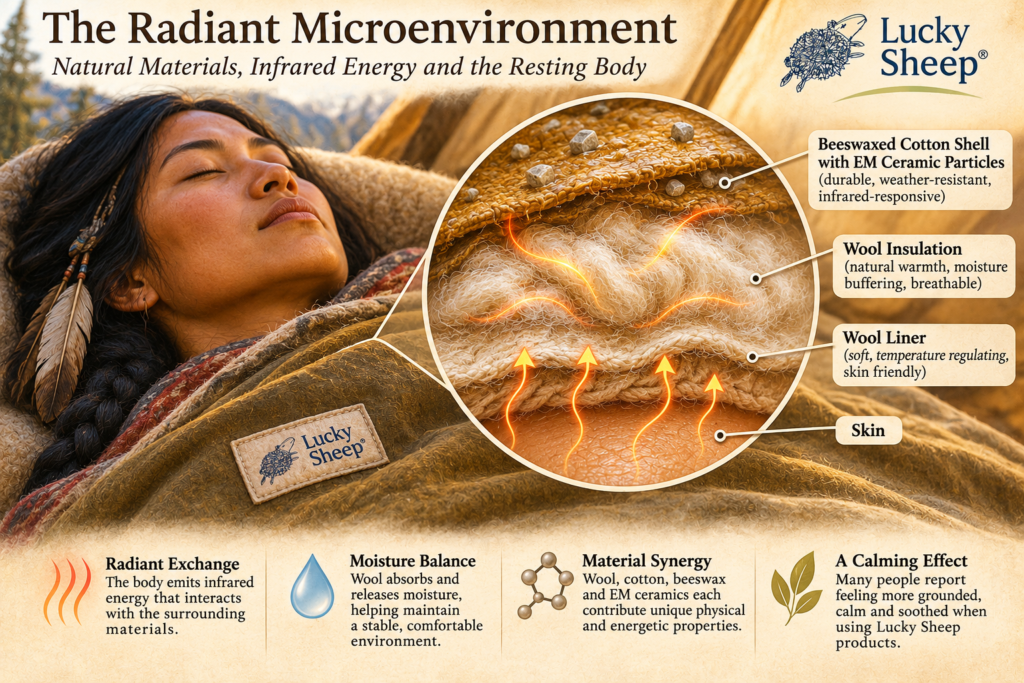
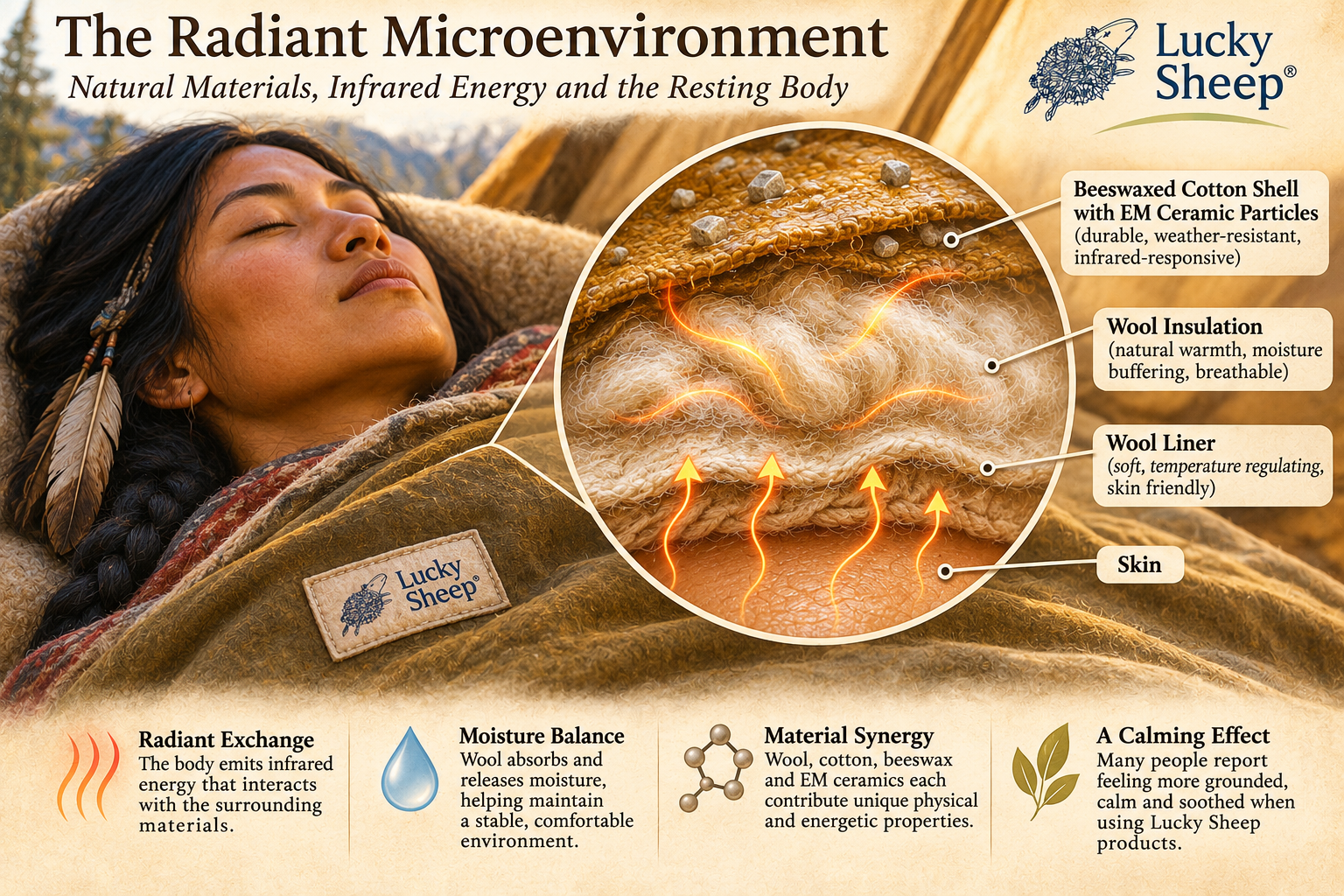
When we combine these materials into clothing, bedding and shelter, we create a microenvironment around the body. Within that environment, heat, moisture and radiant energy are continually being exchanged.
The question that increasingly interests me is whether the character of this exchange contributes to the sensations of comfort, calmness and well-being that people describe.
The Hidden Geometry of Wool
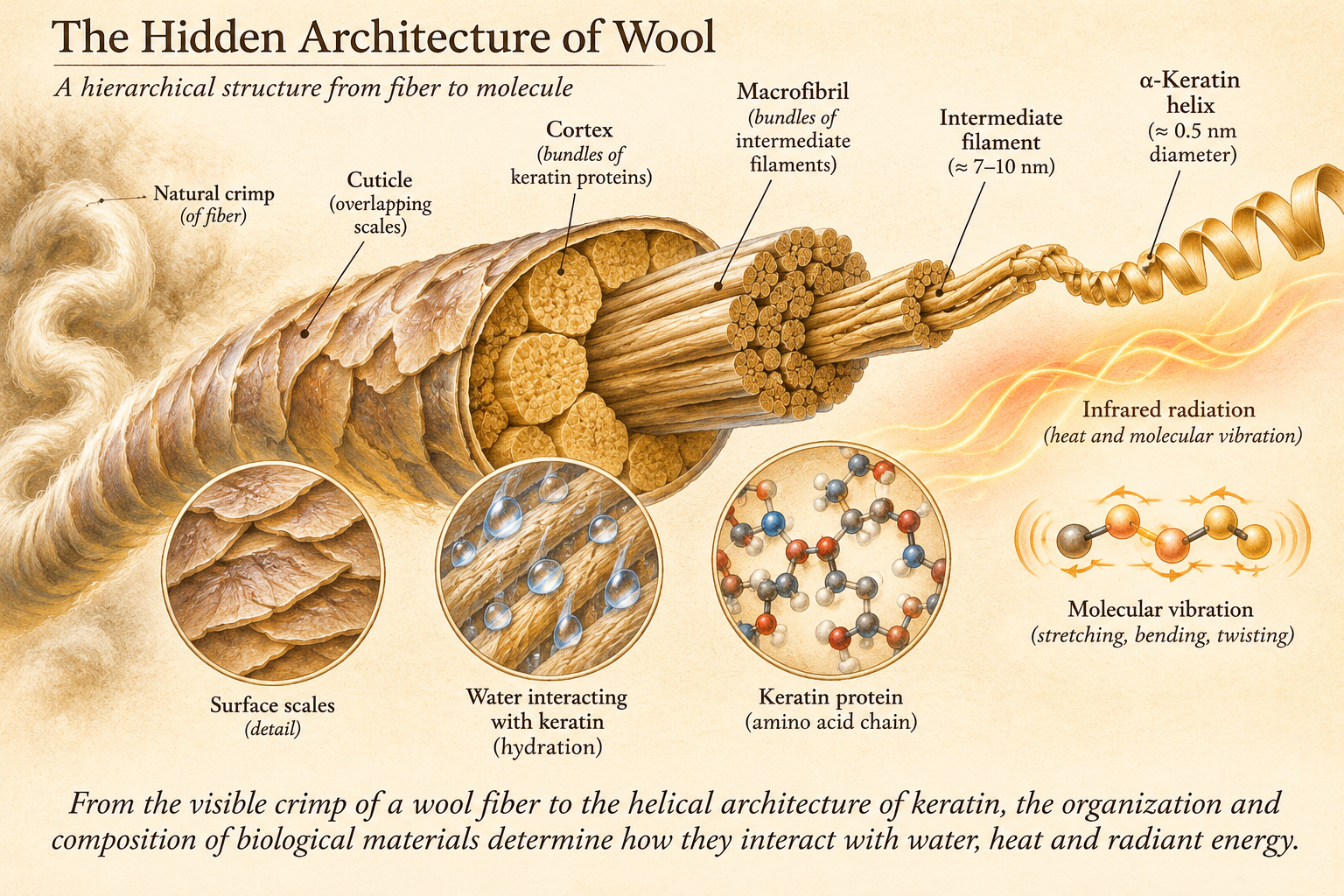
Under a microscope, a wool fiber reveals a remarkably sophisticated architecture.
Its outer surface consists of overlapping scales, somewhat resembling the shingles on a roof. Beneath these scales lies the cortex, where bundles of protein structures are arranged within the fiber.
As we move deeper into the microscopic world, we encounter progressively smaller levels of organization: macrofibrils, intermediate filaments and the molecular architecture of keratin itself.
Keratin proteins contain chains of amino acids arranged into helical structures. These helices associate with one another, forming larger assemblies that contribute to the strength, flexibility and resilience of the fiber.
The architecture extends across multiple scales, from molecular bonds to the natural crimp of the entire fiber.
This hierarchical organization is one of the remarkable characteristics of biological materials. Nature constructs complex functional structures by assembling smaller organized structures into larger ones.
Wool’s architecture contributes to its ability to absorb moisture, bend without breaking, recover its shape, regulate heat exchange and interact with electromagnetic radiation.
It is a material whose physical characteristics emerge from the organization of its constituent parts.
When we wear wool or sleep beneath it, we are surrounding ourselves with this intricate biological architecture.
And when wool is minimally processed, much of its original physical organization remains intact.
Geometry, Frequency and Resonance
The relationship between geometry and electromagnetic behavior is well established in physics and engineering.
The shape of an antenna determines, in part, which frequencies it receives and transmits. Fractal antennas use repeating geometric patterns across different scales to interact with multiple frequency bands.
Certain nonmetallic materials can also function as electromagnetic resonators. These dielectric resonators depend on the geometry and electrical polarization characteristics of the material.
Even at the molecular level, geometry determines how matter interacts with radiant energy.
Atoms within molecules are not stationary. They vibrate, stretch, bend and twist. Different molecular bonds possess characteristic vibrational modes that interact with particular frequencies of infrared radiation.
This is the foundation of infrared spectroscopy, a technology that allows scientists to identify materials by their characteristic patterns of infrared absorption.
Wool, cellulose, beeswax and mineral crystals all possess distinctive molecular structures and infrared signatures.
Wool’s hierarchical architecture does not automatically make it a biological antenna. But the principles behind antennas, dielectric resonators and molecular spectroscopy reveal something fundamental:
The organization of matter influences how it interacts with energy.
When we combine different materials, we also combine their physical interactions with the surrounding environment.
This is particularly interesting when we consider the emerging science of how radiant energy influences the electrical machinery of life.
The Molecular Dance of Life
In Part Two, The Living Spectrum, we explored the work of physician Dr. Roger Seheult and his collaborators, who have proposed a new physical framework for understanding how infrared light influences mitochondrial metabolism.
Their hypothesis builds upon the Nobel Prize-winning work of chemist Rudolph Marcus, whose theory explains the kinetics of electron-transfer reactions.
Within the mitochondria, electrons move through a series of molecular structures known as the electron transport chain. The energy released during this process is used to establish an electrochemical gradient that drives the production of ATP.
But the movement of these electrons depends on more than the availability of chemical energy.
The proteins, molecular bonds and surrounding water molecules must continually reorganize into configurations that allow electron transfer to occur.
An electron can move extremely quickly. The molecular structures surrounding it move more slowly.
The electron-transfer reaction therefore depends partly on how frequently the surrounding molecules reach favorable energetic configurations.
Seheult and his colleagues propose that infrared radiation influences this process by exciting molecular vibrations, changing the probability of these favorable arrangements.
Certain wavelengths may accelerate particular electron-transfer reactions, while others may slow them.
Laboratory experiments have already demonstrated that infrared excitation can accelerate one electron-transfer reaction while inhibiting another within the same molecular system.
This introduces a fascinating way of understanding the biological significance of light.
Radiant energy may participate in regulating the molecular choreography through which chemical energy is converted into usable cellular energy.
Structure influences vibration. Vibration can influence electrical reactions. Electrical reactions are fundamental to life.
This is one reason I have become increasingly interested in the infrared characteristics of the materials we wear and sleep in.
If particular wavelengths can influence biological processes, then the spectral characteristics of our environment become an important subject of investigation.
Water and the Electrical Architecture of Life
Water is an active participant in this molecular choreography.
Its molecules continually form, break and reorganize hydrogen bonds. Around proteins, membranes and other molecular structures, these networks influence the local electrical environment.
Research into mitochondrial electron transfer has identified mechanisms through which strategically positioned water molecules can facilitate the movement of electrons between molecular sites.
Water also participates in proton transport through hydrogen-bonded networks within mitochondrial proteins.
This brings us back to the work of Dr. Gerald Pollack, which we explored in Part Four, Water, Light, and the Electricity of Life.
Pollack’s experiments demonstrate that water near certain hydrophilic surfaces exhibits distinctive behavior, including the exclusion of suspended particles and the development of electrical potential differences. His laboratory has also demonstrated that radiant energy can expand these exclusion zones.
These investigations approach water from different directions, but together they reveal the importance of the relationship between water, molecular surfaces, radiant energy and electrical activity.
Water is not simply the liquid in which the chemistry of life takes place. Its molecular organization participates in that chemistry.
Wool has a particularly interesting relationship with water.
Unlike many synthetic fibers, wool can absorb substantial quantities of moisture into its internal structure while remaining relatively dry to the touch. Water interacts with the polar groups within its keratin proteins, influencing the fiber’s electrical and physical characteristics.
The dielectric properties of wool change with its moisture content. Its thermal behavior changes as well.
This creates a dynamic relationship between the fiber, atmospheric moisture, body heat and the skin.
When we sleep inside a wool sleeping bag, for example, we are not simply enclosing ourselves within a layer of insulation. We are creating a continuously changing microenvironment in which moisture, heat and radiant energy interact with biologically organized materials.
Understanding the physiological significance of that environment is one of the central goals of this investigation.
Life Beyond the Reach of Sunlight
One of the most fascinating discoveries I encountered while investigating Seheult’s work involves a microorganism living in the depths of the ocean.
Researchers studying a species of yeast, Rhodotorula mucilaginosa, associated with deep-sea hydrothermal environments discovered that exposure to near-infrared radiation stimulated mitochondrial metabolism and growth under certain laboratory conditions.
These organisms live far beyond the reach of sunlight. They do not possess the photosynthetic machinery of plants.
Nevertheless, their metabolism responds to radiant energy.
The researchers controlled temperature to distinguish the effects of infrared exposure from ordinary warming. The growth-promoting effects were particularly interesting under conditions where low temperatures otherwise limited metabolic activity.
This experiment expands our understanding of the relationship between life and radiant energy.
It suggests that the biological significance of infrared radiation extends beyond sunlight and beyond photosynthesis.
Geothermal radiation may also participate in the metabolic environment of living organisms.
What especially interests me is the distinction between temperature and the spectral characteristics of radiant energy.
Two environments can have the same temperature while exposing organisms to different wavelengths and intensities of radiation.
This distinction may be particularly relevant when investigating the materials surrounding the human body.
Two sleeping bags might provide similar levels of insulation while differing in their moisture interactions, infrared optical properties and the microenvironment they create around the skin.
Perhaps some of the differences people experience when using natural fiber gear arise from these additional physical characteristics.
Warmth is only one dimension of our relationship with the materials surrounding us.
When Life Imprints Itself on Matter
Many years ago, I became interested in the work of Japanese agricultural scientist Dr. Teruo Higa, the developer of Effective Microorganisms technology, commonly known as EM.
In his books, including An Earth Saving Revolution, Higa describes his investigations into cooperative communities of microorganisms and their ability to influence the environments in which they live.
EM technology brings together microorganisms with different metabolic capabilities, including yeasts, lactic acid bacteria and photosynthetic bacteria.
Among the organisms associated with EM technology are purple nonsulfur bacteria capable of utilizing near-infrared radiation through their specialized light-harvesting machinery.
The recent discoveries involving infrared-responsive deep-sea yeast have renewed my interest in Higa’s work. Although the biological mechanisms differ, both areas of research reveal connections between microbial activity and radiant energy.
One of Higa’s most intriguing inventions was the development of EM ceramics.
His manufacturing process involves introducing selected microorganisms or their culture fluid into raw ceramic materials before firing them at high temperatures.
The microorganisms themselves cannot survive the firing process.
Higa proposed, however, that the ceramic retains functional characteristics imparted by the microorganisms during its preparation. He described this phenomenon in terms of resonance and the capacity of clay to retain vibrational information.
According to his theory, the resulting ceramic continues to interact with its environment through this retained vibrational characteristic, including the emission of infrared radiation.
The manufacturing process and the proposed retention of biologically derived properties are documented in his 1997 United States patent for the preparation of functional ceramics.
Modern materials science offers an interesting perspective on this concept.
Independent research has demonstrated that microorganisms can alter the physical and chemical characteristics of clay during its maturation. Their activity can influence mineral surfaces, particle arrangements, electrical charge and the distribution of dissolved elements.
These changes can influence the characteristics of the finished ceramic.
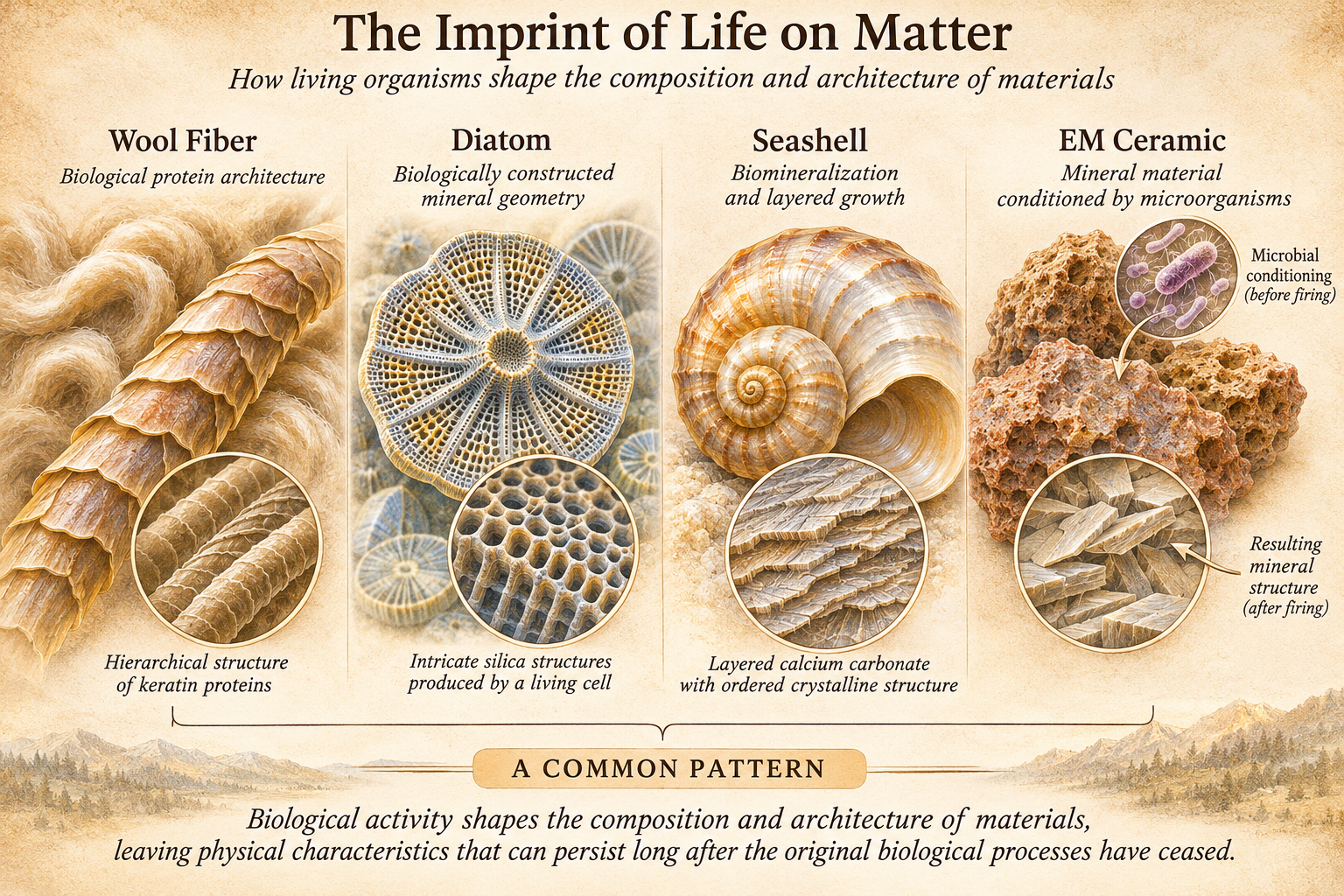
This suggests a possible physical interpretation of biological imprinting: living organisms influence the formation of a material, leaving persistent structural or chemical characteristics after the organisms themselves are gone.
If these changes also alter the infrared characteristics of the finished ceramic, we would have a measurable avenue for investigating Higa’s proposed resonance effect.
This is the theory that originally inspired me to begin incorporating EM ceramic powder into Lucky Sheep fabrics.
The Memory of Biological Materials
Nature is filled with examples of living organisms imparting lasting organization to matter.
Seashells, coral skeletons and the microscopic mineral structures produced by diatoms retain extraordinary architecture long after the organisms that created them have died.
Wood retains the cellular organization of the tree from which it came.
Wool retains much of the intricate protein architecture created by the sheep.
Beeswax retains the molecular characteristics of a substance produced through the metabolism of living bees.
These materials carry a physical record of their biological origins.
This is one way of understanding the concept of material memory. The history of a material is reflected in its present structure, composition and physical characteristics.
A tuning fork retains its characteristic resonant frequency because it retains its shape and material properties. It does not need to store the energy that originally caused it to vibrate.
Similarly, a material’s infrared characteristics can persist as long as its molecular and mineral organization remains stable.
In the case of EM ceramics, the intriguing question is whether microbial conditioning creates persistent changes that influence how the finished material interacts with radiant energy.
In the case of wool, the biological organization is already present in the fiber itself.
Both invite us to investigate the relationship between biological history, material architecture and vibrational behavior.
Bringing These Materials Together
At Lucky Sheep®, I have been bringing several of these materials together in the development of natural fiber outdoor gear.
The beeswax used in our waxed fabrics incorporates EM ceramic powder. This combination is used throughout our waxed product line, including our rain jackets, sleeping bag shells, tents, tarps and the Quantum Calming Sheet.
The beeswax serves as a medium for distributing the fine ceramic particles throughout the fabric, creating a composite material made from cellulose, biologically produced wax and microbially conditioned minerals.
In our sleeping bags, this is combined with wool insulation and wool liners.
Interestingly, modern textile research has demonstrated that incorporating relatively small quantities of ceramic particles into fabrics can measurably alter their infrared absorption and emission characteristics.
Most of this research has involved synthetic textiles and conventional ceramic minerals. My interest is in exploring similar principles using natural fibers, beeswax and biologically conditioned ceramics.
Beeswax itself possesses distinctive infrared absorption bands associated with the vibrations of its molecular bonds.
The resulting fabric is therefore not simply a carrier of ceramic particles. It is a composite in which each constituent contributes to the overall physical characteristics of the material.
During sleep, the body continually emits infrared radiation. The surrounding fabrics absorb, reflect and emit radiant energy according to their physical properties and temperature.
A ceramic-enhanced fabric may modify the spectral characteristics of this exchange.
During the daytime, these same materials interact with the broader spectrum of solar radiation. A waxed canvas jacket or tent therefore participates in a different radiant environment during the day than a sleeping bag does at night.
The wavelengths emitted by materials at ordinary sleeping temperatures are predominantly longer than those used in many near-infrared photobiomodulation experiments. Their interactions are likely to be concentrated near the skin rather than involving direct penetration into deeper tissues.
This creates another avenue of investigation involving skin temperature, hydration, thermal regulation and the body’s immediate radiant environment.
What interests me is how these various interactions might work together.
Rather than looking for a single ingredient responsible for the experiences people describe, I am interested in the combined characteristics of the materials and the environment they create.
Calmness, Grounding and the Conservation of Biological Energy
One of the recurring themes throughout this series has been the relationship between the nervous system, biological electricity and vitality.
In Part Three, we explored the electrical rhythms of the body, heart rate variability, emotional states and the relationship between autonomic regulation and restorative processes.
When the body is continually responding to discomfort, temperature fluctuations or environmental stress, it must devote resources to maintaining equilibrium.
An environment that reduces these demands can support the conditions in which rest and recovery take place.
This brings us back to the calming and soothing sensations that people have described when using Lucky Sheep products.
Wool’s moisture-buffering properties, the distribution of warmth, the tactile characteristics of natural fibers and the radiant properties of the materials may all contribute to the experience.
I am particularly interested in whether the infrared characteristics of these materials represent an additional influence on the body’s regulatory processes.
The emerging science of photometabolism gives us a new reason to investigate this possibility.
Could the physical environment surrounding the body influence not only how comfortable we feel, but also how efficiently we regulate ourselves?
Could some of the sensations we describe as grounding or soothing reflect a reduction in the physiological demands placed upon the nervous system?
This is the hypothesis I am exploring.
The customer experiences are observations that inspire the investigation, rather than measurements establishing a particular biological mechanism. I have not yet isolated the contribution of the EM ceramics or measured the infrared characteristics of our finished fabrics.
Nevertheless, these recurring experiences provide an interesting starting point for investigating the relationship between materials, sensory comfort and biological regulation.
Beyond Geometry: Minerals, Resonance and the Nature of Matter
Geometry is only one aspect of the relationship between matter and energy. The elemental composition of a material, its electronic structure, chemical bonds and crystalline organization also determine how it interacts with its environment.
This adds another dimension to the investigation of EM ceramics. Microorganisms can influence not only the physical arrangement of minerals but also their chemical forms, oxidation states and interactions with water.
These processes have inspired my interest in another area of unconventional research known as ORMUS, sometimes referred to as orbitally rearranged monoatomic elements. Researchers and independent investigators in this field have proposed that certain elements can exist in unusual electronic configurations possessing distinctive energetic and biological properties.
Among those exploring these ideas is Ken Rohla, whose work brings together mineral composition, sacred geometry, water organization, pyramid structures and the proposed harvesting of scalar energy.
What fascinates me about this direction is the possibility that the composition and geometry of a material may work together to determine its energetic characteristics.
Conventional physics already recognizes this relationship in the behavior of dielectric resonators, piezoelectric crystals, antennas and infrared-responsive materials. ORMUS and scalar energy theories propose additional properties and mechanisms that have yet to be established through reproducible scientific experiments.
These investigations raise questions that extend beyond the scope of this installment. But they introduce another dimension to our exploration of natural materials: the relationship between elemental composition, biological organization, geometry and energy.
The emerging research into molecular vibrations, interfacial water and electron-transfer kinetics gives us a tangible scientific foundation from which to continue exploring these possibilities.
The Warmth That Feels Different
Much of this investigation comes back to a simple personal observation.
While experimenting with minimally processed wool felt, I began noticing a quality of warmth that seemed different from what I experienced with conventional insulating materials.
The sensation reminded me of the radiant warmth of sunlight or sitting near a woodstove.
I noticed it while wearing a wool felt vest and while sleeping beneath a wool felt blanket. The sensation appeared quickly and continued throughout the night.
I could experience it even through a layer of clothing or a sheet.
It was not simply the experience of becoming warmer. There was a distinctive quality to the warmth itself.
Interestingly, this experience also occurred with wool felt alone, without the addition of EM ceramic powder.
This suggests that there are several aspects of the materials worth investigating independently, as well as in combination.
The natural architecture of wool, its relationship with moisture, the infrared characteristics of beeswax and the proposed vibrational properties of EM ceramics each represent a different part of the larger picture.
The recent research into infrared radiation and mitochondrial metabolism makes this investigation even more interesting.
It reminds us that warmth is an experience produced by several interacting physical processes, and that the temperature of an environment does not fully describe its radiant characteristics.
Creating an Environment for Vitality
When I began developing Lucky Sheep outdoor gear, I wanted to create an alternative to the synthetic materials that had come to dominate the outdoor industry.
But over the years, the project has evolved into something more.
It has become an ongoing exploration of the relationship between materials and life.
The calming and grounding sensations people have described, my own experiences with the distinctive warmth of wool, and my experiments with beeswax and EM ceramics have all contributed to this investigation.
Throughout this series, we have explored the body as an electrical, rhythmic and environmentally responsive living system.
We have examined sunlight, darkness, the electrical rhythms of the Earth, emotional states, water organization and mitochondrial metabolism.
Each of these subjects reveals another dimension of the relationship between the organism and its environment.
Now we are beginning to explore the role of the materials that form our immediate surroundings.
The clothing we wear, the bedding we sleep beneath and the shelters we inhabit create a physical interface between our bodies and the larger natural world.
These materials influence the movement of heat, moisture and radiant energy. Their molecular structures determine how they interact with water and electromagnetic radiation.
Their properties help shape the microenvironment in which our bodies spend much of their lives.
This is why my interest in natural fibers extends beyond sustainability, comfort and the elimination of unnecessary synthetic chemicals.
Whether we are wearing a waxed canvas jacket, sleeping inside a wool sleeping bag, resting beneath a wool felt blanket or spending the night in a canvas tipi, we are surrounding ourselves with materials that possess their own distinctive physical characteristics.
My goal is to understand these characteristics more deeply and to bring them together in ways that create an environment conducive to vitality.
The emerging science of photometabolism, interfacial water, molecular vibration and infrared-responsive materials offers new ways to investigate the experiences that originally inspired this work.
Vitality emerges from the coordinated functioning of the entire organism in relationship with its environment.
The architecture of that environment — including the architecture of the materials surrounding us — deserves our attention.
For me, this is another dimension of rewilding.
Rewilding is not only about returning the body to nature. It is also about reconsidering the nature of the materials we bring into intimate contact with the body.
And perhaps, in rediscovering these relationships, we can learn to create environments that better support our capacity for calmness, rest, regeneration and vitality.
Stay Wild,
— Patrick
Lucky Sheep® Outdoor Gear
Research and Further Reading
- Fosbury, Seheult, Zimmerman and Jeffery. Metabolism in the Solar Photon Field: A Physical Framework for Photon-Assisted Modulation of Mitochondrial Electron-Transfer Kinetics. 2026 preprint.
- Roger Seheult. How Infrared Light Actually Affects Your Mitochondria — Hypothesis. MedCram, September 2026.
- Rudolph A. Marcus. Nobel Prize in Chemistry, 1992. Theory of electron-transfer reactions.
- How Can Infra-red Excitation Both Accelerate and Slow Charge Transfer in the Same Molecule?
- Infrared Stimulation of Mitochondrial Metabolism in Deep-Sea Yeast Expands the Energetic Framework of Hydrothermal Ecosystems. 2026.
- Chai, Yoo and Pollack. Effect of Radiant Energy on Near-Surface Water. Journal of Physical Chemistry B, 2009.
- Teruo Higa. An Earth Saving Revolution.
- Teruo Higa. Process for Preparing Functional Ceramics. US Patent 5602065, 1997.
- Modification of Clay Properties by Aging: Role of Indigenous Microbiota and Implications for Ceramic Processing. Applied Clay Science, 2009.
- Engineered Emissivity of Textile Fabrics by the Inclusion of Ceramic Particles. Optics Express, 2016.
- Infrared Radiative Properties and Thermal Modeling of Ceramic-Embedded Textile Fabrics. 2017.
- Titanium and Silicon Dioxide-Coated Fabrics for Management and Tuning of Infrared Radiation. 2022.